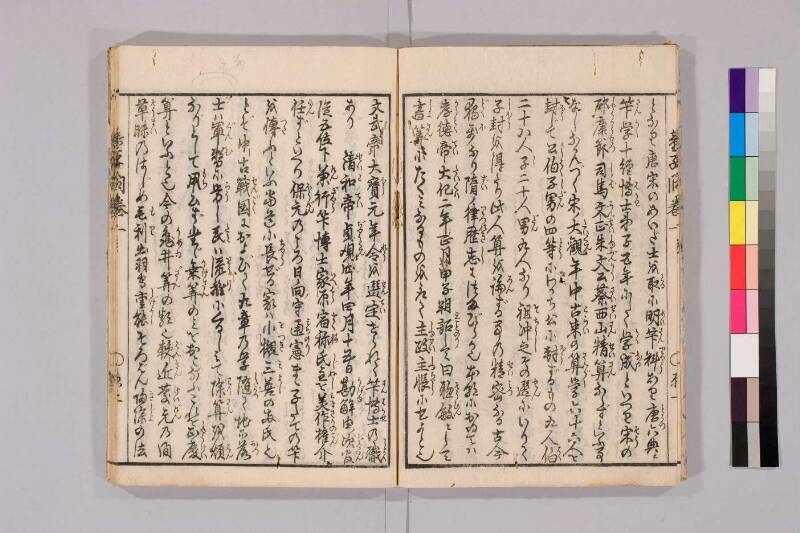
翻刻
【右丁】
となり唐宋のあいだ士を取(とる)に明笇料(めいさんりやう)#1あり唐(とうの)六典に
笇学(さんかく)十経/博士(はかせ)弟子五年にして学成(かくなる)といへり宋(そう)の
《振り仮名:邵-康-節|しやうかうせつ》《振り仮名:司-馬文-正|し ば ふんせい》朱文公(しゆぶんかう)蔡西山(さいせいさん)精算(せいさん)ならずといふ事
なしなかんづく宋の大観(たいくわん)年中/古来(こらい)の算学(さんがく)六十六人を
封(ほう)じて公伯子男(かうはくしだん)の四/等(とう)にわかち公に封(ほう)ずるもの九人/伯(はく)
二十八人/子(し)二十人/男(だん)九人なり祖冲之(そちうし)その選(せん)にいりて
子封(しほう)を得たり此人算を論(ろん)ずる事の精密(せいみつ)なる古今
独歩(どくほ)なり隋(ずい)の律歴志(りつれきし)につまびらか也本朝におゐては
孝徳帝(かうとくてい)大化(たいくは)二年正月甲子朔/詔(みことのり)して曰/聦敏(そうびん)として
書算(しよさん)にたくみなるものを取て主政(しゆせい)主帳(しゆちやう)にせよと也
【左丁】
文武帝大/宝(ほう)元年/令(れう)を選定(せんてい)せられて笇博士(さんはかせ)の職(しよく)
あり 清和帝(せいわてい)貞觀(ぢやうくはん)四-年四-月十五日/勘解由(かげゆ)の次官(じくはん)
従五位下/兼行(けんぎやう)笇博士《振り仮名:家-原宿弥氏主|いへはらすくね#2じぬし》を美作権(みまさかのごん)介に
任(にん)ずといへり保元(ほうげん)のころ日向の守/道憲(みちのり)まゝ子だての笇
を伝(つた)ふといふ当道に長(ちやう)ぜる家は《振り仮名:小-槻|をつき》《振り仮名:三-善|みよし》の両氏也
とぞ中-古/戦国(せんごく)におよびて九章の学 随(したがつ)て地に落(おつ)
士は軍務(ぐんむ)に労(らう)し民(たみ)は流離(りうり)にくるしみて除算(わりざん)を煩(はん)
なりとして用(もち)ひずたゞ乗算(かけさん)のみをおこなふこれを正慶(しやうけい)
算といふと也今の亀井算(かめゐざん)の類也《振り仮名:輓-近|ばんきん》慶元(けいげん)の間
草昧(そうまい)のはじめ毛利(もり)出羽守/重能(しげよし)そろばん帰除(きじよ)の法
現代語訳
【右丁】
となり、唐宋の間に士を取るのに明算科がありました。唐の六典に「算学十経の博士の弟子は五年にして学成る」と言われています。宋の邵康節・司馬文正・朱文公・蔡西山で精算でない者はいませんでした。なかでも宋の大観年中に古来の算学者六十六人を封じて公伯子男の四等に分け、公に封ずる者九人、伯二十八人、子二十人、男九人でした。祖冲之がその選に入って子封を得ました。この人が算を論ずることの精密なることは古今独歩です。隋の律歴志に詳しく記されています。本朝においては孝徳帝大化二年正月甲子朔に詔して曰く「聡敏にして書算に巧みな者を取って主政・主帳にせよ」とのことです。
【左丁】
文武帝大宝元年に令を選定されて算博士の職がありました。清和帝貞観四年四月十五日、勘解由の次官従五位下兼行算博士家原宿禰氏主を美作権介に任ずると言われています。保元のころ日向の守道憲がまま子だての算を伝えるといいます。当道に長ずる家は小槻・三善の両氏です。中古戦国に及んで九章の学は随って地に落ち、士は軍務に労し民は流離に苦しんで、除算を煩わしいとして用いず、ただ乗算のみを行いました。これを正慶算といいます。今の亀井算の類です。近世慶元の間、草昧の始めに毛利出羽守重能がそろばん帰除の法を...
英語訳
【Right Page】
Thus, during the Tang and Song dynasties, there was the Ming Suan (Bright Mathematics) examination for selecting scholars. In the Tang Six Codes it states: "Students of the Ten Classics of Mathematical Learning under the doctoral instructors complete their studies in five years." Among Song scholars like Shao Kangjie, Sima Wenzheng, Zhu Wengong, and Cai Xeishan, there were none who were not excellent at precise calculation. Particularly during the Daiguan era of the Song dynasty, sixty-six mathematicians from ancient times were ennobled and divided into four ranks: Duke, Earl, Viscount, and Baron - nine were made Dukes, twenty-eight Earls, twenty Viscounts, and nine Barons. Zu Chongzhi was selected and received the rank of Viscount. This person's precision in discussing mathematics was unparalleled in ancient and modern times. This is detailed in the Sui Dynasty's Treatise on Pitch-pipes and the Calendar. In our country, Emperor Kōtoku issued an edict on the first day of the first month of the second year of Taika, saying: "Select those who are intelligent and skilled in writing and mathematics to serve as chief administrators and chief clerks."
【Left Page】
In the first year of Taihō under Emperor Monmu, regulations were established and the position of mathematical instructor was created. On the fifteenth day of the fourth month of the fourth year of Jōgan under Emperor Seiwa, Iehara Sukune Ujinushi, who held the positions of Assistant Director of the Bureau of Audit, Junior Fifth Rank Lower, and Acting Mathematical Instructor, was appointed as Acting Assistant Governor of Mimasaka. Around the Hōgen era, it is said that Michinori, Governor of Hyūga, transmitted the "stepchild mathematics." The families that excelled in this way were the Ozuki and Miyoshi clans. When the medieval period reached the age of warring states, the learning of the Nine Chapters consequently fell to the ground. Scholars labored with military affairs and the people suffered from displacement, finding division troublesome and not using it, performing only multiplication. This was called Shōkei mathematics, similar to today's Kamei mathematics. In recent times, during the Keigen era, at the beginning of this rough period, Mōri Dewanokami Shigeyoshi developed the method of abacus division...