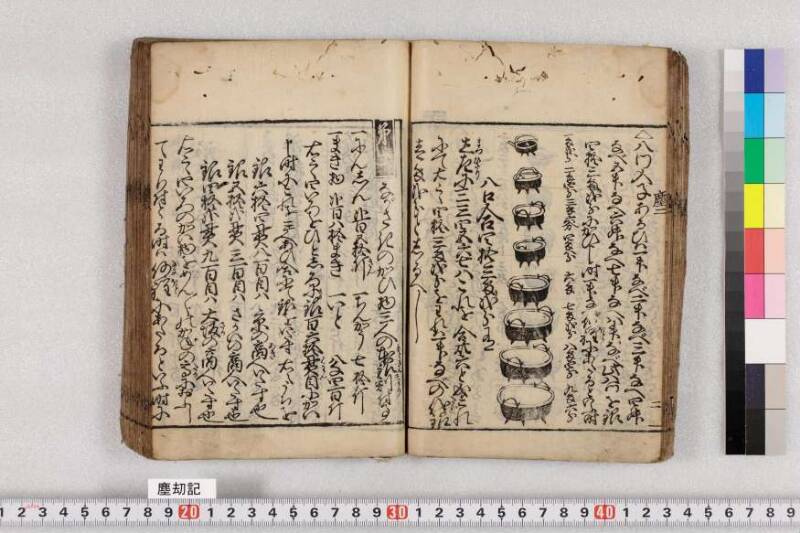
翻刻
【二巻二丁裏】
△八つ入子あるひは一升なべ二升なべ三升なへ四升
なべ五升なへ六升なへ七升なへ八升なべ此八つを銀
四拾三匁弐分にかひ申候時一升なへ何程/(ほと)にあたるといふ時
[一匁弐分][二匁四分][三匁六分][四匁八分][六匁][七匁弐分][八匁四分][九匁六分]
八口合四拾三匁弐分有
先(まつ)左(ひたり)に三三四五六七八これを合卅六と成これ
にて右之四拾三匁弐分をわれは一升なべの代(たい)銀
壱匁弐分としるへし
【二巻三丁表】
《題:第二 ながさきのかひ物三人の本銀(ほんきん)に割(わり)付事》
一にんしん弐百五拾/斤(きん) 一ちんかう 七拾斤
一まき物 弐百八拾まき 一いと 八千四百斤
右之四いろをひとしるに銀百六拾/貫(くわん)目にかい
申候時にこれを三人あひ合にて銀をいだす右■うちを
銀六拾四貫八百目は 京の商(あき)人いたす也
銀五拾弐貫三百目は さかいの商人いたす也
銀四拾弐貫九百目は 大/坂(さか)の商人いたす也
右之四いろのかい物をめん〳〵のかねの高(たか)におふし
てわり付とる時は何程(なにほと)にあたるといふ時に
現代語訳
【二巻二丁裏】
△八つ組みの入れ子、あるいは一升鍋・二升鍋・三升鍋・四升鍋・五升鍋・六升鍋・七升鍋・八升鍋、この八つを銀四十三匁二分で買った時、一升鍋はいくらになるか、という問い。
〔答え〕一匁二分・二匁四分・三匁六分・四匁八分・六匁・七匁二分・八匁四分・九匁六分
八口合計 四十三匁二分
まず左に一・二・三・四・五・六・七・八を置き、これを合計すると三十六となる。これで右の四十三匁二分を割れば、一升鍋の代銀は一匁二分と知るべし。
【二巻三丁表】
《題:第二 長崎の買い物を三人の本銀に割り付ける事》
・人参 二百五十斤
・沈香 七十斤
・巻物 二百八十巻
・糸 八千四百斤
右の四種類の品物を一括して銀百六十貫目で買い、これを三人が共同で銀を出し合って購入した。その内訳は、
銀六十四貫八百目は 京の商人が出す
銀五十二貫三百目は 堺の商人が出す
銀四十二貫九百目は 大坂の商人が出す
右の四種類の買い物を、それぞれの出した銀の高に応じて割り付けて取る時、それぞれ何ほどになるか、という問い。
英語訳
[Volume 2, Folio 2 verso]
△ Suppose there is a set of eight nested pots — a 1-shō pot, a 2-shō pot, a 3-shō pot, a 4-shō pot, a 5-shō pot, a 6-shō pot, a 7-shō pot, and an 8-shō pot. When these eight are purchased together for 43 monme 2 bu of silver, what is the price of the 1-shō pot?
[Answer:] 1 monme 2 bu · 2 monme 4 bu · 3 monme 6 bu · 4 monme 8 bu · 6 monme · 7 monme 2 bu · 8 monme 4 bu · 9 monme 6 bu
Total for 8 items: 43 monme 2 bu
First, place 1, 2, 3, 4, 5, 6, 7, and 8 on the left side and sum them to get 36. Divide the 43 monme 2 bu on the right by this figure, and you will find that the price of the 1-shō pot is 1 monme 2 bu.
[Volume 2, Folio 3 recto]
《Title: Section 2 — On Apportioning the Cost of Goods Purchased in Nagasaki Among Three Merchants According to Their Principal Capital》
· Ginseng: 250 kin
· Agarwood (Jinkō): 70 kin
· Rolled goods (bolts of cloth): 280 rolls
· Thread (raw silk): 8,400 kin
These four types of goods were purchased together for 160 kan-me of silver. Three merchants pooled their funds to make the purchase, with contributions as follows:
64 kan 800 me — contributed by a Kyoto merchant
52 kan 300 me — contributed by a Sakai merchant
42 kan 900 me — contributed by an Osaka merchant
When the four types of purchased goods are distributed among the three merchants in proportion to the amount of silver each contributed, how much does each merchant receive?