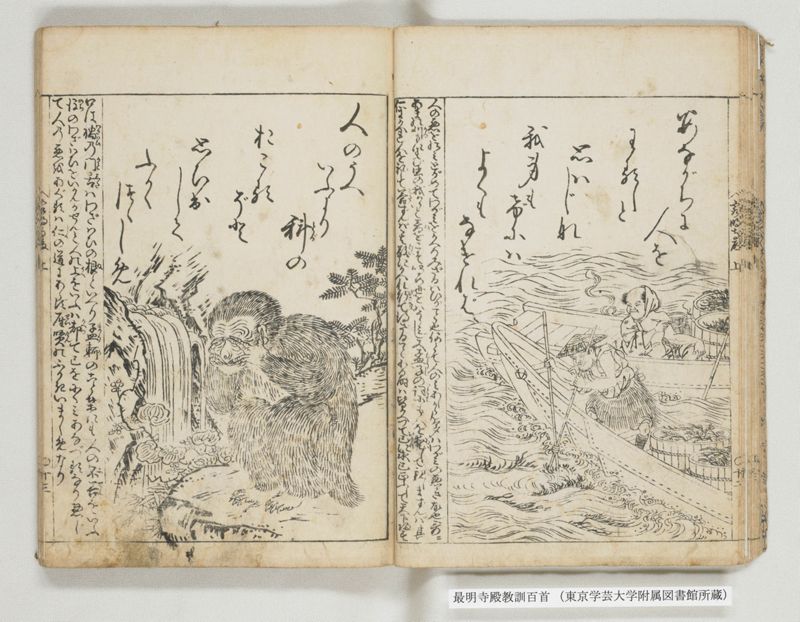
翻刻
【右丁】
あながちに
人を
わるしと
思はじな
我が身も
げには
よくも
なければ
人の悪をのみとがめてわがみをかへりみざるはひがこと也何とて人のみあしからん多はわがみの悪き故也哥に
あまの刈(かる)もにすむ虫の我からと音(ね)をこそ鳴か世をはうらみじ又 孟子(もうし)の詞(ことは)にも人を愛(あい)して親しまずんば其
仁にかへれ人を礼して答(こたへ)ずんば其 敬(けい)にかへれ行(おこなふ)て得ざることある時は皆かへつて己(おのれ)に求己正ふして天下帰す
【左丁】
人のうへ
いふより
科(とが)の
おこる
ぞと
思い出
して
ふかく
つゝしめ
口は禍(わさはひ)の門(かと)舌(した)はわざはひの根(ね)といへり孟軻(もうか)のこと葉にも人の不善(ふせん)をいふ
後(のち)のわざはひをいかんかせんと人の上(うへ)をいふは却(かへつ)て己をにくみあなづるなり惣じ
て人の悪をあぐるは仁(しん)の道にあらず聖賢(せいけん)のふかきいましめなり
現代語訳
【右丁】
(歌)
あながちに
人を
悪しと
思わじな
我が身も
げには
よくも
なければ
(解説)
ひたすら他人の悪いところだけを責めて、自分自身を省みないのは間違ったことである。どうして他人だけが悪いのであろうか。多くの場合は、自分自身の悪さが原因なのである。歌に、
「海女の刈る藻に住む虫の、我からと音をこそ鳴かめ、世をば恨みじ」
(海女が刈る藻に棲む虫(ワレカラ)が、「我からだ(自分のせいだ)」と鳴くように、世を恨むまい)
とある。また、孟子の言葉にも、「人を愛しても親しまれないならば、自分の仁(思いやり)に立ち返れ。人に礼を尽くしても応えてもらえないならば、自分の敬(うやまう心)に立ち返れ。行いが思う通りの結果を得られないことがあるときは、すべて自分自身に立ち返って求めよ。自分を正しくすれば、天下はおのずとついてくる」とある。
【左丁】
(歌)
人のうえ
言うより
科(とが)の
起こる
ぞと
思い出して
ふかく
慎め
(解説)
「口は禍いの門、舌は災いの根」といわれる。孟軻(孟子)の言葉にも、「他人の不善(悪いこと)を言えば、その後の災いをどうすることができようか」とある。他人のことをあれこれ言うのは、かえって自分を憎まれ、侮られることになるのだ。総じて、人の悪いところを取り上げることは、仁の道ではなく、聖賢の深い戒めとするところである。
英語訳
[Right folio]
*(Poem)*
Do not insist
on thinking
others wicked —
for in truth,
one's own self
is hardly
good, either.
*(Commentary)*
To reproach only the faults of others while failing to look at oneself is a mistaken way of thinking. Why should it be that only other people are at fault? In most cases, the cause lies in the wickedness of one's own self. There is a poem that says:
*"Like the creature called 'ware kara' that dwells in the seaweed cut by the diving women — crying out 'it is my own doing!' — I shall not blame the world."*
Furthermore, Mencius says: "If you love others and they do not respond with affection, look inward to your own benevolence. If you show courtesy to others and they do not respond in kind, look inward to your own reverence. If your actions do not achieve the results you seek, in every case turn and seek the cause within yourself. When you have rectified yourself, all under Heaven will follow."
[Left folio]
*(Poem)*
Recall that from speaking
about others,
transgressions arise —
and guard yourself
most deeply
against it.
*(Commentary)*
It is said: "The mouth is the gate of misfortune; the tongue is the root of calamity." Mencius likewise says: "If one speaks of another's wrongdoing, what can one do about the disaster that follows?" To speak disparagingly of others will, in the end, cause one to be hated and despised oneself. In general, to enumerate the faults of others is not the way of benevolence, and it is the most profound admonition of the sages and worthies.