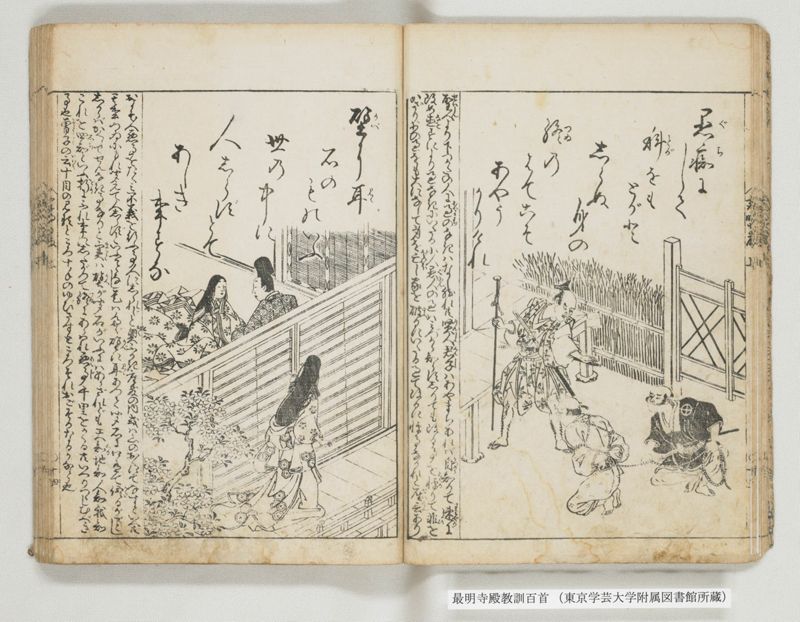
翻刻
【右丁】
愚痴(ぐち)に
して
科(とが)をも
とがと
しらぬ
身の
終(つゐ)の
はてこそ
あやう
かりけれ
聖人(せいしん)より下つかたの人に過(あやまち)のなきはなし然れ共 賢人(けんしん)君子(くんし)はあやまちあれば自(みつから)知りて速(すみやか)に
改め直(なを)すにより過なきにいたる小人 愚人(ぐにん)の過はみづから知らすしりても改る事を憚(はゞか)りて非(ひ)を
かざり少の過をも大になして身を亡(ほろほ)し家を破(やふ)るにいたる過て改るに憚事なかれと聖言あり
【左丁】
壁(かべ)に耳(みゝ)
石の
ものいふ
世の中に
人しらずとて
あしき
事すな
およそ人悪事をたくみ不義を行ふ事人にしられじと
奥(おく)ふかき座敷の内或は山のおくにてなすといへ共
其事つゐにもれ聞えて人しらずといふことなし是はたゞ壁(かべ)に耳(みゝ)あつて聞石に口有て語(かた)るがごとし
しからばかくしてせんなき事なりと実(まこと)は壁(かへ)が聞石がいふにはあらざれども天 知(しる)地知人知我知
これを四知(しち)をいふ折(をり)にふれ事にしたがつて終(つゐ)にあらはれ悪事(あくじ)千里をかくる共いへりつゝしむべき
事也 曽子(そうし)の云(いはく)十目の見るところ十手のゆびさすところそれおごそかなるかなと也
現代語訳
【右丁】
(歌)
愚痴(ぐち)にして
科(とが)をも
とがと
知らぬ
身の
終(つい)の
はてこそ
あやう
かりけれ
(解説)
聖人より下の人間に過ちのない者はいない。しかし、賢人・君子は過ちがあれば自らそれと気づき、すみやかに改め直すことで、過ちのない境地に至る。小人・愚人の過ちは、自ら気づかず、たとえ気づいても改めることを憚り、非をごまかして飾り、わずかな過ちをも大きくして、ついには身を亡ぼし家を破るに至るのである。「過ちを改めるのに憚ることなかれ」と聖人の言葉にある。
【左丁】
(歌)
壁に耳
石の
ものいう
世の中に
人知らずとて
悪しき
事すな
(解説)
およそ人が悪事を企て、不義を行うとき、人に知られまいと、奥深い座敷の内、あるいは山の奥でなしたとしても、そのことは結局漏れ聞こえて、人に知られないということはない。これはまさに、「壁に耳あって聞き、石に口ありて語る」がごとしである。しかし、実際には壁が聞いたり石が言ったりするのではなく、「天知る、地知る、人知る、我知る」――これを四知という。折に触れ、事に従って、ついには明るみに出るものであり、「悪事は千里を走る」ともいわれる。慎むべきことである。曽子はいう、「十目の見るところ、十手の指さすところ、それ厳かなるかな」と。
英語訳
[Right folio]
*(Poem)*
How perilous
the final end
of one who,
mired in folly,
does not even know
their own transgressions
as transgressions.
*(Commentary)*
Among those below the level of a sage, there is no one who is without error. Yet the wise person and the noble person (junzi), when they err, recognize it themselves and swiftly correct themselves, thereby arriving at a state of being without fault. The errors of petty and foolish persons go unrecognized by themselves; and even when recognized, such people hesitate to reform, cover up their wrongs, and allow even small mistakes to grow great — until at last they bring ruin upon themselves and destruction upon their households. The words of the sages teach: "Do not be reluctant to correct your mistakes."
[Left folio]
*(Poem)*
In a world where walls have ears
and even stones
can speak —
do not do evil
on the grounds
that no one will know.
*(Commentary)*
When a person schemes to do evil and commits acts of injustice, thinking to avoid discovery, they may do so deep within a private chamber, or even in the depths of a mountain — yet in the end such things leak out and become known; there is no such thing as something that goes unknown. It is just as the saying goes: "Walls have ears to hear, and stones have mouths to speak." Yet in truth it is not that walls literally listen or stones literally speak: "Heaven knows, Earth knows, others know, I know" — these are called the Four Knowings (Shichi). As occasions arise and events unfold, all things are eventually brought to light; it is also said that "evil deeds travel a thousand leagues." One must be on guard. Zengzi said: "Where ten eyes look, where ten hands point — how solemn and awesome that is!"