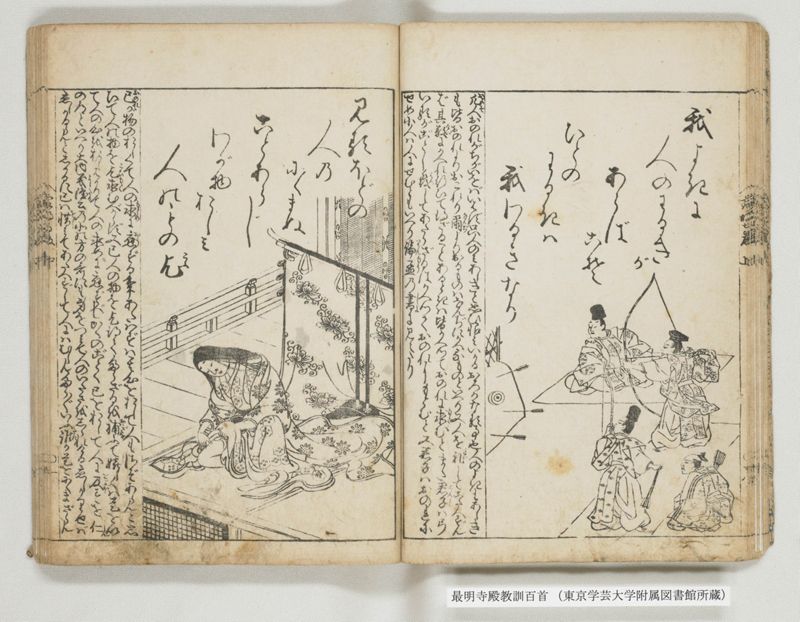
翻刻
【右丁】
我よきに
人のわるきが
あらば
こそ
ひとの
わるきは
我わるきなり
凡(およそ)人おのれがちがいをばいはず只人のみあしきと思ひ恨みいかるおろかなる事也人のよきもあしき
も皆おのれよりおこれり爾(なんぢ)より出るものはなんぢにかへるものといへり又人を礼(れい)してこたへずん
ば其 敬(けい)にかへれ行ひて得ざることあるときは皆かへつておのれに求(もと)むとまた君子(くんし)は弓
いるがごとし発(はつ)してあたらざるはかへつておのれにもとむと又君子はおのれに
せめ小人は人にせむともいへり倫(りん)孟(もう)の書(しよ)に見えたり
【左丁】
見るほどの
人の
にくまぬ
ことあらじ
わが物おしみ
人のもの乞(こふ)
己(おのれ)が物のおしくて人の求(もとめ)に応(おう)ずる事あたはずは其心をおして人もさぞあらんと思
ひて人の物を乞(こひ)求(もと)むべからず又己人の物を乞得てたらざるを補(おぎな)ふて嬉しくは是を以
て人の心をおしはかりて人の求めに応ずべしかくのごとく己をおして人に及(およぼ)すを仁(しん)
の道といへり大内 義隆(よしたか)公の北の方の哥にも身をつみて人のいたさをしられける恋しかりせば
恋しかるらんとしかるに己は惜(をし)みてあたへずして人にはむしんたら〴〵いふ誰(たれ)か是をにくまざらん
現代語訳
【右丁(和歌)】
自分が正しく、他人が悪いということがあるならばともかく、
他人の悪さは、すなわち自分の悪さである。
【右丁(散文)】
およそ人は自分の過ちを言わず、ただ他人だけが悪いと思い、恨み怒るのは愚かなことである。他人の良いところも悪いところも、みな自分から生じるのである。「あなたから出るものは、あなたに返る」と言われている。また「人を敬って返礼がなければ、その敬いは自分に返ってくる。行いをなして結果が得られないときは、すべて振り返って自分自身に原因を求めよ」とある。さらに「君子は弓を射るようなものである。射て当たらなければ、振り返って自分に原因を求める」とも言われている。また「君子は自分を責め、小人は他人を責める」とも言われている。これらは「論語」「孟子」の書に見られる言葉である。
【左丁(和歌)】
見る人が誰も憎まないということはないだろう、
自分の物は惜しみながら、人の物を欲しがる者を。
【左丁(散文)】
自分の物が惜しくて、人の求めに応じることができないならば、その心を推し量って、他人もきっとそうであろうと思い、人の物をむやみに求めてはならない。また、自分が人の物をもらって、足りない分を補われて嬉しいと思うならば、これをもって人の心を推し量り、人の求めに応じるべきである。このように自分の気持ちを推し広めて他人に及ぼすことを「仁の道」と言う。大内義隆公の北の方の歌にも、「身をつみて(わが身に置き換えて)、人の痛さを知られける、恋しかりせば恋しかるらん(恋しいと思うならば、相手も恋しいと思うであろう)」とある。しかるに、自分は惜しんで与えもしないのに、他人には際限なく物乞いをするとは、誰がこれを憎まないでいられようか。
英語訳
**[Right Page — Poem]**
Only if you yourself are righteous and others are at fault could such a claim be made;
but in truth, the faults you see in others are your own faults reflected back.
**[Right Page — Prose]**
In general, people do not speak of their own mistakes, and it is foolish to only think others are wrong and to harbor resentment and anger toward them. Both the good and the bad in others all originate from oneself. It is said, "What comes from you returns to you." It is also written: "If you show respect to someone and receive no response, that respect returns to yourself. When you act and do not achieve the desired result, turn and seek the cause within yourself." Furthermore, it is said, "The gentleman is like one shooting a bow — if the arrow misses the mark, he turns and seeks the reason within himself." It is also said, "The gentleman blames himself; the petty person blames others." These sayings can be found in the Analects (*Lunyu*) and the Mencius (*Mengzi*).
**[Left Page — Poem]**
There is no one who, upon seeing such a person, would not feel contempt —
one who hoards their own possessions yet begs for the belongings of others.
**[Left Page — Prose]**
If your own things are too precious to you to share when someone asks, then push that feeling outward and think: others must feel the same way. Do not therefore go about requesting things from others. Conversely, if you receive something from another person and feel glad to have your needs supplemented, use that feeling to gauge the hearts of others, and respond generously when they come to you in need. To extend one's own feelings outward in this way so as to benefit others is called the Way of Benevolence (*jin* / *ren*). In the poem composed by the consort of Lord Ōuchi Yoshitaka, this very sentiment is expressed: "Placing myself in another's position, I come to understand another's pain — if they long for someone, they must long as I long." And yet, how shameful it is for someone to begrudge giving anything of their own, while endlessly and shamelessly asking things of others. Who could fail to despise such a person?