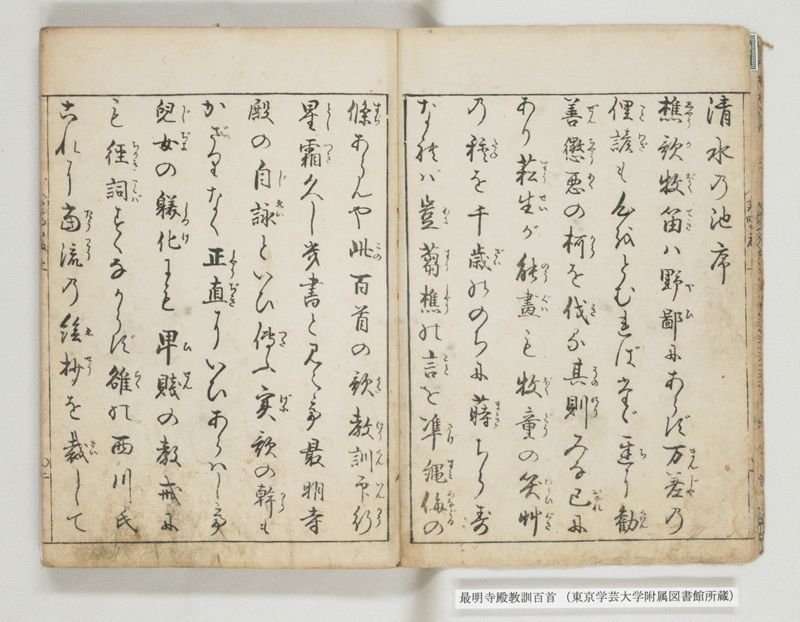
翻刻
【右丁】
清水の池序
樵歌(しやうか)牧笛(ぼくてき)は野鄙(やひ)にあらず万差(まんじや)の
俚諺(ことわざ)も心をとむればたゞ遅(ち)に勧(くはん)
善(ぜん)懲悪(ちやうあく)の柯(から)を伐(き)る其則(そののり)みな己(おのれ)に
あり菘生(すうせい)が能画(のうぐは)も牧童(ぼくどう)の笑草(わらひぐさ)
の種(たね)を千 歳(ざい)ののちに蒔(まき)ちらす
なれば豈(あに)蒭樵(すうしやう)の言(こと)を準縄(さげすみ)侮(あなどる)の
【左丁】
条(すぢ)あらんや此(この)百首の歌(うた)教訓(けうくん)印行(いんかう)
星霜(としつき)久しき書と見えて最明寺
殿の自詠(じゑい)といひ伝(つた)ふ実(げに)歌の幹(から)も
かざりなく正直(しやうぢき)にいひあらはして
兒女(じぢよ)の躾化(しつけ)にも卑賤(ひせん)の教戒に
も径(ちかき)詞(ことば)すくなからず雒(らく)の西川氏
これに当流(たうりう)の絵抄(ゑせう)を裁(さい)して
現代語訳
【右丁】
清水の池序
樵夫の歌や牧童の笛は、田舎くさいものではない。あらゆる種類のことわざも、心を留めれば、ただちに善を勧め悪を懲らしめる手本を与えてくれる。その規範はみな自分自身の中にある。菘生(すうせい)の優れた絵も、牧童の笑い種となるような素材を、千年の後にまで蒔き散らすものであれば、どうして薪取りや木こりの言葉を軽んじ、侮ることができようか。
【左丁】
この百首の歌は、教訓として刊行されて久しい書物と見え、最明寺殿の自作の歌と伝えられている。まことに歌の趣も飾り気なく、正直に表現されており、子女のしつけにも、身分の低い者への教えにも、身近な言葉が少なくない。京(洛)の西川氏がこれに当流の絵の解説を加えて——
英語訳
[Right folio]
Preface: The Pond of Pure Water
The songs of woodcutters and the flutes of shepherds are by no means rustic or vulgar. Even the proverbs of the common people, if one takes them to heart, immediately offer models for encouraging virtue and chastening vice. The principles thereof all reside within oneself. If even the masterful paintings of Sūsei serve to scatter seeds — things that may become objects of laughter among herdsmen — across a thousand years to come, then how could one presume to look down upon or belittle the words of woodcutters and charcoal-burners?
[Left folio]
This collection of one hundred instructional poems appears to be a work that has been in print for many long years, and is handed down as the personal composition of the Lord of Saimyōji. Indeed, the substance of the poems is unadorned and straightforward in its expression, and there is no shortage of accessible language suited both to the moral instruction of children and to the guidance of those of humble station. Mr. Nishikawa of the capital (Raku/Kyoto), having appended illustrations and commentary in the current style——