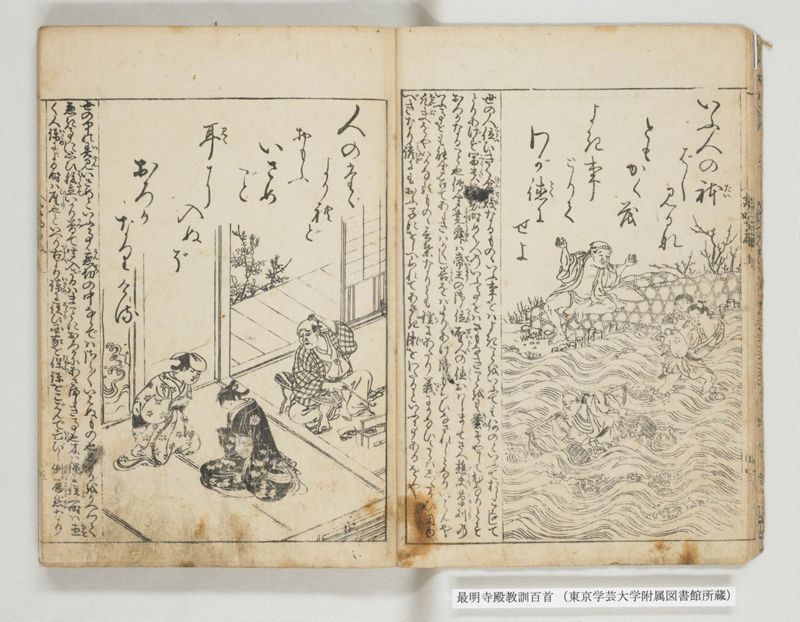
翻刻
【右丁】
いふ人の体(たい)
ばし
見るな
ともかくも
よき事
とりて
わが徳(とく)に
せよ
世の人 位(くらい)ひきく貧賤(ひんせん)なるものゝいふ事をはよきことをいふても何のといふておしこなして
とりあげず富貴(ふうき)《振り仮名:□勢|□□せい》#1時めく人のいふ事をはさもなきことをも誉(ほめ)そやして尤なりとす
おろかなること也伝聞 堯舜(ぎやうしゆん)は帝王(ていわう)の御 位(くらゐ)聖人(せいじん)の徳(とく)おはしましてさへ樵夫(きこり)草刈(くさかり)の
いふ事をも能聞召てあしきはかくし善(よき)をばとりあげ御もちひなされしとなりいはんや
凡夫(ほんぶ)をやいかなるものゝ言葉なりとも理(り)にあたり義(ぎ)にかなひたらばしたがひ用ゆ
べきなり諺(ことわざ)にもおふ子(こ)にをしへられてあさき瀬(せ)をわたるといふ事あるをや
【左丁】
人のたゞ
よかれと
おもふ
いさめ
ごと
耳(みゝ)に
入ぬぞ
おろか
なりける
世の中の異見(いけん)いさめといふ事 懇切(こんせつ)の中ならではさら〳〵いはぬもの也しかるをかへつて
悪き事に思ひ腹立(はらたて)いかり曾(かつ)て聞入ざるはまことにおろかにあさましき事也木は縄(なは)に従(したか)ふ時は直(なを)
く人 諫(いさめ)による時は聖(ひしり)也といへり古(いにしへ)より諫(いさめ)に従(したか)ひ国家を保(たもち)諫をこばんで亡(ほろ)びし例(ためし)歴然(れきぜん)なり
現代語訳
【右丁】
(歌)
物を言う人の身分など
気にして
見るな
ともかくも
良いこと
取り入れて
わが徳と
せよ
(解説)
世の人は、身分が低く貧しいものが言うことは、たとえ良いことを言っても「何ほどのこともない」と言って押しつぶして取り上げず、富み栄えて時めく人が言うことは、大したことでもないのに褒めそやして「もっともなことだ」とする。これは愚かなことである。伝え聞くところでは、堯・舜は帝王の御位にあり、聖人の徳を備えておられながら、樵や草刈りの言うことさえも良く聞き召されて、悪いことは退け、善いことは取り上げてお用いになられたという。まして凡人においてはなおさらのことである。いかなる者の言葉であっても、道理に当たり義に適ったならば、従いこれを用いるべきである。諺にも「子に教えられて浅い瀬を渡る」ということがあるではないか。
【左丁】
(歌)
人がただ
よかれと
思って
諌め
言う言葉が
耳に
入らぬとは
おろか
なことよ
(解説)
世の中で異見・諫めということは、心から親しい間柄でなければ、決して言うものではない。それにもかかわらず、かえって悪いことのように思って腹を立て怒り、かつて一切聞き入れないのは、まことに愚かで嘆かわしいことである。「木は縄(墨縄)に従う時はまっすぐになり、人は諫めによる時は聖人となる」とも言われている。古くから、諫めに従って国家を保ち、諫めを拒んで滅びた例は歴然としてある。
英語訳
[Right folio]
*(Poem)*
Never look down
upon a person
for their station
when they speak —
whatever it may be,
take what is good
and make it
your own virtue.
*(Commentary)*
People in the world tend to dismiss what those of low rank and humble station say, even when they say something worthwhile, brushing it aside with "what does it matter?" — yet they lavish praise on the words of the wealthy and powerful, calling even trifling things "perfectly reasonable." This is foolishness indeed. As tradition tells us, even Yao and Shun — who stood upon the throne as emperors and possessed the virtue of sages — listened attentively to the words of woodcutters and grass-gatherers, setting aside what was wrong and adopting what was good. How much more, then, should ordinary people do the same? Whatever the source, if words accord with principle and conform to righteousness, one ought to follow and make use of them. As the proverb says, "Taught by one's own child, one crosses the shallow ford safely" — and indeed, is that not just so?
[Left folio]
*(Poem)*
When someone speaks
only out of a wish
that you
may do well —
a word of counsel —
how foolish it is
if such words
do not
enter your ears.
*(Commentary)*
In this world, a word of differing opinion or remonstrance is something that is offered only between those who are truly close at heart — it is never said lightly. And yet, to take such words as something bad, to rise up in anger, and to utterly refuse to hear them — this is truly foolish and lamentable. It is said: "As timber follows the marking line and becomes straight, so a person who heeds remonstrance becomes a sage." From ancient times, there are clear examples of those who heeded counsel and preserved their domains, and of those who rejected it and perished.