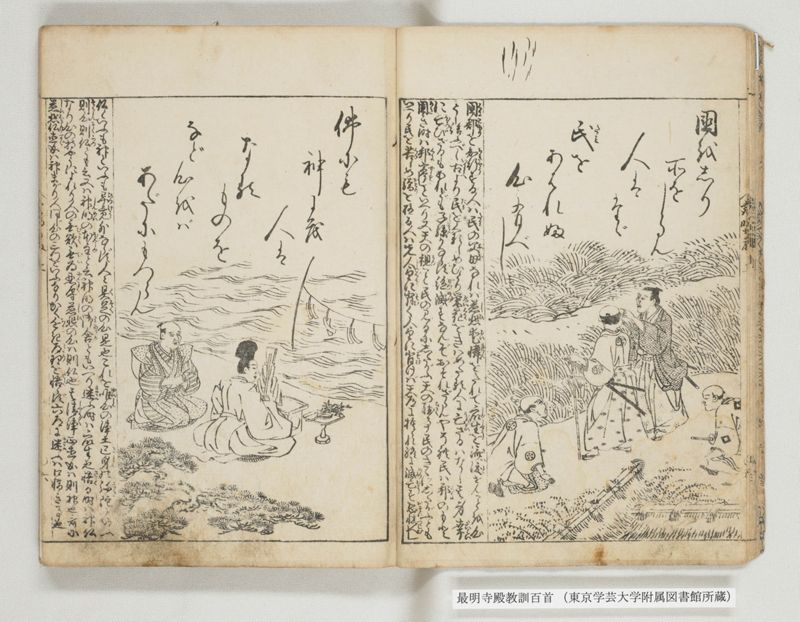
翻刻
【右丁】
国をしり
所を
しらん
人は
たゞ
民(たみ)を
あはれふ
心有べ
し
国(くに)郡(こほり)を知行(ちきやう)する人は民(たみ)の父母(ふほ)なれば慈悲(しひ)愛憐(あいれん)をたれて衆生(しゆしやう)を済渡(さいと)#1せんことを心
とし給ふべし古(いにしへ)より民(たみ)をくるしめひとり栄花(ゑいくわ)をきはめたる人に亡(ほろび)さるはなし其身 幸(さいはい)
に亡(ほろ)びざるもあれども子孫(しそん)かならず絶滅(ぜつめつ)すなんぞおそれざらんやそれ民は邦(くに)のもと
固(かた)き時は邦(くに)寧(やす)しといへり又天の視(みる)こと民の見るにしたがふ天の聴(きく)事民のきくにしたがふとも
いへり民を苦(くる)しめ驕(おこり)を極る人は先 人望(しんばう)に背(そむ)く人望に背(そむ)けば天道に捨られ終に滅亡(めつぼう)す恐(おそれ)慎(つゝしむ)へし
【左丁】
仏にも
神にも
人は
なる
ものを
など心をば
あだにもつらん
仏といふも神といふも畢竟(ひつけう)外ならず人々 具足(くそく)の心是也これを唯心(ゆいしん)の浄土 己身(こしん)の弥陀(みた)といふ
則心則仏(そくしんそくふつ)とも云又は神明(しんめい)の本主(ほんしゆ)と云神明の御舎(みあらか)ともいへり迷(まよ)ふ時は衆生也 悟(さと)る時は神仏
なり心の持やうによれり人の無欲(むよく)無為(むい)忍辱(にんにく)慈悲(しひ)の心は則仏也其 清浄(しやう〳〵)正直成は則神也哥に
慈悲(しひ)仏(ほとけ)直(すぐ)成は神まがり人同じ心の三つをいふなりかく近(ちか)き道理(とうり)を悟(さと)らず六道に迷(まよ)ふは口惜き事也
現代語訳
【右丁】
(歌)
国を知り
所を
知らんとする
人は
ただ
民を
あわれむ
心があるべき
だ
(解説)
国や郡を知行する人は、民の父母であるから、慈悲・愛憐の心を施して、衆生を救い導くことを心がけるべきである。古来より、民を苦しめてひとり栄華を極めた人で、滅びなかった者はいない。その身が幸いにして滅びなかったとしても、子孫は必ず絶えてしまう。どうして恐れ慎まないでいられようか。「それ、民は邦のもと、固き時は邦安し」と言われている。また「天の見ることは民の見るに従い、天の聴くことは民の聴くに従う」とも言われている。民を苦しめ、驕りを極める人は、まず人望に背くことになる。人望に背けば天道に捨てられ、終には滅亡する。恐れ慎むべきである。
【左丁】
(歌)
仏にも
神にも
人は
なれる
ものを
なぜ心を
おろそかに持つのだろう
(解説)
仏と言い神と言っても、つまるところ他のものではない。人々が本来備えている心、これがすなわち仏・神である。これを「唯心の浄土・己身の弥陀」と言い、「即心即仏」とも言い、また「神明の本主」とも言い、「神明の御舎」とも言う。迷う時は衆生であり、悟る時は神仏である。これはすべて、心の持ちようによる。人の無欲・無為・忍辱・慈悲の心はすなわち仏であり、その清浄・正直なる心はすなわち神である。歌に「慈悲は仏、直(すなお)なるは神、曲がった人——同じ心の三つの様相を言うのだ」とある。このように身近な道理を悟らず、六道に迷い続けるのは、まことに口惜しいことである。
英語訳
[Right folio]
*(Poem)*
One who would
know the land,
know the domain —
such a person
must simply
have a heart
that feels
compassion
for the people.
*(Commentary)*
One who governs a province or district is, in effect, the father and mother of its people. Such a person ought to take it to heart to extend compassion and loving care, and to strive to save and guide all living beings. From ancient times, there has never been anyone who tormented the people and pursued glory for themselves alone who did not ultimately come to ruin. Even if such a person were fortunate enough not to perish in their own lifetime, their descendants would certainly be extinguished without fail. How could one not fear and take heed? As it is said: "The people are the foundation of the realm; when the foundation is firm, the realm is at peace." It is also said: "What Heaven sees depends on what the people see; what Heaven hears depends on what the people hear." Those who afflict the people and pursue arrogance to the extreme will first turn the hearts of the people against them. When the hearts of the people turn away, one is abandoned by the Way of Heaven, and in the end, one perishes. This must be feared and guarded against.
[Left folio]
*(Poem)*
Into a buddha,
into a god,
a person
can become —
so why
does one keep
one's heart
so carelessly?
*(Commentary)*
What is called "buddha" and what is called "god" are, when all is said and done, nothing other than what we already are. They are the mind that each and every person is fully endowed with — this is precisely what buddha and god are. This is what is meant by "the Pure Land of one's own mind" and "the Amida Buddha of one's own person"; it is also expressed as "mind itself is buddha," as "the true master of the gods," and as "the divine dwelling of the gods." When one is lost in delusion, one is a sentient being; when one awakens, one is a god or buddha. It all depends on how one holds one's heart. The mind of a person that is free from greed, free from self-serving action, patient, and compassionate — this is buddha. The aspect of that same mind that is pure and upright — this is the gods. As the poem goes: "Compassion is the buddha; uprightness is the god; the crooked person — these three are but expressions of the one same heart." It is truly regrettable that people fail to awaken to this truth, which lies so close at hand, and instead wander lost through the six realms of existence.