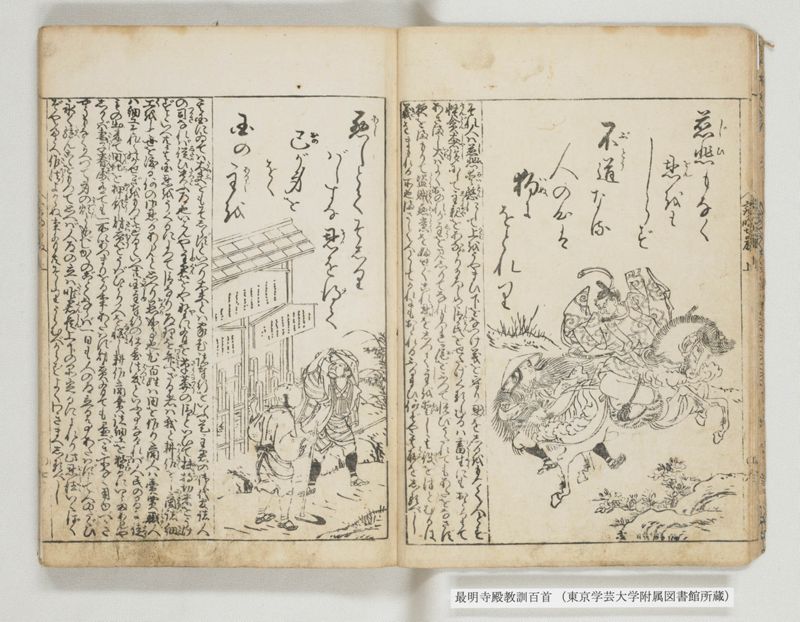
翻刻
【右丁】
慈悲(じひ)もなく
恩(をん)をも
しらず
不道(ぶとう)なる
人の心は
狗(いぬ)に
をとれり
それ人は慈悲(しひ)愛愍(あいれん)#1にして上(かみ)をうやまひ下をなつけ義を守り恩(をん)をしるをもつて人とす
慳貪(けんどん)奢侈(しやし)にして主親(しうおや)をあなどりかろしめ臣民(しんみん)をせたげくるしむるは畜生(ちくしやう)にもおとりて
あさまし犬(いぬ)はよくおのれが主(しう)を見しりてなれもつれ尾(お)をふつて悦びうたれてもあたをなさず
夜をまもりて盗賊(とうぞく)悪党(あくとう)をふせぐこれ恩(をん)をしつて主(しう)を愛(あい)し其 役(やく)をつとむるは
義(き)をまもれる所也まさしく人としてかれにもおとれるふるまひ何ぞや其 恥(はち)をしるべし
【左丁】
悪(あし)しとてそしり
ばしすな恩(をん)を得(え)て
己(おの)が身を
をく
国の主(あるじ)を
其国にゐては大夫(たいふ)をもそしらずといへり大夫とは家老諸奉行をいふ是主君の御代官諸人
の司(つかさ)なれば従(したか)ひ貴(たつと)ふ道也いはんや主君(しゆくん)をや野(や)に有を草莽(さうまう)の臣(しん)といひて扶持(ふち)切米をうけ
ずといへ共其国恩をうくるによつて臣なり道理を弁(わきま)へざる者は我と耕作(かうさく)をし商(あきなひ)諸 細(さい)
工(く)をして世を渡る何の御恩かあらんと思へり愚(おろか)成事也尤百姓は田を作り商人は売買 職(しよく)人
は細工それ〳〵のかせぎをもつて過るといへ共 国主(こくしゆ)奉行の仕置 法度(はつと)といふ事なければ人民の間に徒(いたつら)
もの出来て田地(てんち)を押領(おうれう)し財宝(さいほう)をうばひとり人を悩(なやま)し耕作商売諸細工を務(つとむ)るにいとまあらんや
しからば妻子(さいし)眷属(けんぞく)有ても一所にあつまりをる事あたはず財宝有ても置べき所なく用ゆべき
やうもなくかへつて身の煩(わつらひ)と成べしかくのごとくならば一日も人の道立る事あたはずして人のたぐひ
永く絶(たへ)んこゝをもつて思へば人道の立は唯(たゝ)君臣(くんしん)上下の品定るによれり此 恩徳(をんとく)いくばく
ぞやたとへ作法(さほう)よからぬ事有共そしりうらむべからずよくわきまへしるべし
現代語訳
【右丁】
(歌)
慈悲もなく
恩をも
知らず
不道なる
人の心は
犬に
劣れり
(解説)
そもそも人とは、慈悲・愛憐の心を持ち、上(かみ)を敬い、下(しも)をなつかせ、義を守り、恩を知ることをもって「人」とする。ところが、物惜しみして贅沢にふけり、主君や親をないがしろにして軽んじ、臣民を搾取して苦しめるような者は、畜生にも劣って、まことに嘆かわしい。犬はよく自分の主人を見分けてなつき、尾を振って喜び、打たれても恨みを持たず、夜を守って盗賊・悪党を防ぐ。これは、恩を知って主人を愛し、その役目を果たすという、義を守る姿である。まさに人でありながら、犬にも劣るふるまいとは何事か。その恥を知るべきである。
【左丁】
(歌)
悪しとて
そしりなさるな
恩を受けて
己の身を
置く
国の主を
(解説)
「その国に居る者は大夫(たいふ)をもそしらず」と言われている。「大夫」とは家老・諸奉行のことであり、これらは主君の御代官であり、諸人を統括する者であるから、従い、敬うべき道理がある。まして主君においてをや。野(や)にある者を「草莽の臣」と言い、扶持や切米を受けていないとしても、その国の恩恵を受けているから臣(家臣)なのである。道理をわきまえない者は、「自分は自ら耕作をし、商売や諸々の細工をして世を渡っているのであり、何の御恩があるというのか」と思っている。愚かなことである。なるほど、百姓は田を耕し、商人は売買をし、職人は細工と、それぞれの稼ぎをもって暮らしているとは言え、国主・奉行の仕置きや法度というものがなければ、人民の中に乱暴者が出て、田地を不法に占領し、財宝を奪い取り、人を苦しめ、耕作・商売・諸細工に従事する暇もなくなってしまうであろう。そうなれば、妻子・眷属がいても一所に集まって暮らすこともできず、財宝があっても置き場もなく、使いようもなく、かえって身の煩いとなるであろう。このようであれば、一日たりとも人の道を立てることができず、人の類いは永く絶えてしまうであろう。このことを考えれば、人の道が成り立つのは、ひとえに君臣・上下の身分秩序が定まっていることによるのである。この恩徳はいかほどのものか。たとえ作法のよくないことがあったとしても、そしり恨むべきではない。よくわきまえて知るべきである。
英語訳
[Right folio]
*(Poem)*
Without compassion,
without knowing
gratitude,
the heart of one
who acts
against all decency
is beneath
even a dog.
*(Commentary)*
What it means to be human is, above all, to hold a heart of compassion and loving care — to revere those above, to win the affection of those below, to uphold righteousness, and to know gratitude. By contrast, one who is miserly and extravagant, who treats their lord and parents with contempt and disdain, and who exploits and torments those in their charge — such a person sinks lower even than the beasts, and it is a pitiable thing indeed. A dog faithfully recognizes its own master, grows close to them, wags its tail in joy, bears no grudge even when struck, and keeps watch through the night against thieves and wrongdoers. In knowing its master's kindness, loving its master, and faithfully carrying out its duties, the dog upholds a form of righteousness. Is it not shameful, then, that a person — a human being — should conduct themselves worse even than this? One ought to know one's own shame.
[Left folio]
*(Poem)*
Do not
slander as wicked
the lord of the domain
in which
you find
your place,
having received his favor.
*(Commentary)*
It is said: "One who dwells in a domain does not slander even its senior officials." By "senior officials" is meant the elder councillors (*karō*) and the various magistrates (*bugyō*). These serve as the lord's deputies and as overseers of the people; it is therefore right and proper to follow and honor them. How much more so, then, must this apply to the lord himself. Those who dwell in the countryside are called "subjects of the grass and thicket" (*sōmō no shin*); even if they receive no stipend or rice allowance, they are nonetheless subjects by virtue of receiving the benefits of their domain. Those who do not understand this principle reason as follows: "I till the fields myself, I ply my trade, I pursue my craft — I owe nothing to anyone." This is utterly foolish. It is true that farmers cultivate their fields, merchants conduct their trade, and artisans practice their crafts — each making their living through their respective labors. Yet if there were no administration and no laws laid down by the domain lord and his magistrates, there would inevitably arise among the people violent men who would seize the fields by force, rob others of their wealth, and oppress the people — leaving no time or peace for farming, commerce, or the crafts. Under such conditions, even if one had a wife, children, and family, they could not gather and live together in one place; even if one possessed wealth, there would be nowhere safe to keep it and no way to make use of it — it would become a burden rather than a blessing. In such a world, human society could not endure even a single day, and the human race itself would in time be extinguished. Reflecting on this, one sees that the sustaining of the human way depends entirely on the proper ordering of the relationship between ruler and subject, and between those above and those below. How immeasurable, then, is this debt of grace! Even if those in authority sometimes conduct themselves improperly, one must not slander or resent them. One should reflect deeply on this and understand it well.