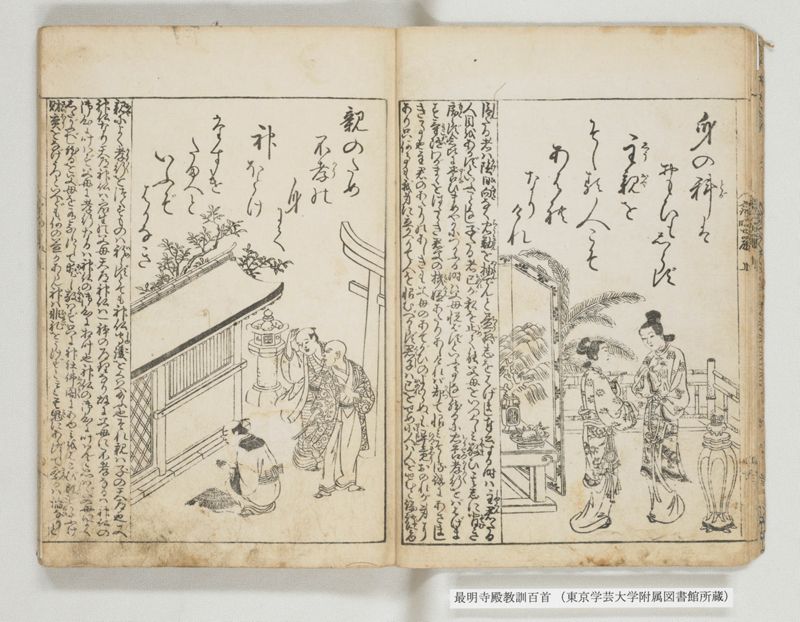
翻刻
【右丁】
身の科(とが)と
おもひもしらず
主親(しうおや)を
そしる人こそ
あはれ
なり
けれ
臣(しん)たる者は陰(かけ)日向(ひなた)なく忠勤(ちうきん)を抽(ぬきん)でんと昼夜(ちうや)志をはげまし奉公する時は主君(しゆくん)たる
人目をあかずといふことなし子(こ)たる者 己(おのれ)が私を止(やめ)て能父母をいつくしみ敬(うやま)ひ其志に背(そむ)き
戻(もと)らず念比に養(やしな)ひまめやかにつかふる時は父母悦ばずといふ事なし然るに忠節(ちうせつ)孝行(かう〳〵)をばはげま
す気随(きずい)わがまゝをはたらき君父の機嫌(きけん)あたりあしければ却(かへつ)て恨みそしる誠にあさまし
き事也主君のあたりのあしきも父母のあてがひのよからぬも畢竟(ひつきやう)おのれが身に
あり只何事も我身に立かへりて人を恨むべからず君子(くんし)は己(おのれ)をせめ小人(せうじん)は人をせむと論語にみゆ
【左丁】
親のため
不 孝(かう)の
身
にて
神ほとけ
たすけ
たまへと
いふぞ
はかなき
親(おや)によく孝行(かう〳〵)をつくすものは祈(いの)らずとても神仏 守護(しゆこ)をくはへ給ふ也それ親は子(こ)の天道也又
神仏なり天道神仏は衆生の父母天道神仏は一体の道理なり故に父母に不孝なるは神仏の
御心に叶はず父母に孝行なるは神仏の御心に相叶也神仏の御心に叶はんと思はゞ父母によく
したがふべし然るを父母を有なしにして愛(あい)し敬(うやま)はず只に神社 仏閣(ふつかく)にあゆみをはこび頭(かしら)をかたふけ
財宝(さいほう)をなげうつといへども何の益かあらん神は非礼(ひれい)をうけずと云々其 鬼(き)にあらずして祭(まつ)るは諂(へつらひ)なりと
現代語訳
【右丁】
(歌)
身の科(とが)と
思いもせず
主親(しゅうおや)を
そしる人こそ
あわれ
なり
けれ
(解説)
臣たる者は、表裏なく忠勤に励もうと昼夜志を奮い立て、奉公に励むならば、主君たる人が目をかけないということはない。子たる者も、自分の私欲を捨てて、よく父母を慈しみ敬い、その意に背くことなく、丁寧に養い、まめに仕えるならば、父母が喜ばないということはない。それにもかかわらず、忠節・孝行に励むどころか、気ままに振る舞い、君や父の機嫌・扱いが思わしくないと、かえって恨みそしる。まことに嘆かわしいことである。主君の扱いが悪いのも、父母の当てがいがよくないのも、つまるところ、自分自身に原因があるのだ。ただ、何事につけても我が身に置き換えて考えて、人を恨んではならない。「君子は己(おのれ)を責め、小人は人を責める」と、『論語』に見える。
【左丁】
(歌)
親のため
不孝の
身
にて
神・仏
助け
たまえと
言うぞ
はかなき
(解説)
親によく孝行を尽くす者は、祈らずとも神仏が守護を加えてくださるものである。そもそも親とは、子にとっての天道である。また、神仏でもある。天道・神仏は衆生の父母であり、天道・神仏は一体の道理である。ゆえに、父母に不孝であることは神仏の御心にかなわず、父母に孝行であることは神仏の御心にかなうのである。神仏の御心にかなおうと思うならば、父母によく従うべきである。それにもかかわらず、父母を有るか無きかのごとくに扱い、愛し敬わずして、ただ神社・仏閣へ足を運び、頭を垂れ、財宝を投げうったとしても、何の益があるというのか。「神は非礼をうけず」と言われ、また「その鬼にあらずして祭るは諂(へつらい)なり」とも言われている。
英語訳
[Right folio]
*(Poem)*
Pitiable indeed
are those who slander
their lord and parents,
never once thinking
that the fault
lies within
themselves.
*(Commentary)*
When one who serves as a subject strives, without distinction between public and private, to excel in loyal service — rousing their spirit day and night, and dedicating themselves to their duty — there is no lord who would fail to look upon them with favor. Likewise, when one who is a child sets aside their own selfish desires, cherishes and reveres their father and mother, never goes against their parents' wishes, tends to them attentively, and serves them faithfully, there are no parents who would not rejoice. And yet, rather than striving in loyal and filial devotion, such people act willfully and indulge their own whims — and when their lord's manner or their parents' treatment falls short of their expectations, they turn instead to resentment and slander. This is truly a pitiable thing. If the lord's treatment is poor, or if the parents' provision is unsatisfactory, the cause ultimately lies within oneself. In all things, one must put oneself in another's place and must not blame others. As it is written in the *Analects of Confucius*: "The gentleman blames himself; the petty man blames others."
[Left folio]
*(Poem)*
How vain it is
to pray to the gods
and buddhas
to grant their aid,
while living
as one
unfilial
to their parents.
*(Commentary)*
Those who devote themselves fully to filial piety toward their parents will receive the protection of the gods and buddhas even without prayer. For, to a child, one's parents are the very Way of Heaven. They are, moreover, the very gods and buddhas themselves. The Way of Heaven and the gods and buddhas are the father and mother of all living beings, and the Way of Heaven and the gods and buddhas are one and the same principle. Therefore, to be unfilial toward one's parents is to go against the will of the gods and buddhas, while to be filial toward one's parents is to accord with their will. If one truly wishes to accord with the will of the gods and buddhas, one must first serve one's parents well. And yet there are those who treat their parents as though they were of no account — neither loving nor revering them — and who nonetheless make their way to shrines and temples, bow their heads, and cast away their treasures in offering. What benefit can this possibly bring? It is said, "The gods do not receive improper ritual," and again, "To perform rites of sacrifice for a spirit that is not one's own is mere flattery."