翻刻
【右丁】
むこへつかはすむこ三こんのみておさむ
るなりこれにて双方(さうはう)三こんづゝ三度(ど)也
三々九 度(ど)といへりしやくくわへことのほか
むつかし口伝(くでん)といふにはあらねどもわざ
事ゆへ筆(ふで)にのべがたし此さかづき事すみ
て婿(むこ)勝手(かつて)へいるなりさて雑煮(ざうに)をいだ
すよめまち女郎(ぢよらう)ともすはるなり引かへ
本膳(ほんぜん)いつる其(その)のちむこよりいたしたるむか
い小袖(こそで)を着(き)かゆるなりこれを色(いろ)なをしと
いへりそのゝちしうとしうとめげんざう有
一家(いつけ)さかづき事ありさて五日(いつか)めには五日
がへりとておやざとへかへる里(さと)にて五日
とうりうしてむこのかたへかへるをはながへ
りといへりそのあいだにしうといり一家(いつけ)
ひろめとてしんるい朋友(ほうゆう)をよびても
てなすをことなりなをくわしくは道(みち)
しれる人にたづぬべし
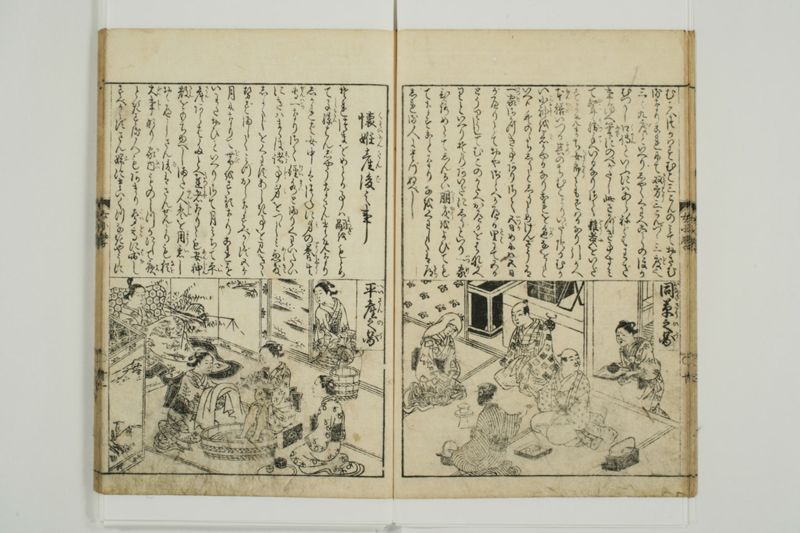
【右丁下段 插絵】
同草之図(おなじさうのづ)
【左丁】
【下段 插絵】
平産(へいさん)之(の)図(づ)
【上段】
懐妊(くわひにん)産後(さんご)之事
それつまをめとる事は嗣(よつぎ)をもとめ
て子孫(しそん)はんじやうなさんためなり
しかれば女中はつねに身(み)の養生(やうじやう)
専一(せんいち)なりさて経水(けいすい)とまりくわいたい
にきはまらは諸事(しよじ)身(み)をつゝしみ悪敷(あしき)
しよくじをくわずあしき事を見きゝ
せずましてみづからなすべからず五ヶ
月になりて帯(をび)をするなりこれを
いわたおびといへりさて月みちて平(へい)
産(さん)あらばたとへ達者(たつしや)なりとも安神(あんじん)
散(さん)をもちゆべしまた人参(にんじん)を用意(ようい)し
おくへしさん後(ご)はさんぜんよりも猶(なを)
大事(だいじ)なり家内(かない)ものしづかにして夜(よ)
とぎする人もあまり声高(こはだか)に咄(はな)し
すべからずさん婦(ふ)にたいくつなきやうに
現代語訳
【右丁】
婿へ渡す。婿も三献飲んで盃を収める。これにて双方三献ずつ、三度で合計九献となる。これを「三々九度」と言う。酌を加えることはことのほか難しく、口伝というわけではないが、実技を要することゆえ筆で述べることが難しい。この盃事が済んで、婿は台所の方へ入る。さて、雑煮が出され、嫁と待女郎(付き添いの女性)も共に座る。その後、本膳が出る。さらにその後、婿の方から贈られた「迎え小袖」に着替えるのである。これを「色直し」と言う。その後、舅・姑との対面があり、一家(親族)との盃事がある。さて、五日目には「五日帰り」といって、嫁の実家へ帰る。実家に五日間滞在してから婿の家へ戻ることを「花帰り」と言う。その間に、舅・姑の挨拶回りや、一家への披露目として、親族・友人を招いてもてなすことが行われる。さらに詳しくは、この道を知っている人に尋ねるべきである。
【右丁下段 挿絵】
同草之図(のしの図)
【左丁】
【下段 挿絵】
平産之図
【上段】
懐妊・産後のこと
そもそも妻を娶ることは、跡継ぎを求めて子孫を繁栄させるためである。したがって、女性は常に体の養生を最も大切なこととすべきである。さて、月経が止まって懐胎と定まったならば、諸事について身を慎み、体に悪い食事をとらず、悪いことを見聞きせず、まして自らそのようなことをしてはならない。五ヶ月になったら帯をするのである。これを「岩田帯」と言う。さて、月が満ちて無事に出産となったならば、たとえ達者であっても「安神散」を用いるべきである。また、人参を用意しておくべきである。産後は産前よりもさらに大事である。家の中の者は静かにして、夜伽をする人もあまり声高に話してはならない。産婦が退屈しないように……
英語訳
**[Right Page]**
…and it is passed to the groom. The groom also drinks three cups and puts away the cup. With this, both parties have drunk three cups each, three times over, making nine cups in total. This is called "san-san-kudo" (three-three-nine times). The role of the sake server is exceptionally difficult; it is not exactly a secret oral tradition, but since it involves practical technique, it is difficult to describe in writing. When this cup ceremony is finished, the groom retires to the kitchen area. Then, zōni (rice cake soup) is served, and the bride and the attendant women sit together. After that, the main formal meal (honzen) is brought out. Following this, the bride changes into the "mukae-kosode" (welcome kimono) sent by the groom's family. This is called "iro-naoshi" (color change, i.e., the change of wedding garments). After that, there is a formal meeting with the father-in-law and mother-in-law, followed by a cup-sharing ceremony with the entire household. On the fifth day, there is a custom called "itsuka-gaeri" (five-day return), in which the bride returns to her parents' home. After staying five days at her parents' home, the bride's return to the groom's household is called "hana-gaeri" (flower return). During this period, the formal greeting from the in-laws and a gathering called "ikke-hirome" (family introduction) takes place, in which relatives and friends are invited and entertained. For further details, one should inquire of a person knowledgeable in these matters.
**[Lower illustration, right page]**
Illustration of noshi (decorative paper ornament)
---
**[Left Page]**
**[Lower illustration]**
Illustration of a safe/normal birth (heisan)
**[Upper text]**
**On Pregnancy and Postpartum Care**
The purpose of taking a wife is to seek an heir and to ensure the flourishing of one's descendants. Therefore, it is of utmost importance that women always take good care of their health. When menstruation stops and pregnancy becomes certain, one should be prudent in all matters: avoid eating foods that are harmful to the body, refrain from seeing or hearing anything harmful, and certainly not engage in such things oneself. At five months, one puts on the special belly band. This is called the "iwata-obi" (sacred belly band). When the month is full and one has given birth safely, even if one is in good health, one should use the medicine "Anjin-san." One should also have ginseng (ninjin) prepared in advance. The postpartum period is even more critical than the period before birth. The members of the household should be quiet, and even those keeping night vigil should not speak in loud voices. Care should be taken so that the new mother does not become bored…