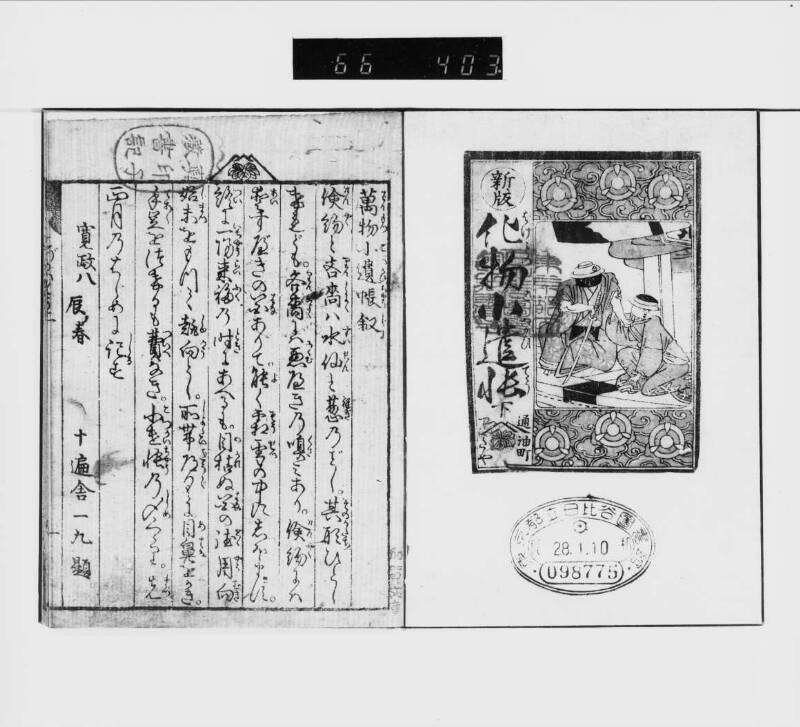
翻刻
新版《題:化物小遣帳(ばけものこづかひてう)》下《割書:通油町|つたや》
万物小遺帳叙(ばんもつこつかひちやうじよ)
倹約(けんやく)と吝嗇(りんしよく)は水仙(すいせん)と葱(ねぎ)のとし。其形(そのかたち)ひとし
けれども。吝嗇(りんしよく)には悪(にくむ)べきの嗅(くさみ)みあり。倹約(けんやく)には
愛(あい)すべきの花(はな)ありて能(よ)く霜雪(そうせつ)の中にしほまず。
終(つい)に一陽来福(いちやうらいふく)の時(とき)にあへるも。目枯(めかれ)ぬ花(はな)の徳用向(とくやうむき)
始末(しまつ)をもつて趣向(しゆかう)とし。所帯道具(しよたいだうぐ)に目鼻(めはな)をかき。
手足(てあし)をつけるも費(ついへ)なき。小遣帳(こつかいちやう)の〆(しめ)くゝり。先(まづ)
正月のはじめに記(しる)す
寛政八辰 ̄ノ春 十返舎一九題
現代語訳
新版《題:化物小遣帳(ばけものこづかいちょう)》下《割書:通油町|つたや》
万物小遣帳序(ばんもつこづかいちょうじょ)
倹約と吝嗇は水仙と葱のようなものである。その形は似ているけれども、吝嗇には憎むべき臭みがあり、倹約には愛すべき花があって、よく霜雪の中でも萎まない。
ついに一陽来復の時を迎えることができるのも、枯れない花の節約術である。
始末をもって趣向とし、所帯道具に目鼻を描き、手足をつけるのも費用のかからない小遣帳の締めくくりである。まず正月の初めに記す。
寛政八辰年の春 十返舎一九題
英語訳
New Edition《Title: Bakemono Kozukaichō (Monster Expense Account)》Volume 2《Publisher's mark: Tsūyu-chō|Tsutaya》
Preface to Banmotsu Kozukaichō (Universal Expense Account)
Frugality and miserliness are like daffodils and green onions. Though their forms are similar, miserliness has a detestable stench, while frugality has lovable flowers that do not wither even in frost and snow.
To finally meet the time of ichiyō raifuku (the return of spring fortune) is also due to the economical methods of flowers that never wither.
Making thrift one's guiding principle, drawing faces on household goods, and adding hands and feet to them is a cost-free way to conclude an expense account. First, I record this at the beginning of the New Year.
Spring of Kansei 8, Year of the Dragon Composed by Jippensha Ikku