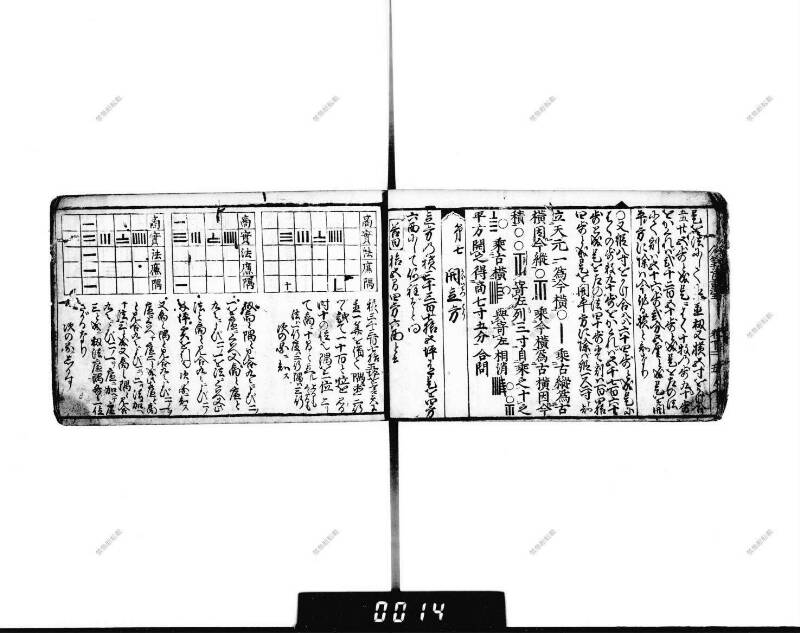
翻刻
是を法にして□置扨又横五寸をかけ合
《割書:五五》廿五歩と成是 ̄ニはく十枚の歩九十歩
をかくれば弐千二百五十歩と成是を左の法
にて割は五十六歩弐分五厘と成是を開
平方に除は今作る横と知なり
▲○又縦八寸をかけ合《割書:八八》六十四歩と成是に
はくの歩数九十歩をかくれば五千七百六十
歩と成是を左の法四十歩にて割は百四拾
四歩と成是を開平方に除ば縦一尺二寸 ̄ト知
立_二 天元一_一為_二今横_一「0┃1」乗_二古縦_一為_二古
横因 ̄ル今縦_一「0┃161」乗_二今横_一為_二古横因 ̄ル今
積_一「0┃0┃161」寄_レ左列_二 三寸_一自_二乗之_一 十_レ之
「90」乗_二古横_一「450」与_レ寄_レ左相消「ー450┃0┃161」
平方開_レ之得_二商七寸五分_一合間
《題:第七 開立方(かいりつはう)》
▲立方の積三千三百七拾五坪有是を四方
六面にして何程ぞと問
[答曰]拾五間四方六面と云
積三千三百七拾五坪を実天に
置一算を借て隅 ̄ニ置二行
づゝ越て一十百と位を見る
時十の位也隅を一位上 ̄リ
て商 ̄ニ十間と立 ̄ル《割書:上るも|くだるも》
法は一行廉は二行隅は三行
次の図 ̄ニ知 ̄ス
扨商と隅と見合九々 ̄ニよび二ノ
一を廉 ̄ニくはへ又商と廉と
九々 ̄ニよび《割書:一一》 ̄ノ一を法 ̄ニくはへ又此
法と商と見合有九々 ̄ニよび《割書:一一》 ̄ノ
千坪実を引也次ノ図 ̄ニ知 ̄ス
又商と隅と見合九々 ̄ニよび二 ̄ノ一 ̄ヲ
置 ̄ニくはへ ̄テ廉二と成此廉と商
と見合九々 ̄ニよび一《割書:一二》 ̄ノ二 ̄ヲ法 ̄ニ加へ
干法三と成又商と隅と見合
九々 ̄ニよび《割書:一一》 ̄ノ一 ̄ヲ廉 ̄ニ加へ ̄テ廉
三と成 ̄ル扨法廉隅各々一位
さがるなり
次の図 ̄ニしるす
現代語訳
これを法にして□置く。さて又横5寸をかけ合わせ5×5で25歩となる。これに箔10枚の歩数90歩をかければ2,250歩となる。これを左の法にて割れば56歩2分5厘となる。これを開平方に除せば今作る横と知るなり。
▲○又縦8寸をかけ合わせ8×8で64歩となる。これに箔の歩数90歩をかければ5,760歩となる。これを左の法40歩にて割れば144歩となる。これを開平方に除せば縦1尺2寸と知る。
天元一を立てて今の横とし、古い縦を乗じて古い横による今の縦とする。今の横を乗じて古い横による今の積とする。左に寄せて3寸を列し、これを自乗して之に十をかける。古い横を乗じて左に寄せると相消する。これを平方開して商7寸5分を得る。間に合う。
《題:第七 開立方(かいりつほう)》
▲立方の積3,375坪がある。これを四方六面にして何程かと問う。
[答え曰く] 15間四方六面という。
積3,375坪を実天に置く。一算を借りて隅に置く。二行ずつ越えて一、十、百と位を見る時、十の位なり。隅を一位上げて商に10間と立てる。《上るも下るも》
法は一行、廉は二行、隅は三行
次の図に知らす。
さて商と隅とを見合わせて九々により2×1を廉に加える。又商と廉とを九々により1×1の1を法に加える。又この法と商とを見合わせて九々により1×1の1,000坪を実から引く。次の図に知らす。
又商と隅とを見合わせて九々により2×1を廉に加えて廉2となる。この廉と商とを見合わせて九々により1×2の2を法に加えて法3となる。又商と隅とを見合わせて九々により1×1の1を廉に加えて廉3となる。さて法・廉・隅各々一位下がるなり。
次の図に記す。
英語訳
Use this as the divisor and □ place it. Now again multiply 5 sun together to get 5×5 = 25 bu. Multiplying this by 90 bu (the number of bu for 10 sheets of foil) gives 2,250 bu. Dividing this by the left divisor gives 56 bu 2 bu 5 rin. Dividing this by square root extraction gives the horizontal dimension being made now.
▲○ Again multiply 8 sun (vertical) together to get 8×8 = 64 bu. Multiplying this by 90 bu (the foil number) gives 5,760 bu. Dividing this by the left divisor of 40 bu gives 144 bu. Dividing this by square root extraction gives the vertical dimension of 1 shaku 2 sun.
Establish the unknown quantity (天元) as 1 for the current horizontal dimension, multiply by the old vertical dimension to get the current vertical dimension based on the old horizontal dimension. Multiply by the current horizontal dimension to get the current product based on the old horizontal dimension. Arrange 3 sun to the left, square it and multiply by ten. Multiply by the old horizontal dimension and when arranged to the left, it cancels out. Opening this by square root extraction yields a quotient of 7 sun 5 bu. This matches.
《Title: Seventh Section - Cube Root Extraction (kairitsu-hō)》
▲There is a cubic volume of 3,375 tsubo. When making this into a four-sided six-faced [cube], how much is it?
[Answer:] 15 ken on all four sides and six faces.
Place the volume of 3,375 tsubo in the dividend position. Borrow one counter and place it in the corner position. Counting by two rows each as 1, 10, 100 to see the place values, it is in the tens place. Raise the corner position by one place and establish 10 ken in the quotient. 《Whether going up or down》
The divisor (法) is one row, the auxiliary divisor (廉) is two rows, the corner (隅) is three rows.
This is shown in the next diagram.
Now compare the quotient with the corner using the multiplication table to add 2×1 to the auxiliary divisor (廉). Again using the multiplication table for quotient and auxiliary divisor, add 1 from 1×1 to the divisor. Again comparing this divisor with the quotient using the multiplication table, subtract 1,000 tsubo from 1×1 from the dividend. This is shown in the next diagram.
Again compare the quotient with the corner using the multiplication table to add 2×1 to the auxiliary divisor, making it 2. Compare this auxiliary divisor with the quotient using the multiplication table to add 2 from 1×2 to the divisor, making it 3. Again compare the quotient with the corner using the multiplication table to add 1 from 1×1 to the auxiliary divisor, making it 3. Now the divisor, auxiliary divisor, and corner each descend by one place.
Record this in the next diagram.