翻刻
扨又商 ̄ニ又五間を立其五間と
隅と見合九々 ̄ニよひ《割書:一五》 ̄ノ五を
廉 ̄ニ加 ̄テ廉三五と成又此廉
と商と見合九々 ̄ニよび《割書:三五》 ̄ノ
十五又《割書:五五》廿五とを法 ̄ニ加 ̄テ
法四七五と成又此法と商と
見合九々 ̄ニよび実を引時《割書:四五》
弐千坪引《割書:五七》三百五十坪引
《割書:五五》廿五坪引と皆実を
引相へは商 ̄ニ十五間四方六
面と知也後法廉隅は不
用也
立_二 天-元一_一為_二立方面_一「0┃1」再 ̄ヒ自_二乗之_一為
_二立方之積_一「0┃0┃0┃1」即与_二云積_一》相消
「ー3375┃0┃0┃1」立方開_レ之得_二商十五間_一
合問
《題:第八 帯縦開立法(たいじうかいりつはう)》
▲此立方の積弐千三百〇四坪有方面ゟ
高 ̄サハ四間長 ̄シ此高 ̄サ方
面何ほどぞと問
答曰《割書:方面 廿弐間|高 ̄サ 十六間》
〽積弐千三百〇四坪 ̄ヲ実 ̄ニ置又
長 ̄サ四間を廉 ̄ニ置一 ̄ヲ隅 ̄ニ置位 ̄ヲ
見 ̄ル時十の位也廉隅各々一位
上 ̄リテ商十間と立ル也
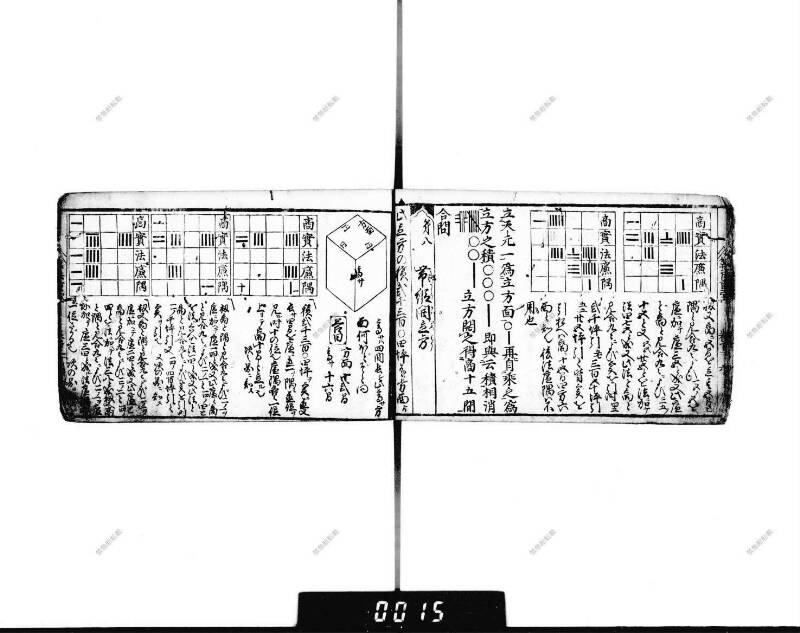
次之図 ̄ニ知 ̄ス
〽扨商と隅と見合九々 ̄ニよび《割書:一一》 ̄ノ一 ̄ヲ
廉 ̄ニ加へ ̄テ廉一四と成又此廉と商
と見合九々 ̄ニよび《割書:一一》 ̄ノ一と《割書:一四》 ̄ノ四と
を法 ̄ニくはへて法一四と成又此法と
商と見合九々 ̄ニよび実を引時
《割書:一一》 ̄ノ千坪引又《割書:一四》 ̄ノ四百坪引と
実 ̄ヲ引也 又次の図 ̄ニ知 ̄ス
〽扨又商と隅と見合九々 ̄ニ《割書:一一》よび
廉 ̄ニ加へ ̄テ廉二四と成又此廉と
商と見合九々 ̄ニよび《割書:一二》 ̄ノ二と《割書:一四》 ̄ノ
四とを法 ̄ニ加へ ̄テ法三八と成扨又商
と隅と見合九々 ̄ニよび《割書:一一》 ̄ノ一 ̄ヲ廉
に加へ ̄テ廉三四と成 ̄ル法廉□
一位さがる也 次の図 ̄ニ
現代語訳
さて又商に又5間を立てる。その5間と隅とを見合わせて九々により1×5の5を廉に加えて廉35となる。又この廉と商とを見合わせて九々により3×5の15又5×5の25とを法に加えて法475となる。又この法と商とを見合わせて九々により実を引く時、4×5の2,000坪引き、5×7の350坪引き、5×5の25坪引きと皆実を引き相えば、商に15間四方六面と知るなり。後の法・廉・隅は不用なり。
天元一を立てて立方面とし、再び自乗してこれを立方の積とする。即ち云う積と相消する。これを立方開して商15間を得る。問いに合う。
《題:第八 帯縦開立法(たいじゅうかいりつほう)》
▲この立方の積2,304坪がある。方面より高さは4間長い。この高さ、方面はどの程度かと問う。
答え曰く《方面22間、高さ16間》
〽積2,304坪を実に置く。又長さ4間を廉に置く。1を隅に置く。位を見る時、十の位なり。廉・隅各々一位上げて商10間と立てるなり。
次の図に知らす。
〽さて商と隅とを見合わせて九々により1×1の1を廉に加えて廉14となる。又この廉と商とを見合わせて九々により1×1の1と1×4の4とを法に加えて法14となる。又この法と商とを見合わせて九々により実を引く時、1×1の1,000坪引き、又1×4の400坪引きと実を引くなり。又次の図に知らす。
〽さて又商と隅とを見合わせて九々により1×1を廉に加えて廉24となる。又この廉と商とを見合わせて九々により1×2の2と1×4の4とを法に加えて法38となる。さて又商と隅とを見合わせて九々により1×1の1を廉に加えて廉34となる。法・廉□一位下がるなり。次の図に
英語訳
Now again establish another 5 ken in the quotient. Compare this 5 ken with the corner using the multiplication table to add 5 from 1×5 to the auxiliary divisor (廉), making it 35. Again compare this auxiliary divisor with the quotient using the multiplication table to add 15 from 3×5 and 25 from 5×5 to the divisor, making it 475. Again compare this divisor with the quotient using the multiplication table to subtract from the dividend: subtract 2,000 tsubo from 4×5, subtract 350 tsubo from 5×7, subtract 25 tsubo from 5×5. When all are subtracted from the dividend and balanced, we know the quotient is 15 ken on four sides and six faces. The subsequent divisor, auxiliary divisor, and corner are not needed.
Establish the unknown quantity (天元) as 1 for the cubic face, square it again to make it the cubic volume. It cancels with the stated volume. Opening this by cube root extraction yields a quotient of 15 ken. This matches the problem.
《Title: Eighth Section - Strip Vertical Cube Root Extraction Method (taijū kairitsu-hō)》
▲There is a cubic volume of 2,304 tsubo. The height is 4 ken longer than the square face. What are this height and square face?
Answer: 《Square face: 22 ken, Height: 16 ken》
〽Place the volume of 2,304 tsubo in the dividend. Also place the length of 4 ken in the auxiliary divisor. Place 1 in the corner. When examining the place values, it is the tens place. Raise both the auxiliary divisor and corner by one place and establish 10 ken in the quotient.
This is shown in the next diagram.
〽Now compare the quotient with the corner using the multiplication table to add 1 from 1×1 to the auxiliary divisor, making it 14. Again compare this auxiliary divisor with the quotient using the multiplication table to add 1 from 1×1 and 4 from 1×4 to the divisor, making it 14. Again compare this divisor with the quotient using the multiplication table to subtract from the dividend: subtract 1,000 tsubo from 1×1, and subtract 400 tsubo from 1×4 from the dividend. This is also shown in the next diagram.
〽Now again compare the quotient with the corner using the multiplication table of 1×1 to add to the auxiliary divisor, making it 24. Again compare this auxiliary divisor with the quotient using the multiplication table to add 2 from 1×2 and 4 from 1×4 to the divisor, making it 38. Now again compare the quotient with the corner using the multiplication table to add 1 from 1×1 to the auxiliary divisor, making it 34. The divisor and auxiliary divisor □ descend by one place. Next diagram shows