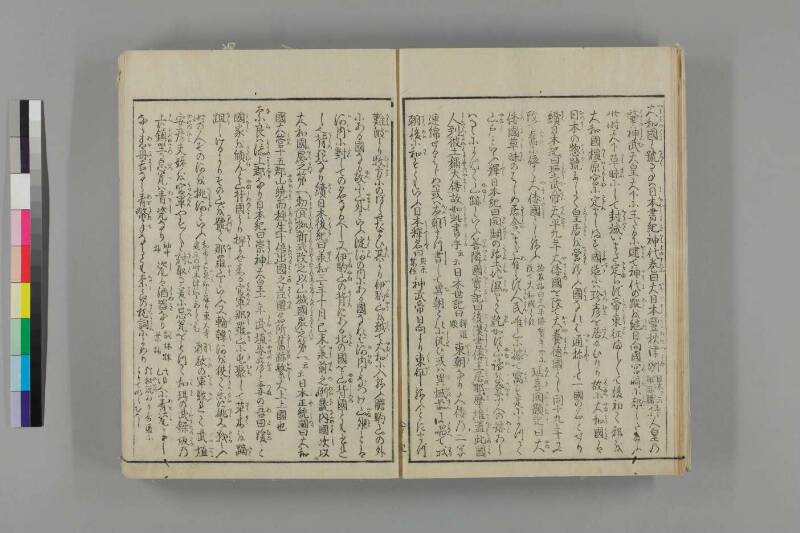
翻刻
【右丁】
大和國(やまとのくに)と號(なづく)る事は日本書紀(にほんしよき)神代巻(かみよのまきに)曰 大日本豐秋津洲(おほやまととよあきつしま)《割書:日本 ̄ヲ云_二|耶麻騰(やまと)_一》抑人皇の
肇(はしめ)神武天皇(しんむ )天下に王たるに逮(およん)て神代(かみよ)の蹤(あと)を継(つぎ)日向國 宮﨑(みやさき)に都(みやこ)したまふ
此時天下 草昧(さうまい)にして封域(ほういく)いまだ定(さだま)らず帝(みかど)東征(とうせい)まし〳〵て後初て都を
大和國 橿原宮(かしはらのみや)に定(さだめ)まします《振り仮名:國造|みやづこ》には珍彦(うつひこ)を居(すへ)給ひけり故(かるがゆへ)に大和國(やまとのくに)は
日本(ひのもと)の惣號(そうがう)にして皇居(くはうきよ)を営(いとなみ)給ふ國(くに)なれば通称(つうしやう)して一国の名とせり
続日本紀(そく ) ̄ニ曰 聖武帝(しやうむてい)天平九年(てんひやう )大倭國(やまとの )を𨸩て大養德國(おほやまとの )とし同十九年又
𨸩て𦾔(ふるき)に依て大倭國(やまとのくに)とし給ふ《割書:拾芥抄曰天平勝寳年中に|𨸩て大和國とす》延喜開題記(ゑんきかいたいのき) ̄ニ曰 大(やま)
倭國(とのくに)草昧(さうまい)のはじめ居舎(きよしや)いまだ有(あ)らず人民(にんみん)唯(たゞ)山に據(よつ)て寓(くう)#1す是によつて
山戸(やまと)といふ釋日本紀(しやく ) ̄ニ曰 開闢(かいひやく)の始(はしめ)土地(とち)濕(しめ)りて乾(かは)かず山路(やまぢ)を登(のぼる)に人の跡(あと)あら
はるゝによつて山跡(やまと)といふ善隣國寳記(せんりんこくほうきに)曰 後漢書(ごかんしよ)倭王(わわう)居(きよす)_二耶麻堆(やまとに)_一蓋(けだし)此(この)國(こく)
人(しん)到(いたつて)_二彼土(かのとに)_一稱(しやうす)_二大倭(やまとゝ)_一故 ̄ニ《振り仮名:如_レ此|ことく かくの》書(しよする)乎《割書:云云》日本世記曰《割書:釋道|顕》東朝(やまと)なり大倭の二字
連綿せるはじめは或は本朝(ほんてう)まづ書(しよ)して異朝(ゐ )これに従(したが)ひ或は異域(ゐいき)前(まへ)に唱(となへ)て我(わが)
朝(てう)後(のち)に和(わ)すともいふ日本釋名( しやくみやう) ̄ニ曰《割書:貝原|篤信》神武帝日向より東征(とうせい)し給ふときまづ
【左丁】
難波(なには)より牧方(ひらかた)#2にのぼらせたまひ其(それ)より伊馰山(いこまやま)#3を越(こへ)て大和(やまと)に入給ふ膽馰山の外
にある國なる故(ゆへ)に山外(やまと)といふ淀河(よとかは)の内にある國なれば河内(かはち)となづけ山外(やまと)とは
河内(かはち)に對しての名なるべし又 伊馰山(いこまやま)の背(うしろ)にある北(きた)の國を山背國(やましろの )とも書れ
し也 背(うしろ)は北なり續日本後紀(そく こうき ) ̄ニ曰《振り仮名:𣴎和|せうは》三年十月己未《振り仮名:𣴎前之例|せうせんのれい》畿内國次(きないのこくし)以_二
大和國 ̄ヲ_一處(をく)_二之(これを)第一 ̄ニ_一勅(ちよくすらく)冝(よろしく|べし )_下拠(よつて)_二新式(しんしきに)_一𨸩(あらためて)_レ之(これを)以(もつて)_二山城國(やましろのくにを)_一處(をく)_上二之(これを)第一 ̄ニ_一《割書:云云》日本正統圖( しやうとうのづ)曰大和
國 大管( くはん)十五郡 山繞而(やまめくりて)種(たなりの)生(なる)《返り点:二》十倍( はい)_一出(いつる)_二國之差圖(くにのさしつに)_一名所《振り仮名:𦾔跡|きうせき》繁大(おほし)上上國也
奈良(なら)は添上郡(そうのかみこほり)なり日本紀曰 崇神天皇(すうしん )十年 武埴安彦(たけはにやすひこ)と妻(つま)の吾田媛(あたひめ)と
國家を頎(かたむけ)#4んと山背國(やましろのくに)より押(をし)よせ来る官軍(くはんくん)那羅山(ならやま)に屯聚(たむろ)して草木(さうもく)を蹢(ふみ)
跙(なら)しけるよりその山を號(なづけ)て那羅山(ならやま)といふ又 輪韓河(わから )を挾(さしはさん)て互(たかひ)に挑(いど)み戦(たゝか)ふ
时の人その河を挑河(いとみかは)といふ《割書:和哥には泉河(いつみ )と詠り東大寺|建立の时木津河とあらたむ》朝歒(てうてき)の軍(いくさ)敗(やふ)れて武埴(たけはに)
安彦(やすひこ)夫婦を官軍(くはんぐん)やす〳〵と討取(うちと)る爰(こゝ)に忌瓮(いつへ)をもつて和珥(わに)の武鐰坂(たけすきのさか)の
上(うへ)に鎭㘴(しづめまつ)る忌瓮(いつへ)は青瓷(あをし)なり《割書:袖中|抄》瓷(し)は酒器(しゆき)なり《割書:詞林採|葉抄》此ゆへに青瓷(あをに)よし
なら《振り仮名:青丹𠮷|あをによし》なら青幣手(あをにきて)ならとも奈良(なら)の枕詞(まくらことは)によめり《割書:猶 秘説(ひせつ)あり哥道に|よりて明らむへし》
現代語訳
【右丁】
大和国(やまとのくに)と名づける理由は、日本書紀の神代巻に「大日本豊秋津洲(おほやまととよあきつしま)」とあり(日本を「やまと」という)、そもそも人皇の始めである神武天皇が天下に王となられた時、神代の跡を継がれ、日向国宮崎に都を置かれた。この時、天下は草創期で国境もまだ定まらず、帝が東征された後、初めて都を大和国橿原宮に定められた。国造には珍彦(うつひこ)を置かれた。それゆえ大和国は日本の総称であり、皇居を営まれる国なので、通称として一国の名としている。
続日本紀によると、聖武帝の天平9年に大倭国を改めて大養徳国とし、同19年にまた改めて旧に依って大倭国とされた(拾芥抄によると天平勝宝年中に改めて大和国とした)。延喜開題記によると、大倭国は草創期の始め、住居もまだなく、人民はただ山によって穴居していた。これによって「山戸(やまと)」という。釈日本紀によると、天地開闢の始め、土地が湿って乾かず、山路を登るのに人の足跡が現れるので「山跡(やまと)」という。善隣国宝記によると、後漢書に「倭王は耶麻堆(やまと)に住む」とある。おそらくこの国の人がかの土に至って「大倭(やまと)」と称するゆえに、このように書くのである(云々)。日本世記(釈道顕)によると「東朝(やまと)」であり、大倭の二字が連綿と続くのは、或いは本朝がまず書いて異朝がこれに従い、或いは異域が前に唱えて我が朝が後に和したともいう。日本釈名(貝原篤信)によると、神武帝が日向より東征された時、まず
【左丁】
難波より枚方に上られ、それより生駒山を越えて大和に入られた。生駒山の外にある国なるゆえに「山外(やまと)」という。淀川の内にある国なれば「河内(かわち)」と名づけ、「山外(やまと)」とは河内に対しての名であろう。また生駒山の背後にある北の国を「山背国(やましろのくに)」とも書いた。背は北のことである。続日本後紀によると、承和3年10月己未、従前の例により、畿内の国次を大和国を第一に置くとの勅があったが、新式により改めて山城国を第一に置くこととした(云々)。日本正統図によると、大和国は大官十五郡、山に囲まれて種が十倍も生える。国の差図より出ている名所旧跡は多く、上上国である。
奈良は添上郡である。日本紀によると、崇神天皇10年、武埴安彦とその妻吾田媛が国家を傾けようと山背国より押し寄せて来た。官軍が奈良山に陣取って草木を踏み均したので、その山を「那羅山(ならやま)」と名づけた。また泉川(木津川)を挟んで互いに挑み戦った。時の人はその川を「挑川(いどみがわ)」という(和歌には泉川と詠み、東大寺建立の時木津川と改めた)。朝敵の軍は敗れて武埴安彦夫婦を官軍がやすやすと討ち取った。ここに忌瓮(いつべ)をもって和珥の武鋤坂の上に鎮祭した。忌瓮は青磁である(袖中抄)。磁は酒器である(詞林采葉抄)。このゆえに「青丹よし奈良」「青幣手奈良」とも奈良の枕詞に詠まれている(なお秘説があり、歌道によって明らかにすべきである)。
英語訳
【Right Page】
The reason for naming it Yamato Province (Yamato no kuni) is found in the Nihon Shoki's Age of Gods chapter, which mentions "Great Japan, the fertile island of dragonflies (Ōyamato Toyoakitsushima)" (Japan is called "Yamato"). Originally, when Emperor Jinmu, the first human emperor, became ruler of the realm, he continued the traces of the age of gods and established his capital at Miyazaki in Hyuga Province. At this time, the realm was in its nascent stage and borders were not yet established. After the emperor's eastern expedition, he first established his capital at Kashihara Palace in Yamato Province. He appointed Utsuhiko as provincial governor (kuni no miyatsuko). Therefore, Yamato Province represents the general name for Japan and is the province where the imperial residence is established, so it became known by this common name as the name of one province.
According to the Shoku Nihongi, in the 9th year of Tenpyō under Emperor Shōmu, Ōyamato Province was changed to Ōyōtoku Province, and in the 19th year of the same era, it was changed back to Ōyamato Province following the old usage (according to Shūgaishō, it was changed to Yamato Province during the Tenpyō-shōhō era). According to the Engi Kaitaiki, in the early days of Ōyamato Province's founding, there were no dwellings yet, and people simply lived in caves in the mountains. This is why it was called "Yamato" (mountain door). According to Shaku Nihongi, at the beginning of heaven and earth's creation, the land was wet and would not dry, and when climbing mountain paths, human footprints would appear, hence it was called "Yamato" (mountain traces). According to Zenrin Kokuhōki, the Later Han Chronicles state that "the Wa king resides in Yamatai." Presumably, when people from this country reached that land, they called it "Ōyamato," which is why it is written this way. According to Nihon Seiki (by Shaku Dōken), it means "Eastern Court (Yamato)," and the continuous use of the two characters for Ōyamato began either when our court first wrote it and foreign courts followed, or when foreign regions first proclaimed it and our court later adopted it. According to Nihon Shakumyō (by Kaibara Atsushin), when Emperor Jinmu conducted his eastern expedition from Hyuga, he first...
【Left Page】
...went up from Naniwa to Hirakata, then crossed Mount Ikoma to enter Yamato. Because it is a province outside Mount Ikoma, it is called "Yamato" (mountain exterior). Since it is a province within the Yodo River, it is named "Kawachi" (river interior), and "Yamato" (mountain exterior) would be a name in contrast to Kawachi. Also, the northern province behind Mount Ikoma was written as "Yamashiro Province" (mountain back). "Back" means north. According to Shoku Nihon Kōki, in the 3rd year of Jōwa, 10th month, day of kinoe-uma, following previous precedent, there was an imperial edict to place Yamato Province first among the Kinai provinces, but it was changed according to new regulations to place Yamashiro Province first. According to Nihon Seitōzu, Yamato Province has fifteen major districts surrounded by mountains where crops grow ten times more abundantly. Famous places and historical sites emerging from the province's geographical features are numerous, making it a superior province of the highest rank.
Nara is in Sōnokami District. According to Nihon Shoki, in the 10th year of Emperor Sujin, Takehani Yasuhiko and his wife Ata-hime attempted to overthrow the state and advanced from Yamashiro Province. Government forces camped at Mount Nara and trampled down the grass and trees, flattening them, which is why that mountain was named "Nara-yama" (flattening mountain). They also challenged and fought each other across the Izumi River. People of that time called that river "Idomi-gawa" (Challenge River) (in waka poetry it is composed as Izumi River, and when Tōdaiji was built, it was changed to Kizu River). The rebel army was defeated and government forces easily defeated and killed Takehani Yasuhiko and his wife. Here, sacred ritual vessels (itsube) were used to enshrine them at the top of Takesuki Hill in Wani. The itsube were blue porcelain (according to Shūchūshō). Porcelain refers to sake vessels (according to Shirinzaiyōshō). For this reason, "Aoni yoshi Nara" (blue-green excellent Nara) and "Aonkite Nara" are used as pillow words for Nara in poetry (there are still secret explanations that should be clarified through the way of poetry).