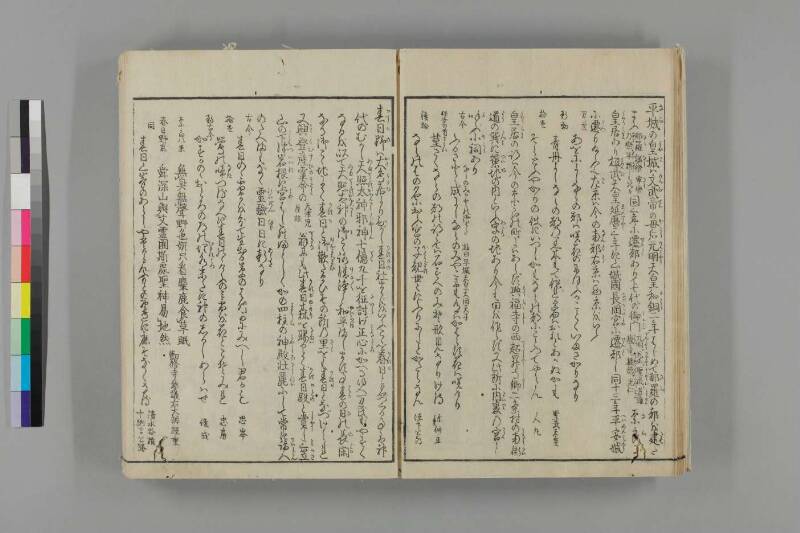
翻刻
【右丁】
平城(なら)の皇城(みやこ)は文武帝(もんむてい)の母后(ほこう)元明天皇(けんみやう )和銅二年(わとう )はじめて那羅(なら)の都を建(たて)た
まふ《割書:那羅(なら)諾樂(なら)寕樂(なら)|乃樂(なら)平(なら)楢(なら)ともいへり》同三年に遷都(せんと)ありて七代の御門(みかど)《割書:元明(げんみやう)。元正(けんしやう)。聖武(しやうむ)。孝謙(こうけん) |癈帝(はい )。稱德(しやうとく)。光仁(くはうにん)》奈良(なら)に
皇居(くはうきよ)あり桓武天皇(くはんむ )延暦三年(ゑんりやく )に山城國 長𫝍宮(ながをかのみや)に還都(せんと)し同十三年 平安城(へいあんじやう)
に遷(うつ)り給ふ也 左京(さ )は今の南都(なんと)右京(う )は西京をいふ
《割書:万葉》
あをによしならの都は咲花のにほふかことくいまさかりなり
《割書:新勅》
青丹よしならの都の黒木もて作れる宿はおれとあかぬかも 聖武天皇
《割書:拾遺》
そらとふやかりの使にいつしかもならの都にことつてやらん 人丸
皇居(くはうきよ)の跡は今の奈良の町にはあらず興福寺(こうふくじ)の西 超昇寺郷(てうしやうしがう)二条村の南(みなみ)街(かい)
道(たう)の巽(たつみ)に《振り仮名:築地の内|ついぢ 》といふ字(あさな)の地あり今も田を作らず又此所に《振り仮名:内裏の宮|たいり み□#1》と
呼(よ)ぶ小祠(ほこら)あり
《割書:古今》 《割書:ならのみかとの御うた 抄曰平城天皇大同天子》
ふるさとゝ成にしならのみやこにも色はかはらす花は咲けり
《割書:保安百首すみれ》
菫さくならの都の跡とては石すへのみそ形見なりける 源仲正
《割書:讀拾》
ならのはの名におふ宮の子䂓世〻にふりにしことかたらなん 法印公朝
【左丁】
春日野(かすかの)は大鳥居(おほとりゐ)よりひがし春日社(かすがの )までをいふこゝを春日(かすが)と名づくる事は神
代のむかし天照太神(あまてらすおほんかみ)邪神(じやしん)七億九千( をく )を征討(たいら)げ正心(みなこゝろ)にかへるゆへ万民もやすく
なるを以て天照太神(あまてらすおほんかみ)の御(み)こゝろ清浄(すか〳〵)と和平(やはらぎ)まします事 春(はる)の日(ひ)の長閑(のどか)
なる御こゝ地にて春日(かすか)と御歡(おんよろこび)たまひその所の里(さと)をも春日(かすが)となづけられ
又《振り仮名:興登産霊𠇭|こゝとむすひのみこと》の《割書:天津児|屋根》翁(をきな)にも此 春日森(かすがのもり)を賜(たまは)りて春日殿(かすかとの)と賞(しやう)し三笠(みかさ)
山の下津岩根(しもついはね)に宮(みや)はしらふとしくかの四柱(よはしら)の神殿(みやしろ)壯麗(さうれい)にして常に詣人(けいじん)
のたへまもなく霊驗(れいげん)日日(ひゞ)に新(あらた)なり
《割書:古今》
春日のゝ雪まを分て生出る草のはつかにみへし君かも 忠岑
《割書:拾遺》
鶯の啼(なき)つるなへに春日のゝけふのみ雪を花とこそみれ 忠房
《割書:新古今》
かすかのゝおとろの道の埋水(むもれみつ)末たに神のしるしあらはせ 俊成
《割書:奈良八景》 無_レ臭無_レ聲野色妍只看麋鹿食_レ草眠
《割書:春日野鹿》 舜深山與_二文霊囿_一斯處聖神易《返り点:レ》地然 勸修寺參議右大辨經重
《割書:同》
春日山峯のあらしや寒からんふもとの野邊に鹿そなくなる《割書:清水谷権|中納言公勝》
現代語訳
【右丁】
平城(奈良)の都は、文武天皇の母后・元明天皇が和銅二年(709年)に初めて奈良の都を建てられた。
※(「那羅」「諾楽」「寧楽」「乃楽」「平」「楢」とも書く)
同三年に遷都があり、七代の帝(元明・元正・聖武・孝謙・廃帝・称徳・光仁)が奈良に
皇居を置いた。桓武天皇が延暦三年(784年)に山城国の長岡宮へ還都し、同十三年(794年)に平安城へ
お遷りになった。左京とは今の南都(奈良)のことで、右京とは西京のことをいう。
【万葉集より】
青丹よし 奈良の都は 咲く花の にほふがごとく 今盛りなり
【新勅撰集より】
青丹よし 奈良の都の 黒木もて 作れる宿は 居れど飽かぬかも 聖武天皇
【拾遺集より】
空飛ぶや 雁の使いに いつしかも 奈良の都に 言伝てやらん 人丸
皇居の跡は今の奈良の町ではなく、興福寺の西・超昇寺郷・二条村の南の街道の東南(巽)の方角に「築地の内」という字(あざ)の地がある。今も田を作らず、またこの場所に「内裏の宮」と呼ぶ小さなほこらがある。
【古今集より】 (奈良の帝の御歌 抄に曰く、平城天皇・大同天子)
ふるさとと 成りにし奈良の 都にも 色は変わらず 花は咲けり
【保安百首・すみれ より】
すみれ咲く 奈良の都の 跡とては 石据えのみぞ 形見なりける 源仲正
【読人知らず・拾遺より】
奈良の葉の 名に負う宮の 子よ 代々に 古りにし事 語らなん 法印公朝
---
【左丁】
春日野は大鳥居から東・春日社までをいう。ここを「春日」と名づけた事の由来は、神代の昔、天照大神が邪神七億九千を征討・平らげ、正しい心(正心)に返らせたゆえに万民も安らかになったことによる。天照大神のお心が清らかで和やかでいらっしゃることは、春の日の長閑なお心持ちのようであるとして「春日」と御歡びになり、その土地の里をも「春日」と名づけられた。
また「興登産霊の命(ことむすびのみこと)」の天津児屋根の翁にも、この春日の森を賜って「春日殿」と称し、三笠山の下つ岩根に宮柱ふとしく立てて、かの四柱の神殿は壮麗であり、常に参詣人の絶え間もなく、霊験は日々に新たである。
【古今集より】
春日野の 雪間を分けて 生い出でる 草のはつかに 見えし君かも 忠岑
【拾遺集より】
鶯の 鳴きつるなへに 春日野の 今日のみ雪を 花とこそ見れ 忠房
【新古今集より】
春日野の おどろの道の 埋れ水 末たに神の しるしあらはせ 俊成
【奈良八景:春日野の鹿】(漢詩)
臭い無く声無く 野の色は美しく
ただ麋鹿の草を食み眠るを看るのみ
深山は文の霊囿(れいゆう)と同じく
この聖なる地に神は易えやすし
勧修寺参議右大弁経重
【同・和歌】
春日山 峯のあらしや 寒からん ふもとの野辺に 鹿ぞ鳴くなる 清水谷権中納言公勝
英語訳
【Right Page】
The imperial capital of Heijō (Nara) was first established in Nara in the second year of Wadō (709) by Empress Genmei, the mother of Emperor Monmu.
※ (Also written as "Nara" in various characters: 那羅, 諾楽, 寧楽, 乃楽, 平, 楢)
The capital was transferred there in the third year of Wadō, and seven successive emperors (Genmei, Genshō, Shōmu, Kōken, the Deposed Emperor, Shōtoku, and Kōnin) maintained their imperial residence in Nara. Emperor Kanmu relocated the capital to Nagaoka Palace in Yamashiro Province in the third year of Enryaku (784), and in the thirteenth year (794) moved again to Heiankyō (Kyoto). The Left Capital refers to what is now Nanto (Nara), and the Right Capital refers to Saikyō (the western section).
【From the Man'yōshū】
Like the fragrance of blossoming flowers—
The capital of Nara, beautiful with blue earth,
Is now at the height of its glory.
【From the Shin Chokusen-shū, by Emperor Shōmu】
The lodging built with black timber
In the capital of Nara, beautiful with blue earth—
How I could dwell there forever, never tiring of it.
【From the Shūi-shū, by Hitomaro】
O wild geese flying through the sky—
When at last will you carry my message
To the capital of Nara?
The site of the former imperial palace is not in the present town of Nara. To the west of Kōfukuji, in the Chōshōji district, to the south of Nijō village, there is a place southeast (in the direction of the "tatsumi") on the road known by the place-name "Tsuiji no Uchi" (Inside the Earthen Wall). Even today no rice paddies are cultivated there, and in this location stands a small shrine called "Dairi no Miya" (Shrine of the Imperial Palace).
【From the Kokinshū】 (An imperial poem by the Emperor of Nara; according to annotations, Emperor Heijō, the Daidō Emperor)
Even in Nara, which has become a place of old memories,
The blossoms bloom unchanged in their color.
【From the Hōan Hyakushu, "violet" section, by Minamoto no Nakamasa】
Of the once-great capital of Nara where violets bloom,
All that remains as a keepsake now
Are the stones set in the ground.
【From the Shūi-shū (Anonymous), by Hōin Kōchō】
O children of the palace, bearing the proud name of the nara tree—
Let us speak of things long past,
Down through the generations.
---
【Left Page】
Kasugano (the Kasuga Plain) refers to the area from the great torii gate eastward to Kasuga Shrine. The reason this place is called "Kasuga" traces back to the age of the gods, when Amaterasu Ōmikami subdued 790,000 evil spirits and returned all hearts to righteousness, bringing peace to the people. Because Amaterasu's heart was pure and serene—like the warmth and tranquility of a spring day—the place was named "Kasuga" (Spring Day), and the villages of that land were likewise called Kasuga.
Furthermore, the deity Kotomubi no Mikoto (of the Ameno Koyane lineage) was granted this Kasuga Forest and honored it as "Kasuga-dono," and at the foot of Mount Mikasa, the shrine pillars were erected firmly upon the bedrock. The four-deity shrine is magnificent, and worshippers visit in an unceasing stream, with divine miracles renewed day after day.
【From the Kokinshū, by Tadamine】
Making their way through the gaps in the snow
On the spring fields of Kasuga—
Were you perhaps that fleeting glimpse of green?
【From the Shūi-shū, by Tadafusa】
Just as the warbler begins to sing
On the spring fields of Kasuga,
Today's snow becomes as blossoms.
【From the Shin Kokinshū, by Toshinari (Fujiwara no Shunzei)】
Along the tangled path of Kasugano,
Beneath the buried spring waters—
May the gods' signs be revealed at last.
【Nara Hakkei (Eight Views of Nara): Deer of Kasugano】 (Chinese poem)
No scent, no sound—the colors of the plain are beautiful,
One merely watches the deer graze and sleep.
Deep mountains like the sacred gardens of the ancients,
In this holy place, the gods dwell with ease.
Kanjūji Sangi Udaiben Tsuneshige
【Same theme, waka poem】
At the foot of Mount Kasuga,
Where deer cry out on the autumn moors—
How cold must the storm be, raging at the peak!
Shimizudani Gon-chūnagon Kimitsu