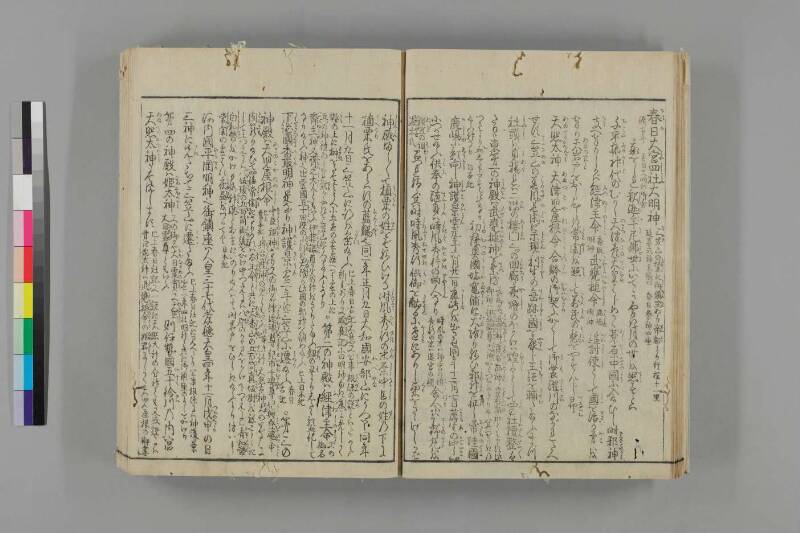
翻刻
【右丁】
春日大宮四社大明神(かすか みやししや )《割書:三笠山(みかさ )の麓(ふもと)に御鎭㘴(こちんざ)あり帝都(ていと)より行程十一里|延喜式神名帳曰 春日祭神四𫝶》
《割書:續古今》 《割書:春日大明神御哥》
我をしれ釈迦牟尼佛(しやかむにほとけ)世(よ)にいてゝさやけき月の世を照(てら)すとは
千早振(ちはやふる)神代(かみよ)のむかし天津彦天皇(あまつひこのすべらき)はじめて葦原中國(あしはらなかつくに)に入給ひし时 邪神(さらへなすかみ)
支(さゝ)へ奉りしかば經津主命(ふつぬしのみこと)《割書:香取|明神》武甕槌命(たけみかつちのみこと)《割書:鹿嶋(かしま)|明神》追討使(ついたうし)として國を治(おさう)る矛(ほこ)を
奉り天岩戸(あまのいはと)をおしひらき常闇(とこやみ)を照(てら)して萬民(はんみん)の愁(うれひ)をやすんじ即(すなはち)
天照太神(あまてるおほんかみ)天津児屋根命(あまつこやねのみこと)合躰(かつたい)の御契(おほんちきり)ふかくして御裳濯川(みもすそかは)のながれたへ
せず三笠山(みかさやま)の春風(はるかぜ)長閑(のどか)に示現(じげん)利生(りしやう)の垂跡(すいしやく)は國(くに)を康(やすん)じ王法(わうほう)を輔(たすけ)たまふまづ
社頭(しやとう)を見揚(みあぐ)れば二階( かい)の樓門(ろうもん)三ッの囬廊(くはいろう)夜燈(やとう)のほかけは煌々(くはう〳〵)として四(よつ)の社檀(しやだん)整々(せい〳〵)
たり◦東第一の神殿(しんてん)は武甕槌神(たけみかつちのしん)を祭(まつ)る《割書:又の御名。武雷神(たけいかつちのしん)。建布都神(たてふつのしん)。豊布都神(とよふつの )とも申す此|御神は伊弉諾尊(いさなきのみこと)火神(ひのかみ)かぐつちをきり給ふ其つるきの》
《割書:つばより血(ち)したゞりそゝぎてなり|給ふ神なり 日本紀》初(はしめ)は陸奥國(むつのくに)《振り仮名:塩𥧄浦|しほかまのうら》に天降(あまくだ)り給ひ邪神(しやしん)を征(せい)し常陸國(ひたちのくに)
鹿嶋(かしま)に影向(ゑうがう)し神護景雲(しんごけいうん)元年六月廿一日 鹿嶋(かしま)を出させ同年十二月七日 薦生(こもふ)の中山(なかやま)
につかせ給ふ供奉(くふ)の随身(すいじん)は時風(ときふう)秀行(ひてゆき)の兩人(りやうにん)なり《割書:時風の末は神宮の預(よ)|秀行の末は造宮の預》舎人(とねり)には乙野丸(をとのまる)を
《割書:禰宜(ねぎ)の祖(そ)|《振り仮名:𣒫木氏|むめのき 》》召つれ給ふ其时 時風(ときふう)秀行(ひてゆき)供脚(くご)を献(たてまつ)るに邊(ほとり)にありし栗(くり)をさゝげしかば
【左丁】
神感(しんかん)まし〳〵て植栗(うへくり)の姓(せい)をぞ給ひける时風(ときふう)秀行(ひでゆき)の末葉(ばつよう)中臣(なかとみ)の姓(せい)の下に
植栗氏(うへくり )をあらはすの藍觴(らんじゃう)#1也同二年正月九日大和國 安部山(あべやま)にうつり同年
十一月九日三笠山に跡を垂(たれ)給ふ《割書:已上春日古記大意又 公事根源(くじこんげん)の説(せつ)とはたがふ|所もあり又 盛衰記(せいすいき)に曰明神白き鹿(しか)にめして》
《割書:鞍(くら)の上に榊(さかき)をたて其うへに五色の雲覆へり雲の上に|五ッの神鏡あらはれ照(てり)かゝやきて三笠山にうつり給ふとなり》◦第二の神殿は《振り仮名:經津主𠇭|ふつぬしのみこと》《割書:又の|御名》
《割書:齊主神(いはひぬしの )又 齊之大人(いはひのうし)ともいふ伊弉諾尊(いさなぎの )火の神をきりたまふ釼(つるき)の刄(は)よりしたゝる血化して|なり給ふ神也出雲國 五十田挾(いそたさ)の小汀(をはま)に天降(あまくた)り此國の邪神を鎭め給ふ 已上日本紀》
下総國(しもをさのくに)香取明神(かとり )是なり神護景雲(しんごけいうん)二年に三笠山に遷(うつり)給ふ《割書:春日|古記》◦第三の
神殿は《振り仮名:天児屋根𠇭|あまのこやねのみこと》《割書:中臣祖神(なかとみのそしん)なり又の御名 津速魂尊(つはやむすひのみこと)兒市千魂尊(こいちちむすひの )《振り仮名:兒興登魂𠇭|こゝとむすびのみこと》|《割書:已上|𦾔事紀》《振り仮名:興台産神の児|こゝとむすひのかみ こ 》ともいふ《割書:日本|紀》此神天照太神《振り仮名:天の岩戸|あま 》に》
《割書:閉籠(とぢこも)り給ひて四海 常闇(とこやみ)になりけれは《振り仮名:太玉𠇭|ふとたまのみこと》と共に天香山(あまのかくやま)の五百筒眞坂樹(いをこまさかき)#2をねこしに|して上つえには《振り仮名:八坂■|やさかに》#3の《振り仮名:五百筒御■|いをかみすまる》#4をかけ中つえには八咫(やた)のかゞみをかけ下つえには青和幣(あをにきて) 》
《割書:白和幣(しらにきて)をかけもろ神達(かみたち)と相■#5にいのり給へは其时岩戸をひらき給ふよりついに|常闇(とこやみ)の雲はれ夜昼(よるひろ)をわかてり日本紀》
河内國 平𫝍明神(ひらをか )也御鎭𫝶は人皇三十七代孝德天皇四年十一月 戊申(つちのへさる)の日
三神に先(さき)たちて三笠山に遷(うつり)たまふ《割書:已上春日社記に見へたり公事根源には神護景|雲二年四社明神と共に御鎭𫝶のよしをかけり》
第四の神殿は姫太神(ひめおほんかみ)《割書:又の御名 大日霊貴(おほいるめのむち)又 天照(あまてらす)|大日霊尊( ひるめ )ともいふ》則伊㔟國 五十鈴川(いすゝかは)の内宮
天照太神(あまてるおほんかみ)にてまします《割書:已上春日社記又一説に天照太神の分神とも又或説には|第四姫太神は《振り仮名:武甕槌𠇭|たけみかつちのみこと》の姫君(ひめきみ)にして大児屋根の御妻》
現代語訳
【右丁】
**春日大宮四社大明神**(三笠山の麓に御鎮座あり。帝都より行程十一里。延喜式神名帳に曰く、春日祭神四座。)
《続古今》 《春日大明神御歌》
我を知れ、釈迦牟尼仏、世に出でて、さやけき月の、世を照らすとは
千早振る神代の昔、天津彦天皇(アマツヒコのスベラキ)が初めて葦原中国に入り給いし時、邪神が支え奉りしかば、経津主命(香取明神)・武甕槌命(鹿島明神)が追討使として、国を治める矛を奉り、天の岩戸を押し開き、常闇を照らして万民の愁いを安んじ、即ち天照大神・天津児屋根命が合体の御契り深くして、御裳濯川の流れが絶えることなく、三笠山の春風長閑に示現・利生の垂跡は、国を安んじ王法を輔けたまう。まず社頭を見上げれば、二階の楼門、三つの回廊、夜燈の灯かげは煌々として、四つの社壇が整然としている。
東の第一の神殿は武甕槌神を祭る。(又の御名、武雷神・建布都神・豊布都神とも申す。この御神は伊弉諾尊が火神・迦具土を斬り給いし、その剣のつばより血がしたたり落ちてお成りになった神なり。日本紀。)初めは陸奥国の塩竈浦に天降り給い、邪神を征し、常陸国の鹿島に影向し、神護景雲元年六月二十一日、鹿島を出られ、同年十二月七日、薦生の中山に着かせ給う。供奉の随身は時風・秀行の両人なり。(時風の末は神宮の預、秀行の末は造宮の預。)舎人には乙野丸を(禰宜の祖、梅木氏)召し連れ給う。その時、時風・秀行が供脚を献ずるに、辺りにありし栗を捧げしかば、
【左丁】
神感ましまして、「植栗」の姓を賜わりける。時風・秀行の末葉、中臣の姓の下に植栗氏を現す。これが藍觴(濫觴)なり。同二年正月九日、大和国の安倍山に移り、同年十一月九日、三笠山に跡を垂れ給う。(以上、春日古記の大意。また公事根源の説とは異なる所もあり。また盛衰記に曰く、明神は白き鹿に召されて、鞍の上に榊を立て、その上に五色の雲覆い、雲の上に五つの神鏡が現れ、照り輝いて三笠山に移り給うとなり。)
第二の神殿は経津主命。(又の御名、齋主神、また齋之大人ともいう。伊弉諾尊が火の神を斬り給う剣の刃よりしたたる血が化してお成りになった神なり。出雲国の五十田挾の小汀に天降り、この国の邪神を鎮め給う。以上、日本紀。)下総国の香取明神これなり。神護景雲二年に三笠山に遷り給う。(春日古記。)
第三の神殿は天児屋根命。(中臣祖神なり。又の御名、津速魂尊・児市千魂尊・児興登魂命。以上、旧事紀。興台産神の児ともいう。日本紀。この神、天照大神が天の岩戸に閉じこもり給いて、四海が常闇になりしかば、太玉命と共に天香山の五百筒真坂樹を根ごと掘り出して、上つ枝には八坂瓊の五百筒御統をかけ、中つ枝には八咫の鏡をかけ、下つ枝には青和幣・白和幣をかけ、諸神達と共に相謀りて祈り給えば、その時、岩戸を開き給うより、ついに常闇の雲は晴れ、夜昼を分かたず照り渡った。日本紀。)河内国の平岡明神これなり。御鎮座は人皇三十七代・孝徳天皇四年十一月戊申の日、三神に先立って三笠山に遷り給う。(以上、春日社記に見えたり。公事根源には、神護景雲二年、四社明神と共に御鎮座の由を書けり。)
第四の神殿は姫大神。(又の御名、大日霊貴、また天照大日霊尊ともいう。)則ち伊勢国・五十鈴川の内宮、天照大神にてましまします。(以上、春日社記。また一説に、天照大神の分神とも。また或る説には、第四の姫大神は武甕槌命の姫君にして、大児屋根の御妻)
英語訳
【Right Page】
**Kasuga Grand Shrine: Four-Society Great Deity**
(Enshrined at the foot of Mount Mikasa. The journey from the imperial capital is eleven ri. The Engishiki Shrine Register states: "Four seats of the Kasuga deities.")
《Zoku Kokin (poetry anthology)》 《Poem of the Kasuga Great Deity》
Know me — as the Buddha Śākyamuni, who emerged into the world, as the clear moon that illuminates all ages.
In the distant Age of the Gods, when the Emperor of Heaven (Amatsuhiko no Suberaki) first entered the Central Land of the Reed Plains (Japan), evil deities obstructed his progress. Therefore, Futsunushi no Mikoto (Katori Myōjin) and Takemikazuchi no Mikoto (Kashima Myōjin) were dispatched as subjugators. They offered the spear that pacifies the land, pushed open the Heavenly Rock Cave, illuminated the eternal darkness, and brought peace to the anxieties of all people. Thus, through the profound bond of unity between Amaterasu Ōmikami and Amano Koyane no Mikoto, just as the Mimosusoriver flows ceaselessly, and the spring breeze of Mount Mikasa blows gently, their manifestations and benevolent traces serve to pacify the land and support the imperial rule. Looking up at the shrine precincts, one sees a two-storied gate, three corridors, lantern lights glowing brilliantly in the night, and four shrines arranged in perfect order.
The **first shrine to the east** enshrines Takemikazuchi no Kami. (Other names: Takeikatsuchi no Kami, Tatefutsu no Kami, Toyofutsu no Kami. This deity was born from the blood that dripped from the guard of the sword with which Izanagi no Mikoto slew the fire deity Kagutsuchi. *Nihongi.*) The deity first descended to Shiogama-no-ura in Mutsu Province, subjugated evil deities, and then manifested at Kashima in Hitachi Province. On the twenty-first day of the sixth month of the first year of Jingo Keiun (767 CE), the deity departed from Kashima, and on the seventh day of the twelfth month of the same year, arrived at Komofu no Nakayama. The two attendants in the procession were Tokikaze and Hideyuki. (The descendants of Tokikaze became custodians of the shrine; the descendants of Hideyuki became custodians of shrine construction.) The groom (toneri) Otonomaru was brought along. (Ancestor of the negi priests; the Umeki clan.) At that time, when Tokikaze and Hideyuki presented offerings for the journey, they offered chestnuts gathered from nearby,
【Left Page】
and the deity was moved and bestowed upon them the surname "Uekuri" (Planted Chestnut). The descendants of Tokikaze and Hideyuki appear bearing the name Uekuri beneath the Nakatomi surname — this is its origin. On the ninth day of the first month of the following year (second year), the deity moved to Mount Abe in Yamato Province, and on the ninth day of the eleventh month of the same year, established traces at Mount Mikasa. (The above is a summary of the Kasuga Koki. There are also some points that differ from the explanations in the Kuji Kongen. The Seisuiki states: the deity rode a white deer, placed a sacred sakaki branch upright on the saddle, above which five-colored clouds gathered, and above the clouds five divine mirrors appeared, shining brilliantly, as the deity transferred to Mount Mikasa.)
The **second shrine** enshrines Futsunushi no Mikoto. (Other names: Iwainushi no Kami, also called Iwai no Ushi. This deity was formed from the blood that dripped from the blade of the sword with which Izanagi no Mikoto slew the fire deity. The deity descended to Isotasa-no-ohama in Izumo Province and pacified the evil deities of the land. *Nihongi.*) This is Katori Myōjin of Shimōsa Province. The deity transferred to Mount Mikasa in the second year of Jingo Keiun. (*Kasuga Koki.*)
The **third shrine** enshrines Amano Koyane no Mikoto. (Ancestral deity of the Nakatomi clan. Other names: Tsuhayamusubi no Mikoto, Koichichi Musubi no Mikoto, Koko to Musubi no Mikoto — from the *Kyūjiki*. Also called Child of Kokoto Musubi no Kami — *Nihongi*. When Amaterasu Ōmikami shut herself within the Heavenly Rock Cave and eternal darkness fell over the four seas, this deity, together with Futodama no Mikoto, uprooted a five-hundred-branched sacred sakaki tree from Mount Ama no Kagu, hung the five-hundred-strand jewels of Yasaka on the upper branches, hung the eight-span mirror on the middle branches, and hung the blue and white offerings on the lower branches. Together with all the assembled deities, they prayed in council, whereupon the rock cave was opened, and finally the clouds of eternal darkness cleared, and light shone continuously without distinction of night or day. *Nihongi.*) This is Hiraoka Myōjin of Kawachi Province. The enshrinement was on the day of Tsuchinoe-Saru (戊申) in the eleventh month of the fourth year of Emperor Kōtoku (the thirty-seventh human emperor), preceding the three other deities in transferring to Mount Mikasa. (As seen in the *Kasuga Shaki.* The *Kuji Kongen* records that in the second year of Jingo Keiun, all four shrine deities were enshrined together.)
The **fourth shrine** enshrines Hime no Ōkami. (Other names: Ōhirume no Muchi, also called Amaterasu Ōhirume no Mikoto.) This is none other than Amaterasu Ōmikami of the Inner Shrine (Naikū) on the Isuzu River in Ise Province. (The above is from the *Kasuga Shaki.* One theory holds that this deity is a divided spirit of Amaterasu Ōmikami; another theory holds that the fourth deity, Hime no Ōkami, is the daughter of Takemikazuchi no Mikoto and the consort of Amano Koyane no Mikoto.)