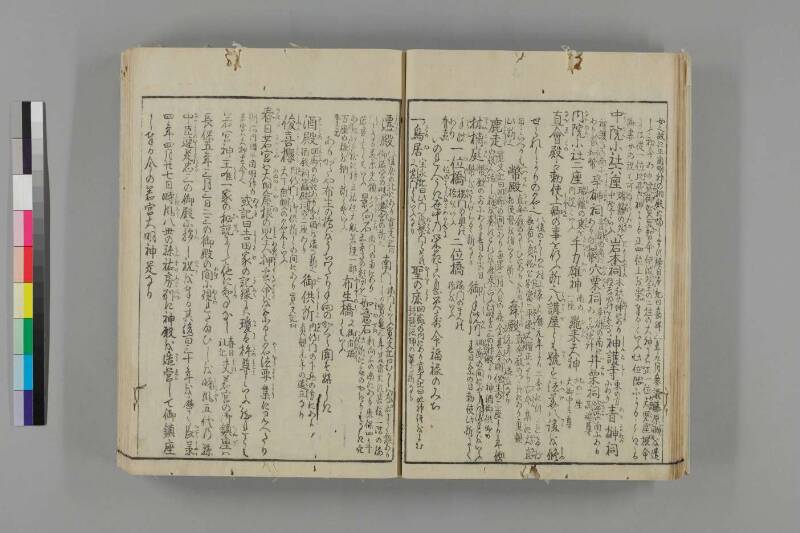
翻刻
【右丁】
《割書:女也故に平𫝍明神の相殿にまします續日本紀曰嘉祥三年九月參議 藤原助( たすく)を遣|して勅命あり《振り仮名:建御賀豆智𠇭|たけみかつち 》伊波比主(いはひぬし)の二柱の大神には正一位《振り仮名:天児屋根𠇭|あまのこやね 》》
《割書:には従一位 比賣神(ひめかみ)には正四位上を崇(あかめ)奉るといふ此 位階(ゐかい)によるときは|御妻女の説も可ならんか》
《振り仮名:中院小社六𫝶|ちうゐん 》《割書:瑞籬(みつかき)の外(そと)を|中院といふ》岩本祠(いはもとのやしろ)《割書:本社の坤(ひつしさる)にあり|住吉明神を祭る》神護寺(しんこじ)《割書:東の方|にあり》青榊祠(あをさかきの )
《割書:神護寺の南に|あり青和幣(あをにぎて)》辛榊祠(からさかきの )《割書:青榊の南に|あり白和幣(しらにぎて)》穴栗祠(あなくり )《割書:辛榊(からさかき)の南に|あり穴次神》井栗祠(いくり )《割書:穴栗(あなくり)の南にあり|高魂尊(たかむすひの )》
《振り仮名:内院小社二𫝶|ないゐん 》《割書:瑞籬(みつかき)の裏(うら)を|内院といふ》手力雄神(たちからおの )《割書:南の|一𫝶》飛来天神(ひらい )《割書:北の一座|天御中主尊》
直會殿(なをゑとの)は勅使 上卿(しやうけい)の事を行ふ所也 八講屋(はつかうや)とも號(がう)す法華八講(ほつけ かう)を修(しゆ)
せられしよりの名也《割書:八講のはしめは村上帝天暦元年より二季に行れける|長者は貞信公(ていしん )を別當(へつたう)は《振り仮名:平源大僧正|ひやうけん 》なり古今集(こきん )に大直(おほなを) 》
《割書:日といへるも|此所也》幣殿(へいてん)《割書:直會殿(なをゑ )のならひにあり祭日|勅使幣を捧らるゝ所也》舞殿(まいどの)《割書:直會殿(なをゑ )のつゝきにあり貞観|元年の造立なり》
鹿走(しゝはしり)《割書:寛文記曰 囬廊(くはいろう)の間にあり毎歳二月五日の夜 金春(こんはる)金剛(こんかう)保生(ほうしやう)の三𫝶より年預( よ)|の役人(やく )詣(けい)し翁(をきな)を奏(そう)すこれを鹿走(しゝはしり)といふ此时㐧三の神殿より神酒御供出る》
林檎庭(りんこのには)《割書:幣殿(へいてん)の前にあり春日祭の日|幣をさゝげらるゝ所なり》御手洗川(みたらしかは)《割書:囬廊(くはいろう)の間に少しき流れをいふ|春日祭の日勅使此所にて》
《割書:手洗(てうづ)|あり》一位橋( ゐはし)《割書:楼門(ろう )の奥の|槗をいふ》二位橋《割書:楼門のまへの|槗をいふ》
《割書:春日古記》 《割書:一位のはしをよめる哥に》
いのれ人うき世中の栄花には息災寿命福禄のみち
《振り仮名:一 ̄ノ鳥居| とりゐ》《割書:宝永記曰此門を《振り仮名:𣵀槃門|ねはん 》と号す|又 紫門(しもん)ともいふなり》《振り仮名:聖の床|ひしり とこ》《割書:囬廊の内にあり寛文記曰地神經をよむ|琵琶法師の篭る所なり》
【左丁】
遷殿(うつし )《割書:八講屋の北にあり寛文記曰|御造営の时 下遷宮(けせんくう)の所也》南門《割書:楼門といふ寛文記曰むかしは鳥居(とりゐ)にて額あり|しが寳亀三年夏雷火す其後二階の楼》
《割書:門となる藤原光頼|造建すともいふ》影向石(ゑうかうせき)《割書:南門の南にあり|赤童子の影向石也》如意石(によゐせき)《割書:影向石の南にあり康保四年|此所に底のかきりもなき穴》
《割書:あきける程に神主祐任大般若經一部|《振り仮名:万𫝶| ざ 》の𬒲(はらひ)を納し所とそいふ》布生橋(ふしやうのはし)《割書:又 御間橋(おあひおはし)|ともいふ》
《割書:春日古記》
ありがたや布生の槗をうちわたり手向のかくら聞そ嬉しき
酒殿(さかとの)《割書:囬廊(くはいろう)の西にあり祭酒(さいしゆ)を造る所也|酒殿祠 竈殿祠(へついとのやしろ)の二𫝶あり》御供所(ごくうしよ)《割書:内侍門(ないし )の下西の方にあり|貞観元年の造立(さうりう)なり》
俊喜櫻(しゆんきさくら)《割書:内侍門(ないし )と御供所との間にあり寛文記曰|天下無雙( ふさう)の名木といふ》
春日若宮(かすがわかみや)は天児尾根(あまのこやね)の児(みこ)《振り仮名:天押雲𠇭|あまのをしくものみこと》を祭ると名法要集(めうほうようしう)に見へたり
《割書:則河内國平𫝍明神の|若宮は天押雲命也》或記(あるき)曰《振り仮名:𠮷田家|よしたけ》の記録(きろく)には瓊々杵尊(ににきのきこと)といふ然れとも
若宮神主 唯(たゞ)一家の秘説(ひせつ)にして他に知(しる)事なし《割書:春日|社記》夫(それ)若宮の《振り仮名:御鎭𫝶| ちんざ》は
長保五年三月三日二三の御殿の間(あひた)に現(あらは)れたまひしを時風(ときふう)五代の孫
中臣連定是忠(なかとものむらしこれたゞ)三の御殿に移(うつ)し祝(のつと)を奉る其後百三十年を歴て《振り仮名:長𣴎|ちやうしやう》
四年四月廿七日 時風(ときふう)八世の孫(そん)祐房(すけふさ)別(べつ)に神殿を造営(さうゑい)して御鎭𫝶
し奉る今の若宮大明神是なり
現代語訳
【右丁】
(前ページより続き:第四姫大神は武甕槌命の姫君であり天児屋根命の奥方なり。それゆえ平岡明神の相殿にましますという説について。続日本紀に曰く、嘉祥三年九月、参議藤原助を遣わして勅命あり。建御賀豆智命・伊波比主命の二柱の大神には正一位、天児屋根命には従一位、比売神には正四位上を崇め奉るという。この位階によれば、御妻女の説も妥当であろうか。)
**中院小社六座**(瑞籬の外を中院という)
- 岩本祠(本社の南西にあり、住吉明神を祭る)
- 神護寺(東の方にあり)
- 青榊祠(神護寺の南にあり。青和幣)
- 辛榊祠(青榊の南にあり。白和幣)
- 穴栗祠(辛榊の南にあり。穴次神)
- 井栗祠(穴栗の南にあり。高魂尊)
**内院小社二座**(瑞籬の内側を内院という)
- 手力雄神(南の一座)
- 飛来天神(北の一座。天御中主尊)
直会殿は、勅使・上卿の儀式を行う所である。八講屋とも称す。法華八講を修めたことに由来する名称である。(八講の始まりは村上天皇の天暦元年より二季に行われた。長者は貞信公、別当は平源大僧正なり。古今集に「大直日」と言えるのもこの場所なり。)
幣殿(直会殿の並びにあり。祭日に勅使が幣を捧げられる場所なり。)
舞殿(直会殿の続きにあり。貞観元年の造立なり。)
鹿走(寛文記に曰く、回廊の間にあり。毎年二月五日の夜、金春・金剛・宝生の三座より年預の役人が参詣して翁を奏す。これを鹿走という。この時、第三の神殿より神酒・御供が出る。)
林檎庭(幣殿の前にあり。春日祭の日に幣を捧げられる場所なり。)
御手洗川(回廊の間に流れる小川をいう。春日祭の日に勅使がこの場所で手洗いあり。)
一位橋(楼門の奥の橋をいう。)
二位橋(楼門の前の橋をいう。)
春日古記より、一位橋を詠める歌:
祈れ人、浮き世の中の栄花には、息災寿命福禄の道
一ノ鳥居(宝永記に曰く、この門を涅槃門と号す。また紫門ともいう。)
聖の床(回廊の内にあり。寛文記に曰く、地神経を読む琵琶法師が籠る所なり。)
【左丁】
遷殿(八講屋の北にあり。寛文記に曰く、御造営の時、下遷宮の場所なり。)
南門(楼門という。寛文記に曰く、昔は鳥居にて額ありしが、宝亀三年夏に雷火す。その後、二階の楼門となる。藤原光頼が造建したともいう。)
影向石(南門の南にあり。赤童子の影向石なり。)
如意石(影向石の南にあり。康保四年、この所に底の限りもない穴が開いたとのことで、神主祐任が大般若経一部、万座の祓いを納めた所とぞいう。)
布生橋(また御間橋ともいう。)
春日古記より:
ありがたや、布生の橋を打ち渡り、手向の神楽聞くぞ嬉しき
酒殿(回廊の西にあり。祭酒を造る所なり。酒殿祠・竈殿祠の二座あり。)
御供所(内侍門の下、西の方にあり。貞観元年の造立なり。)
俊喜桜(内侍門と御供所との間にあり。寛文記に曰く、天下無双の名木という。)
**春日若宮**は、天児屋根命の御子、天押雲命を祭ると、名法要集に見えたり。(すなわち河内国平岡明神の若宮は天押雲命なり。)或る記に曰く、吉田家の記録には瓊々杵尊という。しかしながら若宮神主ただ一家の秘説にして他に知ることなし。(春日社記)
それ若宮の御鎮座は、長保五年三月三日、第二・第三の御殿の間に現れたまいしを、時風五代の孫、中臣連定是忠が第三の御殿に移して祝詞を奉る。その後百三十年を経て、長承四年四月二十七日、時風八世の孫、祐房が別に神殿を造営して御鎮座し奉る。今の若宮大明神、これなり。
英語訳
【Right Page】
(Continued from previous page: One theory states that the fourth deity, Hime-Ōmikami, is the daughter of Takemikazuchi-no-mikoto and wife of Ame-no-koyane-no-mikoto, and therefore resides in the same shrine hall as Hiraoka Myōjin. According to Shoku Nihongi, in the 9th month of Kashō 3, Consultant Fujiwara no Tasuku was dispatched with an imperial decree. Takemikazuchi-no-mikoto and Futsunushi-no-mikoto were elevated to Senior First Rank, Ame-no-koyane-no-mikoto to Junior First Rank, and Hime-no-kami to Senior Fourth Rank Upper Grade. Given these court ranks, the theory of the conjugal relationship may indeed be plausible.)
**Six Small Shrines of the Middle Precinct** (the area outside the sacred fence is called the Middle Precinct)
- Iwamoto Shrine (located to the southwest of the main shrine; enshrines Sumiyoshi Myōjin)
- Jingo-ji Temple (located to the east)
- Aosakai Shrine (located south of Jingo-ji; associated with blue cloth offerings)
- Karasakaki Shrine (located south of Aosakai Shrine; associated with white cloth offerings)
- Anakuri Shrine (located south of Karasakaki Shrine; enshrines Anatsugu-no-kami)
- Ikuri Shrine (located south of Anakuri Shrine; enshrines Takamusubi-no-mikoto)
**Two Small Shrines of the Inner Precinct** (the area inside the sacred fence is called the Inner Precinct)
- Tajikarao-no-kami (southern shrine)
- Hirai Tenjin (northern shrine; Amenominakanushi-no-mikoto)
The Naoraiden (Hall of Direct Meetings) is where ceremonies for imperial envoys and senior court officials are conducted. It is also called the Hakkōya (Eight Lectures Hall), a name derived from the performance of the Lotus Sutra Eight Lectures ceremony there. (The Eight Lectures began in the first year of Tenryaku during Emperor Murakami's reign, held twice yearly. The chief official was Teishin-kō, and the administrator was the high priest Hyōgen. The "Ōnaohi" mentioned in the Kokinshū also refers to this place.)
The Heiden (Offering Hall) (situated alongside the Naoraiden; the place where imperial envoys present offerings on festival days).
The Maidono (Dance Hall) (adjacent to the Naoraiden; constructed in the first year of Jōgan).
Shishi-bashiri (Deer Run): (According to Kanbuniki records, located between the corridors. Each year on the night of the 5th day of the 2nd month, officials from the three schools of nō—Kongō, Kanze, and Hōshō—come to perform the Okina ritual. This is called Shishi-bashiri. At this time, sacred sake and offerings are brought out from the third shrine hall.)
Ringo-no-niwa (Apple Court): (Located in front of the Heiden; the place where offerings are presented on Kasuga Festival days.)
Mitarashi River: (Refers to the small stream flowing between the corridors. On the day of the Kasuga Festival, the imperial envoy performs hand-washing ablutions here.)
Ichii-bashi (First Rank Bridge): (Refers to the bridge inside the two-story gate.)
Nii-bashi (Second Rank Bridge): (Refers to the bridge in front of the two-story gate.)
From the Kasuga Koki, a poem composed at Ichii-bashi:
"Pray, people—for in the glory of this fleeting world, may the paths of good health, long life, and prosperity be yours."
First Torii Gate: (According to Hōeiki records, this gate is called the Nirvana Gate. It is also known as the Purple Gate.)
Hijiri-no-toko (Sage's Resting Place): (Located inside the corridors. According to Kanbuniki, this is where biwa-playing monks seclude themselves to recite the Jishinkyō sutra.)
【Left Page】
Utsushidono (Transfer Hall): (Located north of the Hakkōya. According to Kanbuniki, this is the place for temporary enshrinement during shrine reconstruction.)
South Gate: (Called the Rōmon, or Two-story Gate. According to Kanbuniki, in former times it was a torii gate with a plaque, but in the summer of Hōki 3 it was struck by lightning and burned. Thereafter it became a two-story gate. It is also said to have been built by Fujiwara no Mitsuyori.)
Yōgō-seki (Manifestation Stone): (Located south of the South Gate; this is the stone upon which the Red Child deity manifested.)
Nyoi-seki (Wish-fulfilling Stone): (Located south of the Manifestation Stone. In Kōhō 4, a bottomless pit opened at this spot. It is said that the shrine administrator Suketo buried a complete set of the Mahāprajna-pāramitā Sūtra and performed a purification ritual for ten thousand seats here.)
Fushō-no-hashi (Bridge of Fushō): (Also called the Oai-no-hashi, or Meeting Bridge.)
From the Kasuga Koki:
"How wondrous! Crossing over Fushō Bridge and hearing the sacred kagura music—what joy fills my heart!"
Sakadono (Sake Hall): (Located to the west of the corridors; the place where ceremonial sake is brewed. Contains two subsidiary shrines: the Sakadono Shrine and the Kama-dono Shrine.)
Gokusho (Offerings Preparation Room): (Located below the Naishi Gate to the west; constructed in the first year of Jōgan.)
Shunki Cherry Tree: (Located between the Naishi Gate and the Offerings Preparation Room. According to Kanbuniki, this is said to be an unrivaled famous tree under heaven.)
**Kasuga Wakamiya Shrine** enshrines Ame-no-oshikumo-no-mikoto, child of Ame-no-koyane-no-mikoto, as recorded in the Myōhō Yōshū. (Namely, the Wakamiya of Hiraoka Myōjin in Kawachi Province is also Ame-no-oshikumo-no-mikoto.) According to one record, the Yoshida family records identify the deity as Ninigi-no-mikoto. However, this is a secret teaching known only to the single lineage of the Wakamiya shrine administrators and is not disclosed to others. (Kasuga Shaki)
Regarding the enshrinement of the Wakamiya: On the 3rd day of the 3rd month of Chōhō 5 (1003), the deity appeared between the second and third shrine halls. Nakatomi Murajisadakoretada, the fifth-generation descendant of Tokikaze, transferred the deity to the third shrine hall and presented liturgical prayers. After 130 years had passed, on the 27th day of the 4th month of Chōshō 4 (1135), Sukefusa, the eighth-generation descendant of Tokikaze, separately constructed a shrine hall and enshrined the deity there. This is the present Wakamiya Daimyōjin.