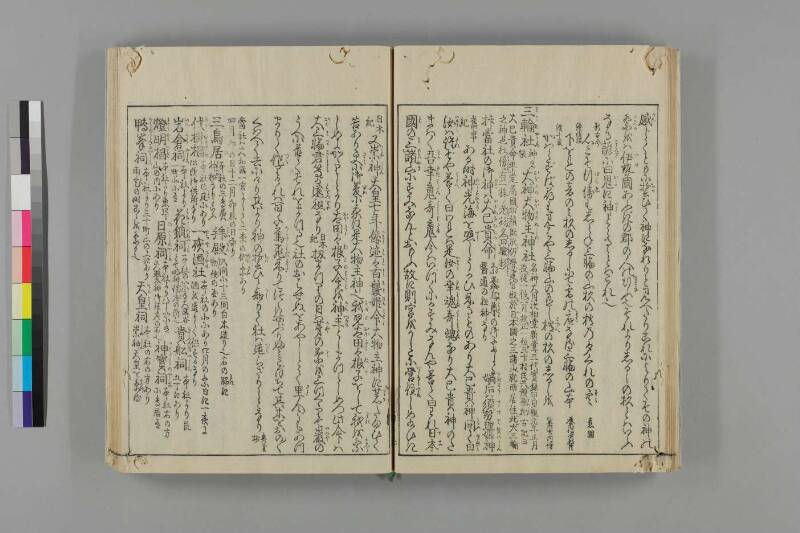
翻刻
【コマ184】
【右丁】
感(かん)じてともに誓(ちか)ひて神になれりと見へたりこれによりてその神の
祭(まつり)をは伊㔟國(いせ )あふぎの郡の人の行(をこな)ふ也それよりしるしの杦とはいふ
なる諺(ことはざ)に曰 鬼(おに)に神(かみ)とらるゝとはこれ也
《割書:新古今》
心こそ行衛(ゆくゑ)もしらね三輪の山杦の梢の夕くれの空(そら) 慈圓
《割書:續後撰》
下をれの音のみ杦のしるしにて雪の底(そこ)なる三輪の山本 藤原信実朝臣
《割書:續千載》
かはらずば尋も見はや三輪山の有し梢(こずへ)の杦のしるしを 皇后宮内侍
三輪社(みわのやしろ)《割書:神名|帳》大神大物主神社(おほかのおほものぬしの )《割書:名神大月次相甞新甞#1三代實録曰貞観元年正月|授 ̄リ_二從一位 ̄ヲ_一 二月授 ̄リ_二正一位 ̄ヲ_一 三十-村民共 ̄ニ 預_二祭祀(さいし)#3古記云》
《割書:大己貴命平-_二定萬國 ̄ヲ_一功績旣 ̄ニ成 ̄テ仍營-_二建 ̄ス宮殿 ̄ヲ於 日本國(やまと)之三諸山 ̄ニ_一就而居住 ̄ス此 ̄レ大三輪|之神也社 ̄ノ傍(かたはら) ̄ニ有_二 一株ノ老杉(らうさん)_一名 ̄テ曰_二驗杉(しるしのすきと)_一》
抑當社の御神( かみ)は大己貴命(おほあなむちのみこと)《割書:素盞烏尊(そさのをのみこと)の御子にして|醫道の祖神なり》嫡后(てきこう)は須㔟理姫神(すせりひめのしん)
《割書:𦾔事#2|記》ある时 神光(あやしきひかり)海を照(てら)しうかひ來るものあり大己貴神 問(とふ)て曰(のたまはゝ)
汝(いまし)は誰(たれ)ぞや答(こたへ)て曰われは是 汝(いまし)の幸魂奇魂(さきみたまくしみたま)なり大己貴神のた
まはく吾(わか)幸魂奇魂(さきみたまくしみたま)今はいづくにかすみなんや答て曰われ日本(やま)
國(と)の三諸山(みもろたま)にすみなんとおもふ故に則宮をかしこに営住(いとなみすま)しめ給ひき
【左丁】
《割書:日本|記》又 崇神天皇七年(しゆしん )《振り仮名:倭迹々日百襲姫𫝇|やまととともゝゑそひめみこと》大物主神に著(かゝり)たまひて
告あり更(さら)に御夢( ゆめ)に我は是大物主神也 我児(わがこ)太田々根子(おほたゝねこ)をして我を祭(まつら)
しめよかゝりしより《振り仮名:太田々根子𫝇|おほたゝねこのみこと》を神主(かんつかさ)としまつらしめつ此𫝇は
大三輪君等(おほみわきみら)が遠祖(とをつをや)なり《割書:日本|紀》扨まつりの日は茅(かや)の葉(は)を三つくゝりて巌(いわほ)の
うへに置てそれをまつる也社のおはせぬをあやしとて里人(さと )どもあつ
まりて作りければ百千《振り仮名:𭴚|からす》飛來(とびきた)りてつゝきやぶりふみこぼちて其木をおの〳〵
くはへて去にけり其より神の誓(ちか)ひと知(し)りて社は造(つく)らざりしとなり《割書:奥義|抄》
《割書:當社は大和國一宮にして二季の例祭(れいさい)あり|四月卯の日十二月卯辰の日なり》
三 ̄ツ鳥居(とりゐ)《割書:本社の三鳥居は|神秘(しんひ)なりといふ》拝殿(はいでん)《割書:五間に十三間白木造り也右の脇(わき)に|勅使の屋あり》
伐掛椙(きりかけのすき)《割書:本社の庭(には)にあり|此所御供所なり》一夜酒社(いちやさけの )《割書:本社の北にあり四月の祭日に一夜に|酒を造りて供するなり》
岩倉祠(いはくらやしろ)《割書:本社より|一町北に有》花鎮祠(はなしづめやしろ)《割書:本社の北に有大國谷|とて明神鎮座の所也》貴舩祠(きふねのやしろ)《割書:本社より艮|五丁にあり》
燈明椙(とうやうすき)《割書:本社より東四丁|山の内にあり》日原祠(ひばらのやしろ)《割書:本社より八丁北に有|天照太神御鎮座の所也》神寳祠(かんたからのやしろ)《割書:本社の右の方|に鳥居有》
鴨峯祠(かうのみねのやしろ)《割書:本社より三十町山の上にあり|雨乞( こひ)の时こゝを祭る也》天皇祠(てんわう )《割書:本社の右の方あり|崇神天皇(しゆしん )を祭(まつ)る》
現代語訳
【コマ184】
【右丁】
(神も)感激して、ともに誓いを立てて神となったと伝えられている。これによって、その神の祭りは伊勢国(いせのくに)奄藝郡(あふきごおり)の人々が執り行うのである。それ以来「しるしの杉」と言うようになったという。諺(ことわざ)に「鬼に神とらるる」とはこのことである。
〔新古今和歌集〕
心こそ行方も知らね 三輪の山 杉の梢の 夕暮れの空 慈圓
〔続後撰和歌集〕
雪に押し折れた音だけが杉の目印となって、雪の下に埋もれている三輪の山のふもと 藤原信実朝臣
〔続千載和歌集〕
変わらずにあるならば、尋ねてみたいものだ 三輪山の、かつての梢(こずえ)の杉の目印を 皇后宮内侍
---
**三輪社(みわのやしろ)**〔割書:神名帳〕**大神大物主神社(おおかのおおものぬしのじんじゃ)**〔割書:名神大(めいじんだい)・月次(つきなみ)・相嘗(あいなめ)・新嘗(にいなめ)。『三代実録』に曰く、貞観元年(859)正月に従一位を授け、二月に正一位を授けた。三十日に村民ともに祭祀に預かった。古記に云う〕
〔割書:大己貴命(おおなむちのみこと)は万国を平定した功績がすでに成り、そこで日本国(大和)の三諸山(みもろのやま)に宮殿を営み建てて、そこに居住した。これが大三輪の神である。社の傍らに一株の老杉があり、名づけて「験杉(しるしのすぎ)」という〕
そもそも当社の御神は大己貴命(おおなむちのみこと)〔割書:素戔嗚尊(すさのおのみこと)の御子にして、医道の祖神である〕であり、嫡后(本妻)は須勢理姫神(すせりひめのかみ)である。
〔旧事記(古事記)〕あるとき、不思議な光が海を照らし、浮かんで来るものがあった。大己貴神が問い給うて「汝は誰ぞや」と仰せになると、答えて「われはこれ、汝の幸魂(さきみたま)・奇魂(くしみたま)である」と言った。大己貴神が仰せになるには「我が幸魂・奇魂よ、今はどこに住もうとするか」と問えば、答えて「われは大和国の三諸山(みもろのやま)に住もうと思う」と言った。それゆえ、すぐに宮をそこに営み住まわせなさった。
【左丁】
〔日本書紀〕また、崇神天皇七年に、倭迹々日百襲姫命(やまとととひももそひめのみこと)が大物主神(おおものぬしのかみ)に憑依(かかり)されてお告げがあった。さらに御夢(おんゆめ)の中で「我はこれ大物主神である。我が子・太田々根子(おおたたねこ)をして我を祭らせよ」と告げがあった。これ以来、太田々根子命(おおたたねこのみこと)を神主(かんぬし)として神を祭らせた。この命(みこと)は大三輪君(おおみわのきみ)たちの遠い祖先である。〔日本紀〕
さて、祭りの日には茅(かや)の葉を三つ結んで岩の上に置き、それを祭るのである。社殿がないのを不思議に思った里人たちが集まって建てようとすると、無数の烏(からす)が飛んで来て、つついて壊し、踏み散らして、その材木をそれぞれくわえて去ってしまった。それより、神の御誓い(みちかい)と知って、社殿は造らなかったのだという。〔奥義抄〕
〔割書:当社は大和国一宮であって、二季の例祭がある。四月の卯の日と、十二月の卯・辰の日である〕
**三ッ鳥居(みつとりい)**〔割書:本社の三ッ鳥居は神秘であるという〕
**拝殿(はいでん)**〔割書:五間に十三間、白木造りである。右の脇に勅使の屋がある〕
**伐掛杉(きりかけのすぎ)**〔割書:本社の庭にある。この場所は御供所(おそなえどころ)である〕
**一夜酒社(いちやさけのやしろ)**〔割書:本社の北にある。四月の祭日に、一夜で酒を造って供えるのである〕
**岩倉祠(いわくらのやしろ)**〔割書:本社より一町北にある〕
**花鎮祠(はなしずめのやしろ)**〔割書:本社の北にある。大国谷(おおくにだに)と呼ばれ、明神が鎮座する所である〕
**貴船祠(きふねのやしろ)**〔割書:本社より艮(うしとら、北東)五丁にある〕
**燈明杉(とうみょうすぎ)**〔割書:本社より東四丁、山の内にある〕
**日原祠(ひばらのやしろ)**〔割書:本社より八丁北にある。天照大神が御鎮座の所である〕
**神宝祠(かんたからのやしろ)**〔割書:本社の右の方に鳥居がある〕
**鴨峯祠(かうのみねのやしろ)**〔割書:本社より三十町、山の上にある。雨乞いのときにここを祭る〕
**天皇祠(てんのうのやしろ)**〔割書:本社の右の方にある。崇神天皇(すじんてんのう)を祭る〕
英語訳
[Folio 184]
[Right page]
(Both the man and the deity) were deeply moved, and together they made a sacred vow, and it is said they became deities. It is for this reason that the rites for that deity are performed by the people of Ago District in Ise Province. From this time on, the expression "the marking cedar" came into use. The proverb "a demon taken by a god" (鬼に神とらるる) refers to this very story.
[*Shin Kokin Wakashū*]
My heart knows not where it has gone—
Mount Miwa,
the cedar treetops,
the sky at dusk
*Jien*
[*Zoku Gosen Wakashū*]
Only the sound of branches snapping under snow
marks the cedar's presence—
the foot of Mount Miwa
buried beneath the snow
*Fujiwara no Nobuzane, Ason*
[*Zoku Senzai Wakashū*]
If it still stands unchanged, I should like to go and seek it—
the cedar marker
on the treetop of Mount Miwa as it once was
*Kōgōgū no Naishi*
---
**Miwa Shrine (三輪社)** [Annotation: *Jinmyōchō* (Register of Deities)] **Ōka no Ōmononushi Jinja (大神大物主神社)** [Annotation: Classified as *Meijin-dai* (great name-deity); participates in *Tsukinami*, *Ainame*, and *Niinamesai* festivals. The *Sandai Jitsuroku* records that in the first year of Jōgan (859), the first month, the rank of Junior First Rank was granted; in the second month, Senior First Rank was granted; and on the thirtieth day, the village people together took part in the rites. The ancient records state:]
[Annotation: Ōnamuji no Mikoto, having already accomplished the feat of pacifying the myriad lands, thereupon built and established a palace on Mount Mimoro in Yamato Province and took up residence there. This is the great deity of Miwa. Beside the shrine stands one ancient cedar tree, named the "Proof Cedar" (*shirushi no sugi*).]
The principal deity of this shrine is Ōnamuji no Mikoto (大己貴命) [Annotation: He is the divine child of Susanoo no Mikoto (素戔嗚尊) and the founding deity of medicine.], and his principal consort is Suseri-hime no Kami (須勢理姫神).
[*Kyūjiki* (Ancient Records / *Kojiki*)] Once, a mysterious light illuminated the sea, and something came floating toward shore. Ōnamuji no Kami asked: "Who are you?" It replied: "I am your *sakimitama* and *kushimitama* (the spirits of your fortune and wonder)." Ōnamuji no Kami then said: "My *sakimitama* and *kushimitama*, where do you wish to dwell now?" They answered: "I wish to dwell on Mount Mimoro in Yamato Province." And so a palace was at once established there for them to inhabit.
[Left page]
[*Nihon Shoki*] Furthermore, in the seventh year of Emperor Sujin's reign, Yamato-totohi-momoso-hime no Mikoto (倭迹々日百襲姫命) became possessed by Ōmonunushi no Kami and received a divine message. Moreover, in a sacred dream, the deity declared: "I am Ōmonunushi no Kami. Let my child, Ōtataneko (太田々根子), conduct the rites in my honor." From that time on, Ōtataneko no Mikoto was appointed as chief priest to perform the worship. This Mikoto is the distant ancestor of the Ōmiwa no Kimi clan. [*Nihongi*]
As for the day of the festival: three bundles of miscanthus leaves are tied and placed upon a rock, and these are worshipped. The villagers, finding it strange that there was no shrine building, gathered together to construct one, but countless crows came flying in, pecking it apart, trampling it down, and carrying off each piece of timber in their beaks. From this, the people understood it to be the will and vow of the deity, and no shrine building was ever constructed. [*Ōgishō*]
[Annotation: This shrine is the *ichinomiya* (first-ranked shrine) of Yamato Province and holds regular festivals in two seasons: on the Day of the Hare in the fourth month, and on the Days of the Hare and Dragon in the twelfth month.]
**Three-pillared Torii (三ッ鳥居)** [Annotation: The three-pillared torii of the main shrine is said to be of sacred and mysterious significance.]
**Worship Hall (拝殿)** [Annotation: Five bays wide by thirteen bays deep, built in unpainted wood. To the right is a building for imperial envoys.]
**The Notched Cedar (伐掛杉)** [Annotation: Located in the garden of the main shrine. This spot is the place for making offerings.]
**One-Night Sake Shrine (一夜酒社)** [Annotation: Located to the north of the main shrine. On the festival day in the fourth month, sake is brewed overnight and offered to the deity.]
**Iwakura Shrine (岩倉祠)** [Annotation: Located one *chō* (approx. 109 m) to the north of the main shrine.]
**Hanashizume Shrine (花鎮祠)** [Annotation: Located to the north of the main shrine. The area is called Ōkunitani, a place where a *myōjin* deity is enshrined.]
**Kifune Shrine (貴船祠)** [Annotation: Located five *chō* (approx. 545 m) to the northeast of the main shrine.]
**Tōmyō Cedar (燈明杉)** [Annotation: Located four *chō* (approx. 436 m) to the east of the main shrine, within the mountain precincts.]
**Hibara Shrine (日原祠)** [Annotation: Located eight *chō* (approx. 872 m) to the north of the main shrine. It is the place where Amaterasu Ōkami is enshrined.]
**Kantakara Shrine (神宝祠)** [Annotation: There is a torii to the right of the main shrine.]
**Kōnomine Shrine (鴨峯祠)** [Annotation: Located thirty *chō* (approx. 3.27 km) above the main shrine on the mountain. This shrine is worshipped when praying for rain.]
**Tennō Shrine (天皇祠)** [Annotation: Located to the right of the main shrine. It enshrines Emperor Sujin (崇神天皇).]