翻刻
【コマ192】
【右丁】
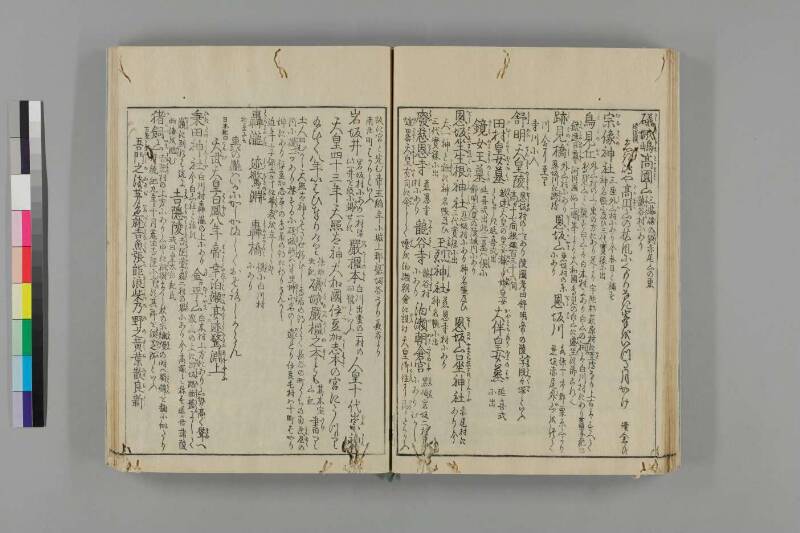
礒城嶋髙圓山(しきしまたかまと )《割書:三輪崎の巽(たつみ)赤尾山の東|龍谷村(りやうたに )#2にあり》
《割書:續後撰》
しき嶋や髙円山(たかまと )の秋風にくもりなき峯をいつる月かけ 讀人しらす
宗像神社(むなかたの )《割書:三座 外山村(とび )にあり今春日と穪す|神名帳に及び三代實録に出》
鳥見丘(とみのおか)《割書:外山村の上 ̄ミ東の方にあり是より宇陀郡萩原村に至(いた)るなり上古はすへて|鳥見山(とみ )と號す白山は白木村にあり白山の祠(やしろ)は白川村にあり𦾔事紀曰》#1
《割書:饒速日尊(にへはやひのみこと)河内國河上 哮峯(たける )より大和國鳥見の白山に遷坐(せんさ)す即これ也》
跡見橋(とみのはし)《割書:外山村にあり|恩坂川に跨(またが)る》恩坂山(をしさかやま)《割書:忍坂村の東|にあり》恩坂川(をしさか )《割書:水源十市郡粟原山より|忍坂赤尾外山を経て》
《割書:川合に至り|寺川に入》
舒明天皇陵(じよめいてんわうのみさゝき)《割書:恩坂村(をしさか )の上 ̄ミあり陵圖考曰舒明帝の陵 字(あさな)叚々塚(たん〳〵 )といふ#3|髙 ̄サ十七間根廻百三十六間》
田村皇女墓(たむらくはうによのはか)《割書:敏達天皇(ひんたつ )の皇女 糠手姫皇女(ぬかてひめ )|とも申き延喜式出》大伴皇女墓(おほともくはうによのはか)《割書:延喜式|に出》
鏡女王墓(かゝみによわうのはか)《割書:延喜式出此三墓は倶(とも)に|舒明天皇の陵域内にあり》
恩坂坐生根神社(をしさかにいますいくねのしんしや)《割書:忍坂村にあり神名帳及ひ|三代實録に出》恩坂山口坐神社(をしさかやまくちにいますしんしや)《割書:赤尾村に|あり今》
《割書:天一神と称(しやう)す神名帳及ひ|三代實録に出》玉烈神社(たまつらのしんしや)《割書:慈恩寺村にあり|神名帳に出》
廢慈恩寺(はいじをんじ)《割書:慈恩寺|村にあり》龍谷寺(りやうこくじ)《割書:龍谷村(りやうたに )|にあり》#2泊瀬朝倉宮(はせあさくらのみや)《割書:《振り仮名:黒﨑|くろさき》岩坂二村の間|にありむかし》
《割書:雄畧天皇(ゆうりやくてんわう)有司(ゆうし)に《振り仮名:𫝇|めい》して壇(だん)を泊瀬朝倉に設(もふ)け天皇 御位(みくらひ)に即(つき)たまふ》
【左丁】
《割書:故に宮と定む帝王編年に城上郡 磐坂谷(いはさか )なり長谷より|南廿町はかりといふ》
岩坂井《割書:岩坂村にあり一村皆|此一井を汲に竭(かつ)せす》嚴橿本(いつかしのもと)《割書:白川出雲の二村の|旧號といふ》人皇十代 崇神(しゆしん)
天皇四十三年天照太神大和國 伊豆加志本(いづかしもと)の宮にうつり
給ひて八年いはひ奉りけり《割書:倭姫|丗紀》礒城嚴橿之本(しきのいつかしのもと)とも《割書:葛本宝|山記》書(かけ)り
《割書:土人曰むかし天照太神たてさせ給ひし鳥居の跡とて長谷の町うちの南 民屋(みんをく)の|内に礎(いしつへ)二つあり按するに礒城嶋(しきしま)は半里 坤(ひつじさる)に名のみ遺(のこ)れり伊豆毛村は十町ばかり》
《割書:坤にあり伊豆加志本の鳥居の跡に侍りなんかし|近年享保五年に《振り仮名:𬜻表|とりゐ》を立しとそ》
轟瀧(とゞろきのたき)#2 迹驚淵(とゞろきのふち) 轟橋(とゞろきのはし)《割書:倶(とも)に白川村|にあり》
《割書:枕草子云》
軣の瀧はいかにかしかましくおそろしからん#2
《割書:日本紀曰》
天武天皇(てんむ )白鳳八年(はくほう )帝(みかと)幸(みゆきす)_二泊瀬(はせに)_一宴(ゑんす)_二#4迹驚淵上(とゝろきのゑんしやうに)_一
秉田神社(ひきたのしんしや)《割書:白川村轟瀧#2の上にあり|今白山社と称す》金(かね) ̄カ平山(ひらやま)《割書:白木村上方にあり山㔟髙く聳(そひ)へ|衆山の上に出(いづ)坂路曲盤(はんろきよくはん)にして》
《割書:巓(いたゝき)に到れは遥に|西海を臨(のぞ)む》《振り仮名:𠮷隠陵|よなばりのみさゞき》《割書:《振り仮名:𠮷隠|よなばり》萱森(かやのもり)二村の界(さかい)にあり今髙塚と称す延喜諸陵|式曰皇太后紀氏》
猪飼山(いかいやま)《割書:《振り仮名:𠮷隠村|よなはり 》の上方にあり山中に楓樹(かへて )多し秋の末 爛漫(らんまん)の时は蜀錦(しよくきん)を翻に似たり|持統紀九年十月菟田𠮷隠に幸(みゆき)す其野を浪芝野(なみのしはの)といふ》
《割書:万葉》
吾門之(わかかどの)淺茅色就(あさぢいろづく)《振り仮名:𠮷魚張能|よなはりの》浪柴乃野之(なみしはののの)黄葉散良新(もみちちるらし)#5
現代語訳
【右丁】
**磯城嶋高円山(しきしまたかまとやま)**〔三輪崎の東南・赤尾山の東、龍谷村にあり〕
〔続後撰より〕
しき嶋や 高円山の 秋風に くもりなき峯を いづる月かげ (詠み人知らず)
**宗像神社(むなかたじんじゃ)**〔三座。外山村にあり、今は春日と称す。神名帳および三代実録に出る〕
**鳥見丘(とみのおか)**〔外山村の上方東の方にあり。ここより宇陀郡萩原村に至る。上古はすべて鳥見山と号す。白山は白木村にあり、白山の祠は白川村にあり。旧事紀に曰く、饒速日尊(にぎはやひのみこと)は河内国河上の哮峯(たけるがみね)より大和国鳥見の白山に遷座す。すなわちこれなり〕
**跡見橋(とみのはし)**〔外山村にあり、恩坂川に跨る〕 **恩坂山(おしさかやま)**〔忍坂村の東にあり〕 **恩坂川(おしさかがわ)**〔水源は十市郡粟原山より、忍坂・赤尾・外山を経て、川合に至り寺川に入る〕
**舒明天皇陵(じょめいてんのうのみささぎ)**〔恩坂村の上方にあり。陵図考に曰く、舒明帝の陵の字(あざな)は「段々塚(たんたんづか)」という。高さ十七間、根廻り百三十六間〕
**田村皇女墓(たむらのひめみこのはか)**〔敏達天皇の皇女、糠手姫皇女(ぬかてひめのひめみこ)とも申す。延喜式に出る〕 **大伴皇女墓(おおともひめみこのはか)**〔延喜式に出る〕
**鏡女王墓(かがみのじょおうのはか)**〔延喜式に出る。この三墓はともに舒明天皇の陵域内にあり〕
**恩坂坐生根神社(おしさかにいますいくねのじんじゃ)**〔忍坂村にあり。神名帳および三代実録に出る〕 **恩坂山口坐神社(おしさかやまぐちにいますじんじゃ)**〔赤尾村にあり、今は天一神と称す。神名帳および三代実録に出る〕 **玉烈神社(たまつらのじんじゃ)**〔慈恩寺村にあり。神名帳に出る〕
**廃慈恩寺(はいじおんじ)**〔慈恩寺村にあり〕 **龍谷寺(りょうこくじ)**〔龍谷村にあり〕 **泊瀬朝倉宮(はせのあさくらのみや)**〔黒崎・岩坂の二村の間にあり。むかし雄略天皇が有司に命じて壇を泊瀬朝倉に設け、天皇が御位に即かれた。〕
【左丁】
〔ゆえに宮と定める。帝王編年に「城上郡磐坂谷(いわさかだに)なり、長谷より南二十町ばかりという」とある〕
**岩坂井**〔岩坂村にあり。一村皆この一つの井を汲めども尽きることなし〕 **厳橿本(いつかしのもと)**〔白川・出雲の二村の旧号という〕
人皇十代 崇神天皇四十三年、天照大神が大和国伊豆加志本(いづかしもと)の宮にお移りになり、八年間お祀り申し上げた。〔倭姫世紀〕 磯城厳橿之本(しきのいつかしのもと)とも〔葛本宝山記〕書かれている。
〔土人の曰く、むかし天照大神を立てさせ給いし鳥居の跡とて、長谷の町の内の南、民家の内に礎石が二つある。按ずるに、磯城嶋(しきしま)は半里ほど南西(坤)に名のみ遺れり。伊豆毛村は十町ばかり南西にあり、伊豆加志本の鳥居の跡にあたるのであろう。近年、享保五年(1720)に鳥居を立てたとのことである〕
**轟滝(とどろきのたき)** **迹驚淵(とどろきのふち)** **轟橋(とどろきのはし)**〔ともに白川村にあり〕
〔枕草子に云く〕
轟の滝はいかに(水音が)かしましく恐ろしかろうか
〔日本紀に曰く〕
天武天皇、白鳳八年(679)、帝、泊瀬に行幸し、迹驚淵の上で宴を催された。
**秉田神社(ひきたのじんじゃ)**〔白川村、轟滝の上にあり。今は白山社と称す〕 **金ヶ平山(かねがひらやま)**〔白木村の上方にあり。山勢が高くそびえ、衆山の上に出る。坂路は曲折し、頂上に至れば遙かに西海を望む〕
**吉隠陵(よなばりのみささぎ)**〔吉隠・萱森の二村の境にあり。今は高塚と称す。延喜諸陵式に曰く「皇太后 紀氏」〕
**猪飼山(いかいやま)**〔吉隠村の上方にあり。山中に楓の木が多く、秋の末、紅葉爛漫の時は蜀錦(しょっきん)を翻すに似たり。持統紀九年十月、菟田吉隠に行幸す。その野を浪芝野(なみのしばの)という〕
〔万葉集より〕
わが門の 浅茅色づく 吉隠の 浪柴の野の 紅葉散るらし
英語訳
【Right Page】
**Shikishima Takamato (磯城嶋高円山)**
[Located in Ryūtani Village, to the southeast of Miwasaki and east of Akao Mountain]
[From the *Zoku Gosen Wakashū*:]
On Shikishima, Mount Takamato — in the autumn wind,
the moonlight emerges over its unclouded peak.
*(Poet unknown)*
**Munakata Shrine (宗像神社)**
[Three shrines. Located in Tobi Village; now called Kasuga. Recorded in the *Jinmyōchō* (Register of Deities) and the *Sandai Jitsuroku* (True Records of Three Reigns).]
**Tomi Hill (鳥見丘)**
[Located to the upper east of Tobi Village. From here one proceeds to Hagiwara Village in Uda District. In ancient times, the entire area was called Mount Tomi (鳥見山). Shirayama is in Shiraki Village; the Shirayama Shrine is in Shirakawa Village. The *Kujiki* states: "Nigihayahi no Mikoto moved from Mount Takeru on the upper reaches of the Kawachi River to the White Mountain of Tomi in Yamato Province — that is this very place."]
**Tomi Bridge (跡見橋)**
[Located in Tobi Village, spanning the Oshisaka River.]
**Mount Oshisaka (恩坂山)**
[Located to the east of Oshisaka Village.]
**Oshisaka River (恩坂川)**
[Its source is in Awahara Mountain in Toichi District; it flows through Oshisaka, Akao, and Tobi, and joins the Tera River at the river confluence.]
**Mausoleum of Emperor Jomei (舒明天皇陵)**
[Located above Oshisaka Village. According to the *Ryōzukō* (Study of Imperial Mausolea), the tomb is known by the name "Tantanzuka." Height: 17 *ken*; circumference at base: 136 *ken*.]
**Tomb of Princess Tamura (田村皇女墓)**
[A princess of Emperor Bidatsu, also known as Princess Nukate-hime. Recorded in the *Engishiki*.]
**Tomb of Princess Ōtomo (大伴皇女墓)**
[Recorded in the *Engishiki*.]
**Tomb of Lady Kagami (鏡女王墓)**
[Recorded in the *Engishiki*. These three tombs are all located within the precincts of Emperor Jomei's mausoleum.]
**Oshisaka-ni-imasu Ikune Shrine (恩坂坐生根神社)**
[Located in Oshisaka Village. Recorded in the *Jinmyōchō* and *Sandai Jitsuroku*.]
**Oshisaka Yamaguchi-ni-imasu Shrine (恩坂山口坐神社)**
[Located in Akao Village; now called Tennichi-no-kami. Recorded in the *Jinmyōchō* and *Sandai Jitsuroku*.]
**Tamatsurana Shrine (玉烈神社)**
[Located in Jigonji Village. Recorded in the *Jinmyōchō*.]
**Ruins of Jigonji Temple (廃慈恩寺)**
[Located in Jigonji Village.]
**Ryōkokuji Temple (龍谷寺)**
[Located in Ryūtani Village.]
**Hase Asakura Palace (泊瀬朝倉宮)**
[Located between Kurosaki and Iwasaka Villages. In former times, Emperor Yūryaku ordered officials to construct a ceremonial platform at Hase Asakura, and there the Emperor ascended the throne.]
【Left Page】
[For this reason it was designated a palace. The *Teiohennen* (Imperial Chronological Records) states: "It is in Iwasaka Valley (磐坂谷) in Shikijō District, said to be about twenty *chō* south of Hase."]
**Iwasaka Well (岩坂井)**
[Located in Iwasaka Village. The entire village draws water from this single well, yet it never runs dry.]
**Itsukashi no Moto (厳橿本)**
[Said to be the former name of the two villages of Shirakawa and Izumo.]
In the 43rd year of the reign of Sujin, the tenth human Emperor, Amaterasu Ōmikami was transferred to the palace of Izukashimoto in Yamato Province and was enshrined there for eight years. [From the *Yamatohime Seiki*] It is also written as *Shiki no Itsukashi no Moto* [from the *Kuzumoto Hōzanki*].
[Local people say: "There is a place said to be the site of the torii gate erected for Amaterasu Ōmikami of old, within a private residence on the south side of the town of Hase, where two foundation stones remain. Upon investigation, the name 'Shikishima' survives only as a name, about half a *ri* to the southwest. Izumo Village lies about ten *chō* to the southwest, and may well be the site of the torii of Izukashimoto. In recent years, in the fifth year of Kyōhō (1720), a torii was erected there."]
**Todoroki Falls (轟滝)** **Todoroki Pool (迹驚淵)** **Todoroki Bridge (轟橋)**
[All located in Shirakawa Village.]
[The *Makura no Sōshi* (Pillow Book) says:]
"How clamorous and fearsome must be the Todoroki Falls!"
[The *Nihon Shoki* states:]
In the eighth year of the Hakuhō era (679), Emperor Tenmu made a progress to Hase and held a banquet above Todoroki Pool.
**Hikita Shrine (秉田神社)**
[Located above Todoroki Falls in Shirakawa Village; now called Hakusan-sha (White Mountain Shrine).]
**Kanegahirayama (金ヶ平山)**
[Located above Shiraki Village. The mountain rises high, towering above the surrounding peaks. The mountain path winds and turns, and from the summit one can look out far over the western sea.]
**Mausoleum of Yonabari (吉隠陵)**
[Located on the border between Yonabari and Kayanomori Villages; now called "Takatsuka." The *Engi Shoryōshiki* (Engi-era Regulations on Imperial Mausolea) records: "Empress Dowager, of the Ki clan."]
**Mount Ikai (猪飼山)**
[Located above Yonabari Village. The mountain is rich in maple trees; at the height of autumn colour, the scene resembles the unfurling of Sichuan brocade. In the ninth year of the *Jitō* reign (695), tenth month, the Empress made an imperial progress to Uda Yonabari. The plain there is called Nami-no-Shiba-no (波芝野).]
[From the *Man'yōshū*:]
At my gate, the cogon grass turns colour —
at Yonabari,
on the plain of Nami-no-Shiba,
the autumn leaves must be scattering.