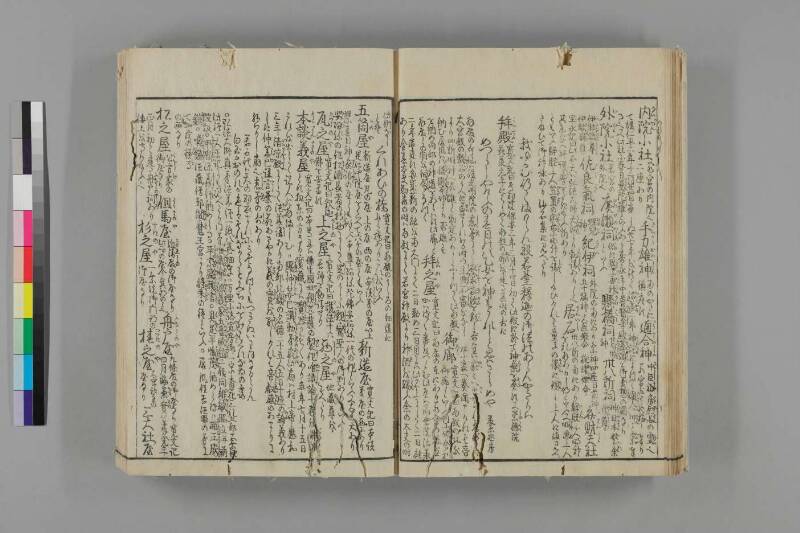
翻刻
【右丁】
内院小社(ないゐん )《割書:若宮の内院也|二𫝶あり》手力雄神(たちからおのしん)《割書:南のかたに|鎭座す》通合神(つうかうのしん)《割書:中臣祐房朝臣(なかとみすけふさあそん)の霊(れい)也|若宮をこゝに移(うつ)し奉り》
《割書:て後仁平二年十二月廿四日卒しぬ廿七年を經て《振り仮名:治𣴎|ちしやう》二年 神詑(しんたく)#1によつて通合神(つうかうのしん)と崇(あかめ)奉|る也又此社に春日曼陀羅( まんだら )といふあり寿永年中 普賢寺殿基通公(ふけんじ もとみち )御夢想( むさう)の圖(づ)なり》
外院小社(けゐん )《割書:若宮の|外院也》廣瀬祠(ひろせのやしろ)《割書:俗に鬼子母神(きしほしん)|といふ》懸橋祠(かけはし )《割書:葛城(かつらき)|神》卅八所祠《割書:神日本磐余(かんやまといはれ)|彦尊(ひこのみこと)》
《割書:伊弉諾尊(いさなきのみこと)|《振り仮名:伊弉冊尊| さなみ 》#2》佐良氣祠(さらき )《割書:蛭兒(ひるこ)|神》紀伊祠(きい )《割書:外院の南に祭神四座日前神|五十猛神大屋姫𠇭《振り仮名:狐津姫𠇭|こつひめ 》》弁財天社(べさいてん )
《割書:宝永記曰此弁天は弘法大師 天河(てんのかは)より勸請(くはんじやう)ありし也|其東に大師 護摩(ごま)をたき給ふ所あり》居石(すへいし)《割書:卅八所の南にあり解脱上人(けたつ )明神|を礼拜ありし跡といふ又 明惠上人(みやうゑ )》
《割書:ともいふ解脱上人(けたつ )笠置(かさぎ)の閑居(かんきよ)に明神を請(じやう)し給ひければ童子の像(かたち)に現(けん)し上人にま見へ|たまひて御神詠あり沙石集に見へたり》
我ゆかむ行てまもらん般若䑓釋迦の御法のあらんかきりは
拜殿(はいてん)《割書:寛文記曰鳥羽院保安三年三月十四日初て此殿に於て神樂(かくら)を奏(そう)す又 崇德院(しゆとく )|長𣴎元年にはしめて拜殿の廊(ろう)を建る其时の哥に》
めつらしやけふの春日の八乙女を神もうれしと思はさらめや 藤原忠房
《割書:拜殿の哥仙は後光明院の宸筆(しんひつ)にて衣裳(ゐしやう)衣紋(ゑもん)を彩(さい)し哥は其 家〻へ書(かゝ)せられ忍びて|大宮殿の敷石(しきいし)のうへに置(をか)せられける时の主典(しゆてん)不審(ふしん)をなし 禁裏へ奏聞申ければ帝》
《割書:より四所明神へ寄進と勅定ありしによつて此拜殿へ|納む屏風は八幡瀧本坊(やはたたきもとほう)より寄進す》御廊《割書:寛文記曰拜殿の北を|御廊といふ内に佛舎利》
《割書:を納め两部の神道をあらはす此廊と|拜殿との間を細殿(ほそとの)となづく》拜之屋(はいのや)《割書:寛文記曰拜殿の東にあり若宮の称冝|かはる〳〵番をつとむ此屋は髙倉院治𣴎》
《割書:二年造建す毎歳薪の能を南大門にて二日勤め三日目には此石上にして二日能|あり金春太夫勤番の时は拜殿にて若宮神殿より《振り仮名:神酒|みさ》を賜ふ余の太夫の时》
【左丁】
《割書:此例なし|とそ》くれあひの槗《割書:寛文記日拜殿のうしろの細道に|少き槗ありこれをいふ》
五筒屋( かのや)#3《割書:新造屋瓦の屋上の屋西の屋《振り仮名:本談義の屋|もとたんぎ 》以上|是に中院屋をくはへて六ヶの屋ともいふ》新造屋《割書:寛文記曰本談|義屋の西にあり》
《割書:世に《振り仮名:春日神垂迹の屋| すいしやく 》とも呼ぶ本尊阿弥陀佛安阿弥一代の作といふ又大黒天あり|安阿弥(あんあみ)の作 松浦長者(まつら )の持物(じぶつ)にして足(あし)のうらに親鸞聖人(しんらん )の御判ありといふといふ》
瓦之屋(かはらのや)《割書:寛文記曰釈迦|佛を安置す》上之屋(かみのや)《割書:寛文記曰 護法十六(ごほう )|善神を勸請せり》西之屋(にしのや)《割書:地藏尊を|すへたり》
本談義屋(もとだんぎのや)《割書:寛文記曰本尊には佛生國 世親菩薩(せしん )の製作(せいさく)唯識論(ゆいしき )十巻を佛躰(ぶつたい) |とす扨東の方なる寳藏には寳器かず〳〵あり毎年七月十五日》
《割書:これを出して諸人にい拜ましむ◦賜(たまふ)_二仲筭(ちうさん)已講(ゐかう) ̄ニ_一勅筆扇(ちよくひつのあふき)此扇は村上帝應和|三年 清凉殿(せいりやうてん)にして法華講(ほつけかうあり)南都北嶺( れい)の名德二十五人五日五𫝶の論義(ろん )あり》
《割書:仲筭已講( さんゐ )言葉(ことは)の花あさやかに義(き)の實(じつ)を顕(あらは)しけれは帝(みかと)叡感(ゑいかん)のあまりに|給はりし扇也 宸筆(しんひつ)の哥(うた)あり》
君か代は天の羽衣まれにきてなつともつきぬいわほなるらん
白玉かおのれか色はそれなからもみちにをけはくれなゐの露
《割書:◦弘法大師眞筆法華經一紙八巻細字◦万里小路宣房卿( のぶふさ )一字香花三礼五部大乗經|此經は大平記にも見へたり同筆 唯識論(ゆいしきろん)◦源義家(みなもとのよしいへ)五音威鎧(こいんをとしよろひ)同 緋縅(ひをとし)𦚰立并前》
《割書:段板◦甲冑(かぶとよろひ)源義經( よしつね)納めらる◦平宗盛願書(たひらのむねもりのくはんしよ)◦具足(くそく)平惟茂( これもち)納めらる◦楠正成(くすのきまさしげ)|鎧(よろひ)◦喚鐘(くはんしやう)法藏僧都 《振り仮名:𨵻魔王宮|ゑんま 》より將来(しやうらい)の鐘といふ◦屏風住吉法眼の筆に》
《割書:て加茂の競馬(けいば)|の画(ゑ)なり》
松之屋《割書:公方家(くほうけ)の|御屋なり》但馬屋(たしまのや)《割書:近衛殿(このゑとの)の御屋なり|此二ヶの屋今は其跡のみ也》舟戸屋(ふなとのや)《割書:九條殿の御屋なり寛文記|曰 月輪兼實公( かねさね )建久元年》
《割書:正月初て建る舟戸祠(ふなとのやしろ)あり|海上を守り給ふ也》杉之屋(すきのや)《割書:一乗院御門跡の|御屋なり》椿之屋(つはきのや)《割書:大宮神主の|屋なり》三大社 ̄ノ屋
現代語訳
【右丁】
**内院小社**(若宮の内院にある小社。二社あり)
**手力雄神**(南の方角に鎮座する)
**通合神**(中臣祐房朝臣の霊である。若宮をここに移し奉った後、仁平二年十二月二十四日に卒去した。二十七年を経て、治承二年、神託によって通合神と崇め奉るようになった。またこの社には「春日曼陀羅」と呼ばれるものがある。寿永年中、普賢寺殿基通公が御夢想によって描かせた図である)
**外院小社**(若宮の外院にある)
**広瀬祠**(俗に鬼子母神という)
**懸橋祠**(葛城神)
**三十八所祠**(神日本磐余彦尊・伊弉諾尊・伊弉冉尊を祀る)
**佐良気祠**(蛭子神)
**紀伊祠**(外院の南にあり、祭神は四座。日前神・五十猛神・大屋姫命・狐津姫命)
**弁財天社**
(宝永記によれば、この弁天は弘法大師が天河より勧請されたものである。その東には大師が護摩を焚かれた場所がある)
**居石**(三十八所の南にある。解脱上人が明神を礼拝された跡という。また明恵上人ともいう。解脱上人が笠置の閑居に明神を請じられたところ、童子の姿で現れ、上人の前にお見えになり、御神詠があった。沙石集に見えている)
我ゆかむ 行きて守らん 般若台 釈迦の御法の あらんかぎりは
**拝殿**(寛文記によれば、鳥羽院保安三年三月十四日に初めてこの殿において神楽を奏した。また崇徳院長承元年に初めて拝殿の廊を建てた。その時の歌に)
めづらしや 今日の春日の 八乙女を 神も嬉しと 思はざらめや 藤原忠房
(拝殿の歌仙は後光明院の宸筆であって、衣裳・衣紋を彩色し、歌はそれぞれの家に書かせられ、忍んで大宮殿の敷石の上に置かれた時、その時の主典が不審に思い、禁裏へ奏聞申し上げたところ、帝より四所明神への寄進との勅定があったことによって、この拝殿に納めた。屏風は八幡滝本坊より寄進したものである)
**御廊**(寛文記によれば、拝殿の北を御廊という。内に仏舎利を納め、両部の神道を表す。この廊と拝殿との間を細殿と名づける)
**拝之屋**(寛文記によれば、拝殿の東にある。若宮の称宜がかわるがわる番をつとめる。この屋は高倉院治承二年に造建した。毎年薪の能を南大門にて二日勤め、三日目にはこの石の上にて二日能がある。金春太夫が勤番の時は拝殿にて若宮神殿より神酒を賜る。他の太夫の時は)
【左丁】
(この例はないとのこと)
**暮れ合いの橋**(寛文記によれば、拝殿の後ろの細道に小さな橋があり、これをいう)
**五箇屋**(新造屋・瓦の屋・上の屋・西の屋・本談義の屋、以上。これに中院屋を加えて六箇の屋ともいう)
**新造屋**(寛文記によれば、本談義屋の西にある。世に「春日神垂迹の屋」とも呼ぶ。本尊は阿弥陀仏で安阿弥一代の作という。また大黒天があり、安阿弥の作。松浦長者の持仏であって、足の裏に親鸞聖人の御判があるという)
**瓦之屋**(寛文記によれば、釈迦仏を安置する)
**上之屋**(寛文記によれば、護法十六善神を勧請した)
**西之屋**(地蔵尊を据えている)
**本談義屋**(寛文記によれば、本尊には仏生国・世親菩薩の製作になる唯識論十巻を仏体とする。さて東の方にある宝蔵には宝器が数々あり、毎年七月十五日にこれを出して諸人に拝ませる。仲算已講に勅筆扇を賜った。この扇は、村上帝応和三年、清涼殿にて法華講があり、南都・北嶺の名徳二十五人による五日五座の論義があった。仲算已講の言葉の花が鮮やかに義の実を顕したので、帝が叡感のあまりに賜った扇である。宸筆の歌がある)
君が代は 天の羽衣 まれに来て 夏とも尽きぬ 岩ほなるらん
白玉か おのれが色は それながら もみじにおけば くれないの露
(弘法大師真筆法華経一紙八巻・細字。万里小路宣房卿の一字香花三礼五部大乗経。この経は太平記にも見える。同筆の唯識論。源義家の五音威鎧・同緋縅腹立并前段板。甲冑は源義経が納めた。平宗盛の願書。具足は平惟茂が納めた。楠正成の鎧。喚鐘は法蔵僧都が閻魔王宮より将来した鐘という。屏風は住吉法眼の筆にて加茂の競馬の画である)
**松之屋**(公方家の御屋である)
**但馬屋**(近衛殿の御屋である。この二箇の屋は今はその跡のみである)
**舟戸屋**(九条殿の御屋である。寛文記によれば、月輪兼実公が建久元年正月に初めて建てた。舟戸祠があり、海上を守り給う)
**杉之屋**(一乗院御門跡の御屋である)
**椿之屋**(大宮神主の屋である)
**三大社之屋**
英語訳
**[Right Page]**
**Inner Precinct Small Shrines** (Small shrines within the inner precinct of the Wakamiya Shrine; there are two of them)
**Tajikarao Shrine** (Enshrined to the south)
**Tsūgō Shrine** (This is the spirit of Nakatomi no Sukefusa Ason. After he transferred the Wakamiya Shrine here, he passed away on the 24th day of the 12th month of Ninpei 2 [1152]. Twenty-seven years later, in Jishō 2 [1178], by divine oracle, he came to be venerated as Tsūgō no Kami. Furthermore, at this shrine there is something called the "Kasuga Mandala." It is a picture drawn based on the dream-vision of Lord Motomichi of Fukuji-dono during the Juei era [1182–1185].)
**Outer Precinct Small Shrines** (The outer precinct of the Wakamiya Shrine)
**Hirose Shrine** (Popularly known as Kishimojin, the Mother of Demons)
**Kakehashi Shrine** (Katsuragi deity)
**Thirty-Eight Shrines** (Enshrining Kamuyamatoiwarehiko no Mikoto [Emperor Jinmu], Izanagi no Mikoto, and Izanami no Mikoto)
**Saraki Shrine** (Hiruko no Kami [Leech Child deity])
**Kii Shrine** (Located to the south of the outer precinct; four deities are enshrined: Hinokuma no Kami, Isotakeru no Kami, Ōyahime no Mikoto, and Kotsuhime no Mikoto)
**Benzaiten Shrine**
(According to the Hōei Records: This Benzaiten was invited here by Kōbō Daishi [Kūkai] from Tenkawa. To its east is a place where the Great Master performed goma fire rituals.)
**Suehishi (Placed Stone)** (Located to the south of the Thirty-Eight Shrines. It is said to be the spot where the monk Gedatsu Shōnin paid his respects to the deity. Some also say it was Myōe Shōnin. When Gedatsu Shōnin invited the deity to his hermitage at Kasagi, the deity appeared in the form of a young boy, revealed himself before the monk, and composed a divine poem. This is recorded in the *Shasekishū*.)
> *We shall go, go forth and protect — the Platform of Prajñā — for as long as the teachings of Śākyamuni shall endure*
**Haiden (Oratory/Worship Hall)** (According to the Kanmon Records: On the 14th day of the 3rd month of Hōan 3 [1122] during the reign of Retired Emperor Toba, *kagura* sacred music was performed in this hall for the first time. Also, in Chōshō 1 [1132] during the reign of Retired Emperor Sutoku, the corridor of the Haiden was first constructed. A poem composed at that time:)
> *How rare and wonderful — the eight shrine maidens of Kasuga today — surely even the gods must feel joy at this sight* — Fujiwara no Tadafusa
(The portraits of the Thirty-Six Poetry Immortals in the Haiden were executed in the imperial brushwork of Emperor Gomyō, with the figures' robes and drapery painted in color, while the poems were written by respective families. These were placed secretly on the paving stones of the Great Shrine, and the official on duty at the time became suspicious and reported the matter to the Imperial Palace. Upon the Emperor's decree that they be donated to the Four Sacred Deities, they were enshrined in this Haiden. The folding screens were donated by Takimoto-bō of Yawata [Iwashimizu Hachiman Shrine].)
**Omi-rō (Sacred Corridor)** (According to the Kanmon Records: The area to the north of the Haiden is called the Omi-rō. Inside, Buddhist relics (*busshari*) are kept, symbolizing the Dual-Aspect Shinto (*ryōbu shintō*). The space between this corridor and the Haiden is called the *Hosodono* [Narrow Hall].)
**Hai no Ya (Worship Building)** (According to the Kanmon Records: Located to the east of the Haiden. The *shōgi* (hereditary priests) of the Wakamiya take turns on duty here. This building was constructed in Jishō 2 [1178] during the reign of Retired Emperor Takakura. Each year, the *Takigi Nō* (torchlight Noh performances) are performed for two days at the South Great Gate, and on the third day, two days of Noh are held on this stone platform. When the Komparu Tayū is on duty, sacred sake (*miki*) is bestowed from the Wakamiya Shrine at the Haiden. When other Tayū are on duty—)
**[Left Page]**
(—this custom does not apply.)
**Kureai no Hashi (Twilight Bridge)** (According to the Kanmon Records: There is a small bridge along the narrow path behind the Haiden; this refers to it.)
**Five Buildings** (The Shinzō-ya, Kawara no Ya, Kami no Ya, Nishi no Ya, and Moto-dangiya — these five. Adding the Chūin-ya makes six buildings in total.)
**Shinzō-ya (Newly Built Hall)** (According to the Kanmon Records: Located to the west of the Moto-dangiya. It is also popularly called the "Hall of the Kasuga Deity's Manifestation" (*suijaku*). The principal image is an Amida Buddha, said to be a work created during the lifetime of An'ami. There is also a Daikokuten, also An'ami's work, which was a personal Buddhist image belonging to Matsura no Chōja [a wealthy patron]; it is said that the seal of the Monk Shinran is on the soles of its feet.)
**Kawara no Ya (Tile-Roofed Hall)** (According to the Kanmon Records: A Śākyamuni Buddha is enshrined here.)
**Kami no Ya (Upper Hall)** (According to the Kanmon Records: The Sixteen Protective Deities of the Dharma [*gohō jūroku zenshin*] were invited here.)
**Nishi no Ya (Western Hall)** (A Jizō Bodhisattva is installed here.)
**Moto-dangiya (Original Lecture Hall)** (According to the Kanmon Records: The principal object of worship takes the ten volumes of the *Vijñaptimātratāsiddhi* (*Yuishikiron*), composed by the Bodhisattva Vasubandhu from the Land of the Buddha [India], as its Buddha-body. In the treasure repository to the east, there are numerous treasures, and every year on the 15th day of the 7th month they are brought out for the public to worship. The *chokuhi no ōgi* (imperially inscribed fan) was bestowed upon the Already-Lectured Monk Chūsan. This fan dates from Emperor Murakami's Ōwa 3 [963], when a Lotus Sutra lecture was held at the Seiryōden Palace. Twenty-five eminent monks from the Southern Capital [Nara] and Northern Peak [Mount Hiei] held five days of doctrinal debate in five sessions. Because Chūsan's eloquent words brilliantly illuminated the substance of the doctrine, the Emperor, moved beyond measure, bestowed this fan. There are imperial poems inscribed on it:)
> *Your reign is like the Heavenly Feather Robe — rarely donned, yet never worn out through summer — like a great craggy rock it endures*
> *Is it a white jewel? Your color remains just as it is — and yet when placed among the autumn leaves it becomes a crimson dew*
(Handwritten Lotus Sutra in fine script on eight scrolls, each on one sheet of paper, in the authentic hand of Kōbō Daishi. The Five-Part Mahāyāna Sūtra with one-character incense-and-flower three-prostration by Lord Madenokōji Nobufusa. This sutra also appears in the *Taiheiki*. The *Vijñaptimātratāsiddhi* in the same hand. The "Five-Tone威" armor and crimson-laced belly armor with front-panel stand, donated by Minamoto no Yoshiie. A suit of armor donated by Minamoto no Yoshitsune. A petition letter by Taira no Munemori. A suit of armor donated by Taira no Koremochi. The armor of Kusunoki Masashige. The *kansho* (summoning bell) said to be a bell brought by the Monk Hōzō from the Palace of Emma, King of Hell. A folding screen painted by Sumiyoshi Hōgen depicting the horse races at Kamo.)
**Matsu no Ya (Pine Hall)** (The residential hall of the Kubō [Shogunal] family.)
**Tajima no Ya (Tajima Hall)** (The residential hall of the Konoe household. These two buildings now exist only as sites.)
**Funato no Ya (Harbor Hall)** (The residential hall of the Kujō household. According to the Kanmon Records: Lord Tsukimichi Kanezane [Kujō Kanezane] first built it in the 1st month of Kenkyū 1 [1190]. There is a Funato Shrine here, which protects those at sea.)
**Sugi no Ya (Cedar Hall)** (The residential hall of the Ichijōin Monzeki [a branch of the imperial family heading Ichijōin temple].)
**Tsubaki no Ya (Camellia Hall)** (The hall of the Chief Priest of the Great Shrine.)
**Three Great Shrines Hall**