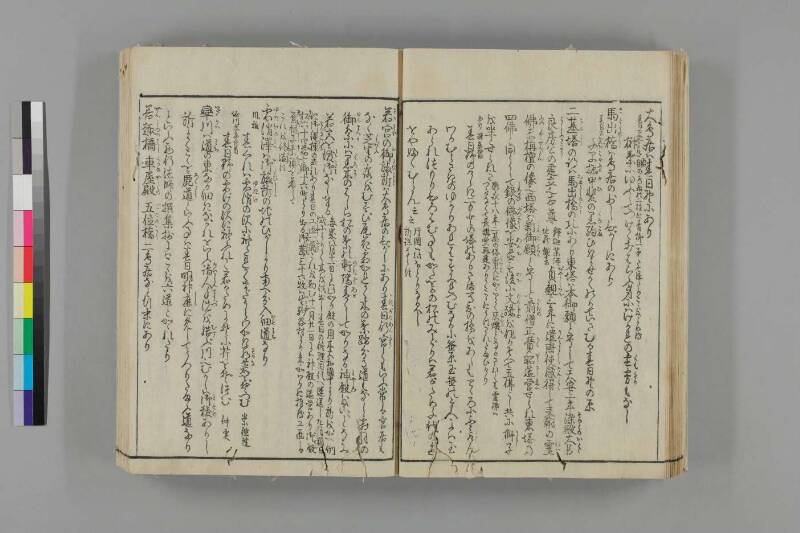
翻刻
【右丁】
大鳥居は春日野にあり
《割書:春日古記 緋(あけ)の鳥居二柱青栁一本たて添たりこゝをよめる》
榊葉(さかきば)にゆふしてつけて打はらふ身にはけかれの雲雾(くもきり)もなし
馬出槗(またしのはし)は鳥居の少しひがしにあり
《割書:春日古記》
千早振(ちはやふる)甲斐(かひ)の黒駒(くろこま)ひきよせてのりていさむる春日野の原
二基塔( きのたう)の跡は馬出橋(むまたしのはし)の北にあり東塔は本御願と号して天安二年 染殿大臣(そめとのおとゞ)
良房公(よしふさこう)の建立也本尊《割書:釋迦薬師|地藏観音》貞観(ぢやうくはん)三年に遣唐使(けんたうし)感得(かんとく)して来朝の霊(れい)
佛(ふつ)赤栴檀(しやくせんだん)の像也西塔は新御願(しんごくはん)と号して前僧正覺昭(さきの かくせう)造営(さうゑい)せられ東塔の
四佛と同うして銀(しろかね)の佛像(ぶつざう)を安置(あんち)す後(のち)に文殊(もんじゆ)を作りそへて五佛とし供に師子(しゝ)
を𫝶とせられき《割書:應永十八年二基の塔 雷火(らいくは)にかゝりて灰燼(くはいじん)となるされとも霊佛は|つゝがなくて長講堂再建ありてこゝにうつされたまひけり》
《割書:西行撰集抄曰》
春日野のけしき二もとの塔のありさま馬出の槗をあしもとゝろにふみけん
わかむらさきのゆかりあれはすみれつむなる小笠原玉笹のうへには玉
あられつもりひろはむ事もかたをかの松のみどりは君がため千代の色
をやふくむらん《割書:云云》《割書:片𫝍は此ほとりなるへし|所詳ならす》
【左丁】
若宮(わかみや)の御旅所(おたびじよ)は大鳥居のひがしにあり春日行宮(かすがのあんきう)ともいふ常は宮居も
なく芝生(しばふ)の露をむすび尾花霜かれて木の葉踏分る道もなし霜月の
御祭(おんまつり)には黒木(くろき)のはしら松の葉の軒端(のきば)青(あを)くしてかりなる神殿(みやしろ)をいとなみ
若宮を渡御(ときよ)なし奉る《割書:毎歲八月十一日には此かり殿の用木大和國中より所をかへ例|式によりて木を伐出し春日の修理目代へ運送九月朔日》
《割書:に御縄棟(をんなはむね)の式礼あり春日の工匠(こうじやう)《振り仮名:一﨟| らう》これを勤む十一月廿一日には神殿の造営あり御殿(ごてん)|松(まつ)六十四荷( か)七郷十六町より出る御薦(をんこも)三十六牧#1は生駒(いこま)谷村より年かはりに捧る工匠は|烏帽子(ゑぼし)素襖(すあふ)を着して|これを修造(しゆざう)す》
雪消澤(ゆきけのさは)は御旅所(おたびしよ)の地のひがしより南へ分入 細道(ほそみち)なり
《割書:風雅》
春くれは雪消(ゆきけ)の沢に袖たれてまだうらわかき若菜(わかな)をぞつむ 崇徳院
《割書:堀川太郎百首》
春日野の雪げの沢に袖ふれて君かためにそ小芹をぞつむ 仲實
卛川(いざかは)#2は道(みち)の東なる細きながれをいふ詣人(けいしん)手洗(てうづ)を結(むす)ぶ川也むかしは御祓(みそき)ありし
所にてこゝを鹿道(ろくたう)といふ事は春日明神 鹿(しか)にめしてうつりたまふ道なり
といふ西行法師の撰集抄にはこゝを六道とかゝれたり
善趣橋(ぜんしゆのはし)車屋殿(くるまやとの)五位槗(ごゐのはし)二鳥居なと行末にあり
現代語訳
【右丁】
**大鳥居**は春日野にある。
〔春日古記より〕
榊の葉に木綿をつけて打ち払えば、わが身に罪穢れの雲霧も無くなる
**馬出橋**(またしのはし)は鳥居の少し東にある。
〔春日古記より〕
神威あらたかな甲斐の黒駒を引き寄せて乗り、勇み立つ春日野の原よ
**二基の塔の跡**は馬出橋の北にある。東塔は「本御願」と称し、天安二年(858年)に染殿大臣・藤原良房公が建立した。本尊〔釈迦・薬師・地蔵・観音〕は、貞観三年(861年)に遣唐使が感得して持ち帰った霊仏で、赤栴檀の像である。西塔は「新御願」と称し、前僧正・覚昭が造営し、東塔の四仏と同様に銀の仏像を安置した。後に文殊を加えて五仏とし、ともに師子を座とされた。
〔応永十八年(1411年)に二基の塔は落雷による火災で灰燼に帰した。しかし霊仏は無事であり、長講堂が再建されてそこに移されたという。〕
〔西行の撰集抄に曰く〕
春日野の景色よ、二本の塔のたたずまい、馬出の橋を足もとどろに踏んだことよ
若紫ゆかりのことゆえ、すみれを摘む小笠原の玉笹の上には玉霰が積もり、拾うことも難しい。片岡の松の緑は、君のために千代の色を含むのであろうか。〔以下省略〕
〔片岡はこのあたりであろうが、詳細は不明〕
【左丁】
**若宮の御旅所**は大鳥居の東にあり、「春日行宮(かすがのあんぐう)」とも呼ばれる。普段は建物もなく、芝生に露が結び、尾花は霜枯れて木の葉を踏み分けて進む道もないほどである。しかし霜月(十一月)の御祭りには、黒木の柱、松の葉で葺いた軒端を青々として、仮の神殿を設け、若宮を渡御なさる。
〔毎年八月十一日には、この仮殿の用材を大和国中より場所を変えて、例式にしたがって木を伐り出し、春日の修理目代へ運送する。九月一日に御縄棟の式礼があり、春日の工匠(一臈)がこれを務める。十一月二十一日には神殿の造営がある。御殿松六十四荷は七郷十六町より出る。御薦三十六牧は生駒谷村より年替わりに奉る。工匠は烏帽子・素襖を着してこれを修造する。〕
**雪消沢**(ゆきけのさわ)は御旅所の地の東から南へ分け入る細道である。
〔風雅和歌集より〕
春が来ると、雪解けの沢に袖を垂れて、まだ若々しい若菜を摘むのだ 崇徳院
〔堀川太郎百首より〕
春日野の雪解けの沢に袖を触れて、あなたのために小芹を摘むことよ 仲実
**率川**(いざかわ)は道の東を流れる細い流れのことである。参詣人が手水を取る川である。昔は御祓いが行われた場所であり、ここを「鹿道(ろくどう)」と呼ぶのは、春日明神が鹿に乗ってお移りになった道であるという理由による。西行法師の撰集抄では、ここを「六道」と書いている。
**善趣橋**・**車屋殿**・**五位橋**・**二の鳥居**などが、この先にある。
英語訳
**[Right Page]**
**The Great Torii Gate** stands in Kasugano (Kasuga Field).
[From the Kasuga Koki (ancient records of Kasuga):]
*Draping streamers on sakaki branches and waving them to purify — no clouds or mists of sin and defilement remain upon my body.*
**Matashi Bridge** (馬出橋) stands a little to the east of the torii gate.
[From the Kasuga Koki:]
*Drawing near the divine black horse of Kai Province and mounting it, how spirited the plain of Kasugano appears!*
**The Site of the Two Pagodas** lies to the north of Matashi Bridge. The East Pagoda, known as the "Hon-Gogan" (Original Votive Foundation), was built in Tenan 2 (858 CE) by the Minister of Somedonono, Fujiwara no Yoshifusa. Its principal Buddhist images [Śākyamuni, Yakushi, Jizō, and Kannon] are sacred Buddhist statues of red sandalwood (*shyakusendan*), brought back by the envoy to Tang China in Jōgan 3 (861 CE). The West Pagoda, known as the "Shin-Gogan" (New Votive Foundation), was constructed by the former Senior Buddhist Prelate Kakushō, and silver Buddhist statues equivalent to the four Buddhas of the East Pagoda were enshrined there. Later, Mañjuśrī (Monjū) was added to make five Buddhas, all of which were placed upon lion thrones.
[In Ōei 18 (1411 CE), both pagodas were struck by lightning and burned to ash. However, the sacred images survived unharmed, and when the Chōkōdō hall was rebuilt, they were moved there.]
[From the Senshūshō attributed to Saigyō:]
*The scenery of Kasugano — the appearance of the two pagodas — I must have walked thunderously across Matashi Bridge.*
*Since this place recalls the story of the Young Purple, one picks violets here; upon the jeweled bamboo of Ogasawara, jeweled hail piles up and even collecting it is difficult. Do the pine-greens of Kataoka perhaps hold the colors of a thousand generations for your sake?* [and so forth]
[Kataoka is presumably somewhere in this vicinity, though the exact location is uncertain.]
---
**[Left Page]**
**The Otabisho (Sacred Resting Place) of the Wakamiya Shrine** lies to the east of the Great Torii Gate, and is also called the "Kasuga Ankyū" (Kasuga Temporary Palace). Ordinarily there are no structures here — dew collects on the lawn, the pampas grass withers in the frost, and there is scarcely a path to tread through the fallen leaves. However, during the Festival of the Eleventh Month (Shimotsuki), a temporary shrine is built with pillars of unstripped wood and eaves of fresh pine needles, and the Wakamiya deity is ceremonially escorted there (Togyō).
[Every year on the eleventh day of the Eighth Month, the timber required for this temporary shrine is cut from different locations throughout Yamato Province according to established custom and transported to the Kasuga Repair Deputy (Shurimoshiro). On the first day of the Ninth Month, there is a ceremony called the Onnawamune-shiki, performed by the chief craftsman (ichirou) of Kasuga. On the twenty-first day of the Eleventh Month, the shrine's construction takes place. Sixty-four loads of shrine pine come from the seven townships of sixteen villages. Thirty-six consignments of sacred rush mats (miko) are offered on a rotating annual basis from Ikoma Valley village. The craftsmen wear eboshi caps and suō robes while performing the construction work.]
**Yukike no Sawa** (Snow-Melt Marsh) is a narrow path leading east and then south from the site of the Otabisho.
[From the Fūga Wakashū anthology:]
*When spring comes, I trail my sleeves in the snow-melt marsh and pick the still-young spring herbs.* — Emperor Sutoku
[From the Horikawa Tarō Hyakushu (Hundred Poems of Horikawa Tarō):]
*Touching my sleeves to the snow-melt marsh of Kasugano, I pick small water parsley for your sake.* — Nakazane
**Rate River** (率川, Izakawa) refers to the slender stream flowing to the east of the road. It is the river where pilgrims purify their hands (temizu). In former times, the Great Purification (misogi) was performed here. The reason this place is called the "Deer Road" (Rokudō) is that it is said to be the path along which the divine spirit of Kasuga Myōjin traveled, riding upon a deer. In the Senshūshō of the monk Saigyō, this place is written as "Rokudō" (六道, the Six Realms).
**Zenshu Bridge**, **Kurumaya-dono**, **Goi Bridge**, and **the Second Torii Gate** lie further ahead along this route.