翻刻
《割書:春日古記》
鳥居たつ左右も高間の原なれやあつまり給へ四方の神〳〵
《振り仮名:𬒲戸神祠|はらひとのやしろ》は祭る所 瀬織津比咩(せをりつひめ)なり《割書:宝永記熊野権現|ともいふ》
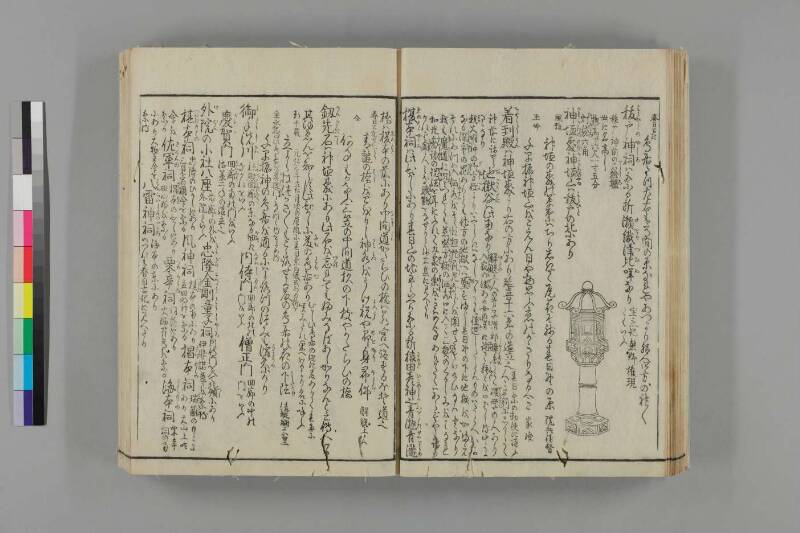
《割書:𬒲戸神前の石燈爐(いしとうろ)|丗に名髙し|惣髙 ̄サ六尺一寸五分|火袋(ひふくろ)六角󠄀》【石燈爐の図】
神垣森(かみかきのもり)神垣山(かみかきのやま)は《振り仮名:𬒲戸|はらひと》の北にあり
《割書:風雅》
神垣の森の草葉はちりしきて尾花そ残る春日野の原 院兵衛督
《割書:玊吟》
千早振神垣山をこえん日や物思ふ恋のかきりなるへき 家隆
着到殿(ちやくたうてん)は神垣森より右の方にあり延喜十六年の造立𬻿《割書:春日祭の勅使び随ふ|人〻着到にしるして》
《割書:神前に詣せら|るゝなり》地獄谷(ぢごくたに)は此南なり《割書:解脱上人(げだつ )の㐧子 《振り仮名:僧都璋圓| しやうゑん》とて碩学(せきがく)の人あり|入寂(にうじやう)の後(のち)ある女の身(み)に詫(つき)#1て《振り仮名:種〻|しゆ〴〵》を口ばしる中に》
《割書:我(わか)大明神の御方便(ごほうへん)よりいみしきはなしかりにも値過(ちぐ)#2したらんものはたとへいか|なる深重(しんぢう)の罪(つみ)ありとも他方の地獄へは墜(をと)すまじ春日野の下に地獄をかまえ》
《割書:それにあつめ入 洒水(しやすい)をそゝぎ經 陀羅尼(だらに)などを聞せたすけ給ひなんとなり|我も魔道(またう)に沉(しづ)みつれとも慈悲(じひ)方便(ほうべん)の洒水(しやすい)口に入て三热( ねつ)のくるしみをはなれ》
《割書:和光垂迹( すいしやく)の説法(せつほう)を耳にふれて九泉( せん)の樂(たのしみ)をきはめん事ありがたくはあらずやと語り|ければ聞(きく)人みな感歎(かんたん)をなせりと沙石集に見へたり》
榎本祠(ゑのもとやしろ)は此ひがしにあり春日山の地主といへり祭る所 猿田彦神(さるだひこのしん)𬻿青瀧(あをたき)青瀧(せいりうの)
【左丁】
橋は榎本(ゑのもと)の前にあり中間道(なかまみち)かたらひの槗は若宮へ詣ずるほそ道𬻿
《割書:春日古記》
青龍(せいりう)の槗(はし)をとをりし神(かみ)水(みつ)をうけ祝(よろこふ)や即身(とをなり)即佛(ほとけ) 解脱上人
《割書:仝》
何事もかなふ三笠の中間道杦の下枝やかたらひの槗
釼先石(けんさきいし)は神垣森にあり此石を忘(わす)れてもふみなばあしかりなんと云傳へける
其ゆゑんを知らず此ひがしに《振り仮名:藤の鳥居|ふち とりゐ》あり《割書:むかし此鳥居の辺に藤ありて春毎に|咲みたれ栄へけるより名に呼ふ》
《割書:新千載 元弘三年立后月次の屏風に春日祭の儀式ある所を》
立よらはつかさ〳〵もこゝろせよ藤の鳥居の花の下陰(したかけ) 後醍醐天皇
《割書:宝永記曰此鳥居を菩提門(ほたいもん)となづくるをよめる》
千早振神の鳥居を通るにはよろつのつみも消失(きうせ)けり
御手洗川(みたらしかは)《割書:社殿(しやてん)囬廊(くはいろう)の東なる細(ほそ)き|ながれをいふ》内侍門(ないしもん)《割書:囬廊の北の|門をいふ》僧正門《割書:囬廊の中の|門をいふ》
慶賀門(けいか )《割書:囬廊(くはいろう)の南の門をいふ|治𣴎二年の造立𬻿》
外院(けゐん)の小社八𫝶《割書:歩廊の外を|外院といふ》忠隆金剛童子祠(たゝだかこんがうとうしやしろ)《割書:内侍門を入て北頰( つら)にあり|伊弉諾尊を祭る》
椿本祠(つはきもとの )《割書:忠隆のひかしにあり|三見宿禰𫝇を祭る》風神祠《割書:椿本(つばき )の南にあり|立田明神を祭る》椙本祠(すきもとの )《割書:瑞籬(みつかき)のもとに|あり大山上咋》
《割書:𫝇を|祭る》佐軍祠(さくんの )《割書:椙本(すきもと)のひかしにあり|田心姫を祭る》栗辛祠(くりからの )《割書:同所にあり|火酢芹尊を祭る》海本祠(うみもとの )《割書:栗辛|祠の南》
《割書:にあり大物主𫝇を|祭る》八雷神祠(はちらいしんのやしろ)《割書:海本の東にあり|いづれも春日古記に見へたり》
現代語訳
【右丁】
《割書:春日古記》
鳥居の立つ左右も高間の原であろうか、集まりたまえ四方の神々よ
祓戸神祠(はらいとのやしろ)は祭る所が瀬織津比咩(せおりつひめ)である《割書:宝永記では熊野権現ともいう》
《割書:祓戸神前の石燈籠は世に名高く、総高さ六尺一寸五分、火袋六角》【石燈籠の図】
神垣森・神垣山は祓戸の北にある
《割書:風雅集》
神垣の森の草葉は散り敷いて、尾花のみが残る春日野の原よ 院兵衛督
《割書:玉吟》
千早振る神垣山を越える日よ、物思いする恋の限りとなるのだろうか 家隆
着到殿(ちゃくとうでん)は神垣森より右の方にある。延喜十六年の造立である《割書:春日祭の勅使に随う人々が着到に記して》
《割書:神前に参詣されるのである》。地獄谷はこの南にある《割書:解脱上人の弟子に、僧都璋圓(しょうえん)という碩学の人がいた。入寂の後、ある女の身に憑いて種々のことを口走る中に》
《割書:「我が大明神の御方便より、いかにも値遇したものは、たとえいかなる深重の罪ありとも、他方の地獄へは堕とすまじ。春日野の下に地獄を設けて》
《割書:それに集め入れ、洒水を注ぎ、経・陀羅尼などを聞かせて助け給いなんとなり。我も魔道に沈みつれども、慈悲方便の洒水が口に入り、三熱の苦しみを離れ》
《割書:和光垂迹の説法を耳にふれて九泉の楽しみを極めん事、ありがたくはあらずや」と語ったので、聞く人みな感嘆したと沙石集に見える》
榎本祠(えのもとやしろ)はこの東にある。春日山の地主神といわれる。祭る所は猿田彦神である。青龍橋(せいりゅうのはし)は
【左丁】
榎本の前にある。中間道(なかまみち)・語らいの橋は若宮へ参詣する細道である
《割書:春日古記》
青龍の橋を通りし神、水を受けて喜ぶや、即身即仏 解脱上人
《割書:同》
何事もかなう三笠の中間道、杉の下枝よ、語らいの橋よ
剣先石(けんさきいし)は神垣森にある。この石を忘れても踏むようなことがあれば凶事があると伝えられているが、その由来は分からない。この東に藤の鳥居がある《割書:昔、この鳥居の辺りに藤があって春ごとに咲き乱れ栄えていたことより名に呼ぶ》
《割書:新千載集に、元弘三年立后月次の屏風に春日祭の儀式ある所を》
立ち寄らば官人たちも心せよ、藤の鳥居の花の下陰よ 後醍醐天皇
《割書:宝永記に曰く、この鳥居を菩提門(ぼだいもん)と名づけることを詠める》
千早振る神の鳥居を通るには、よろずの罪も消え失せにけり
御手洗川《割書:社殿回廊の東なる細き流れをいう》、内侍門《割書:回廊の北の門をいう》、僧正門《割書:回廊の中の門をいう》、
慶賀門(けいがもん)《割書:回廊の南の門をいう。治承二年の造立である》
外院(げいん)の小社八社《割書:歩廊の外を外院という》:忠隆金剛童子祠《割書:内侍門を入って北頬にある。伊弉諾尊を祭る》
椿本祠(つばきもとのやしろ)《割書:忠隆の東にある。三見宿禰命を祭る》、風神祠《割書:椿本の南にある。龍田明神を祭る》、椙本祠(すぎもとのやしろ)《割書:瑞籬のもとにあり、大山咋命を》
《割書:祭る》、佐軍祠(さくんのやしろ)《割書:椙本の東にある。田心姫を祭る》、栗辛祠(くりからのやしろ)《割書:同所にある。火酢芹尊を祭る》、海本祠(うみもとのやしろ)《割書:栗辛祠の南》
《割書:にある。大物主命を祭る》、八雷神祠(はちらいじんのやしろ)《割書:海本の東にある。いずれも春日古記に見える》
英語訳
[Right page]
《Note: Kasuga Koki》
Is it the high Takama Plain stretching on both sides of the standing torii? Gather here, O gods of the four directions!
The Haraitono Shrine (Shrine of the Purification Deity) enshrines Seoritsuhime《Note: The Hōei Record also calls this the Kumano Gongen》
《Note: The stone lantern before the Haraitono Shrine is renowned throughout the land; total height: 6 shaku 1 sun 5 bu; the lantern chamber is hexagonal》【Illustration of stone lantern】
Kamigaki Forest and Kamigaki Mountain are north of the Haraitono Shrine
《Note: Fūga Collection》
The leaves of grass in the divine fence forest have scattered and spread; only the pampas grass remains on the Kasuga Plain In'e no Hyōe no Kami
《Note: Gyokugin Collection》
On the day I cross mighty Kamigaki Mountain, will it be the final limit of my love-sick grief? Ietaka
Chakutōden (the Arrival Hall) is to the right of Kamigaki Forest, built in the sixteenth year of Engi《Note: The attendants following the imperial envoy to the Kasuga Festival record their arrival and》
《Note: then proceed to worship before the shrine》. Jigoku Valley (Hell Valley) is to the south of this《Note: Among the disciples of the Holy Priest Gedatsu, there was a scholar of great learning called the Priestly Superintendent Shōen. After his death, he supposedly possessed a woman's body and among various things he spoke through her:》
《Note: "Through the compassionate means of our Great Deity, anyone who has had any encounter with the deity, no matter how grave and deep their sins, shall not be cast into the hells of other realms. A hell is established beneath Kasuga Plain,》
《Note: where they are gathered, sprinkled with purified water, and made to hear sutras and dharani, so that they may be saved. Though I myself sank into the demonic realm, the purified water of compassionate means entered my mouth, freeing me from the three torments of heat,》
《Note: and touching my ears with the teachings of the harmonious light manifest in traces, I have been able to reach the utmost joys of the afterlife—is this not a grace beyond measure?" Those who heard this all expressed deep admiration, as recorded in the Shasekishū》
The Enomoto Shrine is to the east of this. It is said to be the shrine of the local earth deity of Kasuga Mountain. The deity enshrined is the god Sarutahiko. The Seiryū Bridge (Blue Dragon Bridge) is
[Left page]
before the Enomoto Shrine. The Middle Path (Nakama-michi) and Kataraiのhashi (Dialogue Bridge) are the narrow path leading to Wakamiya Shrine
《Note: Kasuga Koki》
The deity who crossed the Blue Dragon Bridge—may they rejoice receiving the sacred water; instantly becoming Buddha in this very body Holy Priest Gedatsu
《Note: Same》
All wishes are fulfilled on the Middle Path of Mikasa; O cedar lower branches, O Dialogue Bridge!
Kensaki-ishi (Sword Tip Stone) is in Kamigaki Forest. It is passed down that if anyone—even forgetfully—should tread upon this stone, misfortune will follow, though the reason for this is unknown. To the east of this is the Fuji no Torii (Wisteria Torii)《Note: In ancient times, wisteria grew around this torii, blooming in magnificent profusion every spring, which is how it came to be called by this name》
《Note: From the New Senzai Collection, composed for a scene depicting the Kasuga Festival ceremonies on a monthly folding screen for the enthronement ceremony in the third year of Genkō:》
If you should stop here, officials too must be mindful—beneath the shade of flowers at the Wisteria Torii Emperor Go-Daigo
《Note: The Hōei Record says, a poem composed on the naming of this torii as Bodai-mon (Gate of Enlightenment):》
For those who pass through the divine torii standing amid divine power—all ten thousand sins vanish away
The Mitarashi River《Note: refers to the narrow stream east of the shrine's covered corridor》, the Naishi Gate《Note: refers to the north gate of the corridor》, the Sōjō Gate《Note: refers to the middle gate of the corridor》,
and the Keiga Gate《Note: refers to the south gate of the corridor; constructed in the second year of Jishō》
The eight small shrines of the Outer Precinct (Gein)《Note: the area outside the gallery is called the Outer Precinct》: the Tadataka Kongō Dōji Shrine《Note: inside the Naishi Gate on the north side; enshrines Izanagi no Mikoto》,
Tsubakimoto Shrine《Note: east of Tadataka; enshrines Mimi no Sukune no Mikoto》, the Wind God Shrine《Note: south of Tsubakimoto; enshrines the Tatsuta Deity》, Sugimoto Shrine《Note: at the base of the sacred fence; enshrines Oyamakui no》
《Note: Mikoto》, Sakun Shrine《Note: east of Sugimoto; enshrines Tagorihime》, Kurikara Shrine《Note: in the same location; enshrines Hosuseri no Mikoto》, Umimoto Shrine《Note: south of the Kurikara》
《Note: Shrine; enshrines Ōmononushi no Mikoto》, and the Eight Thunder Gods Shrine《Note: east of Umimoto; all of these appear in the Kasuga Koki》