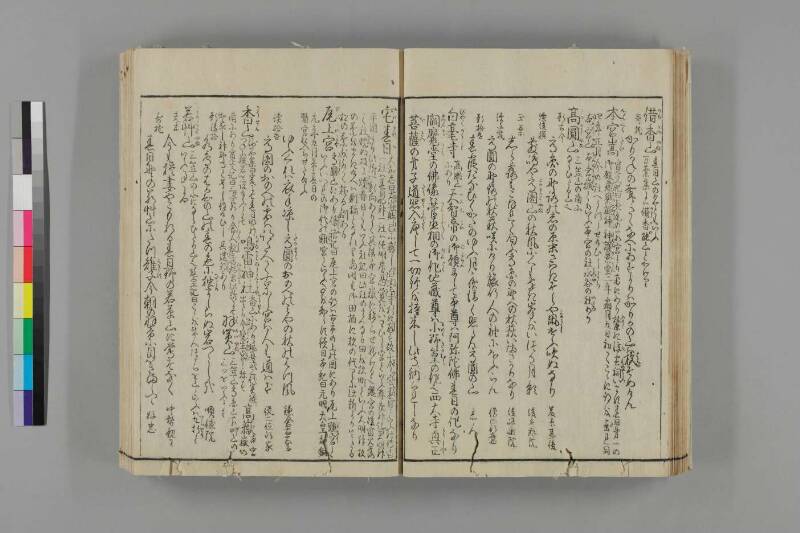
翻刻
【右丁】
借香山(かりかのやま)《割書:春日山の名ともいふ|萬葉集には備香能山(かすがの )とかけり》
《割書:哥枕》
かりかねの聲きくなへにあすよりはかりかの山は栬(もみぢ)そめけん
本宮嵩(ほんくうたけ)《割書:寛文記曰長尾の若宮より南にあり麓(ふもと)に浮雲祠(うきくものやしろ)います春日㐧一の|御殿 建甕槌神(たけみかつちのしん)神護景雲(しんこけいうん)二年霜月九日初てこゝに跡を垂(た)れ同》
《割書:四年正月今の社へうつらせ給ひしより|本宮山(ほんくうやま)本宮嶽(ほんくうがたけ)ともいふ本宮の社 水谷(みつや)の社(やしろ)あり》
髙圓山(たかまとやま)《割書:三笠山の南に|ならひたる山𬻿》
《割書:新古今》
高圓の野路のしの原末さはきそらや凩(こからし)けふ吹ぬなり 藤原基俊
《割書:續後撰》
敷嶋や高圓山(たかまとやま)の秋風にくもなき峯をいつる月影 後鳥羽院
《割書:玉葉》
しら露もこほれて匂ふ高圓の野への秋萩いまさかりなり 後嵯峨院
《割書:續千載》
高圓の野路の秋萩咲にけり旅行人の袖にほふらん 僧正行意
《割書:新拾遺》
春霞たなひくかたのゆふ月夜清く照らん高圓の山 赤人
白毫寺(びやくがうじ)《割書:髙圓山|にあり》天智帝(てんちてい)の御願(ごぐはん)にして本尊は阿弥陀佛春日の作なり
閻魔堂(ゑんまたう)の佛像は菅丞相(かんしやう〳〵)の御作(おんさく)地藏尊は小野篁(おのゝたかむら)の作𬻿西大寺 興正(こうしやう)
菩薩(ほさつ)の㐧子 道照(たうせう)入唐(につたう)して一切経を持來し此寺 ̄ニ納られしなり
【左丁】
宅春日(やけかすか)《割書:大和志曰 大宅郷(おほやけかう)已(すて)に癈(はい)し白毫寺村(ひくかうし )に存(そん)す故に今(いま)宅春日(やけかすか)よいふ社傳に曰|一社は春日明神一社は法明房忍覚( にんかく)をいわひし宮といふ春夜神記曰大明神》
《割書:平𫝍より此所へ影向ありて其後本宮嶽に移らせ給ける𬻿遷宮の後雷火落|て社 焼(やけ)ぬ故に焼春日(やけ )ともいふ社記曰此社の前なる田を杦町といふ大明神杦》
《割書:の葉をまき給へは則稲となれり當时も御田植に杦の代りに此所より生たる松#1の葉を取て植る例あり》
尾上宮(おのへのみや)《割書:高圓山(たかまと )にあり倭路記(あまとち )曰尾上宮の跡は古市の上の𫝍にあり尾上離宮( りきう)と|いふいつれの御代の離宮(り )といふ事を知らす續日本紀曰元明天皇和銅》
《割書:元年九月帝春日の|離宮に入らせたまふ》
ゆふくれは衣手凉し高圓(たかまと)のおのへのみやの秋のはつ風 鎌倉右大臣
《割書:續拾遺》
高圓のおのへの宮は跡たへて古にし宮は人も通はず 従二位行家
香山(かうせん)《割書:沙石集曰爰にて春日明神|つねに般若を説給ふとそ》鳴雷神社(なるかみのしんしや)《割書:香山(かうせん)にあり延喜式三代實録 ̄ニ|出たり今(いま)髪生宮(かみなりのみや)と称す》髙嶽《割書:本宮|嶽の》
《割書:南にあり寛文記曰三ッ宮あり舎人親王(とねりしん )の姫君(ひめきみ)此所にて|出家し神野寺と号し住給ひし其 遺跡(ゐせき)あり》羽買山(はかいやま)《割書:三笠山髙圓山若艸山の|三ッをいふにそ》
《割書:新後拾》
水鳥のはかひの山の春の色に独(ひとり)ましらぬ岩つゝし哉 順徳院
若艸山(わかくさやま)《割書:三笠山の北にならひたる山𬻿延宝記曰こゝを皆人つゞらを山といふは九折(つゝらをり)と|いふ事にや》
《割書:夫木》
今も猶妻やこもれる春日野の若草山に鶯そなく 中務親王
《割書:哥枕》
春日野の若艸山にたつ雉子(きゞす)今朝の羽音に目をさましつゝ 好忠
現代語訳
【右丁】
**借香山(かりかのやま)**〔春日山の別名ともいう。万葉集には「備香能山(かすかのやま)」と書いてある〕
〔歌枕〕
雁がねの声聞くとともに、明日よりは借香の山は紅葉(もみじ)染めけん
**本宮嶽(ほんぐうたけ)**〔寛文記に曰く、長尾の若宮より南にあり、麓に浮雲祠(うきぐものやしろ)が鎮座する。春日第一の御殿。建甕槌神(たけみかづちのかみ)が、神護景雲二年(768年)霜月九日に初めてここに御跡を垂れ、同四年正月に今の社へ遷られた。それより本宮山・本宮嶽ともいう。本宮の社・水谷(みずや)の社がある〕
**高円山(たかまとやま)**〔三笠山の南に連なる山である〕
〔新古今集〕
高円の野路の篠原、末騒ぎ、空や木枯らし、今日吹きぬらむ 藤原基俊
〔続後撰集〕
敷島や高円山(たかまとやま)の秋風に、雲なき峰を出ずる月影 後鳥羽院
〔玉葉集〕
白露もこほれて匂ふ高円の、野辺の秋萩、今盛りなり 後嵯峨院
〔続千載集〕
高円の野路の秋萩咲きにけり、旅行く人の袖、匂ふらん 僧正行意
〔新拾遺集〕
春霞たなびく方の夕月夜、清く照らん高円の山 赤人
**白毫寺(びゃくごうじ)**〔高円山にある〕天智天皇の御願(ごがん)によって建てられ、本尊は阿弥陀仏で春日(仏師)の作である。
閻魔堂の仏像は菅丞相(菅原道真公)の御作、地蔵尊は小野篁(おののたかむら)の作である。西大寺・興正菩薩の弟子、道照(どうしょう)が入唐して一切経を持ち帰り、この寺に納められた。
---
【左丁】
**宅春日(やけかすが)**〔大和志に曰く、大宅郷(おおやけごう)はすでに廃れ、白毫寺村に存する。ゆえに今、宅春日という。社伝に曰く、一社は春日明神、一社は法明房忍覚(にんかく)を祀った宮という。春夜神記に曰く、大明神は平城(の地)よりこの所へ影向(ようごう)あって、その後、本宮嶽に遷られた。遷宮の後、雷火が落ちて社が焼けたため、焼春日(やけかすが)ともいう。社記に曰く、この社の前にある田を「杉町」という。大明神が杉の葉を撒かれると、それが即座に稲となった。当時も御田植えに杉の代わりに、この所より生えた松の葉を取って植える慣例がある〕
**尾上宮(おのえのみや)**〔高円山にある。倭路記に曰く、尾上宮の跡は古市の上の辺にある。尾上離宮という。いずれの御代の離宮かは知れない。続日本紀に曰く、元明天皇和銅元年九月、帝は春日の離宮に入られた〕
夕暮れは衣手涼し高円の、尾上の宮の秋の初風 鎌倉右大臣
〔続拾遺集〕
高円の尾上の宮は跡絶えて、古(いにしえ)にし宮は人も通わず 従二位行家
**香山(こうせん)**〔沙石集に曰く、ここにて春日明神が常に般若を説かれるとのことである〕 **鳴雷神社(なるかみのじんじゃ)**〔香山にある。延喜式・三代実録に記されている。今は「髪生宮(かみなりのみや)」と称する〕 **高嶽**〔本宮嶽の南にある。寛文記に曰く、三つの宮がある。舎人親王の姫君がこの所で出家し、神野寺(かみのじ)と号して住まわれた。その遺跡がある〕
**羽買山(はかいやま)**〔三笠山・高円山・若草山の三山のことをいうのであろう〕
〔新後拾遺集〕
水鳥の羽買の山の春の色に、独り交じらぬ岩躑躅(いわつつじ)かな 順徳院
**若草山(わかくさやま)**〔三笠山の北に連なる山である。延宝記に曰く、ここを皆人が「つづら山」というのは、「九折(つづらおり)」ということからか〕
〔夫木和歌抄〕
今も猶、妻やこもれる春日野の、若草山に鶯ぞ鳴く 中務親王
〔歌枕〕
春日野の若草山に立つ雉子(きぎす)、今朝の羽音に目をさましつつ 好忠
英語訳
**[Right page]**
**Karika Mountain (Karika-no-yama)** [Also known by another name for Kasuga Mountain. In the *Man'yōshū*, it is written as "Kasuga-no-yama" (備香能山).]
[Utamakura (poetic place name)]
Upon hearing the cry of the wild geese, from tomorrow onward, Karika Mountain must have begun to be dyed in autumn colors.
**Hongū Peak (Hongū-take)** [According to the *Kanbun-ki*, it lies to the south of the Young Shrine of Nagao. At its foot stands the Ukigumo Shrine. It is the foremost of the Kasuga shrines, housing the deity Takemikazuchi-no-kami, who first manifested here on the ninth day of the eleventh month of the second year of Jingo Keiun (768 CE), and then transferred to the present shrine in the first month of the fourth year of the same era. Since then, it has also been called Hongū Mountain and Hongū Peak. The Hongū Shrine and Mizuya Shrine are located here.]
**Takamato Mountain (Takamato-yama)** [A mountain range extending to the south of Mikasa Mountain.]
[*Shin Kokin Wakashū*]
On the wild path of Takamato, the tips of the bamboo grass sway in the wind— could it be the winter gale blowing through the sky today? — *Fujiwara no Mototoshi*
[*Shoku Gosen Wakashū*]
At Shikishima's Takamato Mountain, the moonlight emerges over the cloudless peak in the autumn wind. — *Retired Emperor Go-Toba*
[*Gyokuyō Wakashū*]
Even the white dew overflows with fragrance at Takamato— the autumn bush clover in the fields is now at its very peak. — *Retired Emperor Go-Saga*
[*Shoku Senzai Wakashū*]
The autumn bush clover has bloomed along the wild paths of Takamato— its fragrance must linger on the sleeves of those who travel by. — *Sōjō Gyōi*
[*Shin Shūi Wakashū*]
In the evening moonlight where spring haze trails, may the light shine clear upon Takamato Mountain. — *Akahito*
**Byakugō-ji Temple** [Located on Takamato Mountain.] Founded by the vow of Emperor Tenji (Tenchi). The principal image is an Amida Buddha, the work of (the Buddhist sculptor) Kasuga. The Buddhist image in the Enma Hall is the work of Sugawara no Michizane (the Minister of Kan), and the Jizō Bodhisattva is the work of Ono no Takamura. Dōshō, a disciple of Kōshō Bosatsu of Saidai-ji Temple, traveled to Tang China and brought back the complete Buddhist scriptures (Issaikyō), which were enshrined in this temple.
---
**[Left page]**
**Yake-Kasuga (Taku-no-Kasuga Shrine)** [According to the *Yamato-shi*, the Ōyake district has already fallen into ruin, but (the shrine) survives in Byakugō-ji village; hence it is now called Yake-Kasuga. According to shrine tradition, one shrine is dedicated to the Kasuga Deity, and the other is said to be a shrine enshrining Hōmyōbō Ninkaku. According to the *Shunyo Shinki*, the Great Deity made a divine visitation (yōgō) to this place from Heijō (Nara), and thereafter moved to Hongū Peak. After the transfer of the shrine, lightning fire fell and burned the shrine, hence it is also called Yake-Kasuga (Burned Kasuga). According to the shrine records, the rice field in front of this shrine is called "Sugi-chō" (Cedar Block). When the Great Deity scattered cedar leaves, they immediately became rice. Even today, there is a custom of taking young pine needles grown at this site in place of cedar leaves during the rice-planting ceremony.]
**Onoue Shrine (Onoue-no-miya)** [Located on Takamato Mountain. According to the *Yamatoji-ki*, the ruins of the Onoue Shrine lie in the area above Furuichi, called the Onoue Detached Palace. It is not known from which reign this detached palace dates. According to the *Shoku Nihongi*, in the ninth month of the first year of Wadō (708 CE) during the reign of Empress Genmei, the Emperor entered the detached palace at Kasuga.]
At dusk, the sleeves feel cool at the Onoue Shrine on Takamato— the first breath of autumn wind. — *The Kamakura Minister of the Right (Minamoto no Sanetomo)*
[*Shoku Shūi Wakashū*]
The Onoue Shrine atop Takamato has fallen to ruin— this ancient palace is visited by no one. — *Junior Second Rank Yukiie*
**Kōsen (Kōzan)** [According to the *Shaseki-shū*, it is said that the Kasuga Deity here always preaches the Prajñā (Hannya) sutras.] **Narugami Shrine (Narugami-no-jinja)** [Located at Kōsen. It is recorded in the *Engishiki* and the *Sandai Jitsuroku*. Today it is called Kaminari-no-miya (Thunder Deity Shrine).] **Takadake (High Peak)** [Located to the south of Hongū Peak. According to the *Kanbun-ki*, there are three shrines here. The princess of Prince Toneri renounced the world at this place, took the religious name Kamino-ji, and lived here. The traces of this remain.]
**Hakai Mountain (Hakai-yama)** [This likely refers collectively to Mikasa Mountain, Takamato Mountain, and Wakakusa Mountain.]
[*Shin-Go-Shūi Wakashū*]
Among the spring colors of Hakai Mountain where waterfowl swim, the azalea alone stands apart, blooming on the rocks. — *Retired Emperor Juntoku*
**Wakakusa Mountain (Wakakusa-yama)** [A mountain range extending to the north of Mikasa Mountain. According to the *Enpō-ki*, people commonly call this place "Tsuzura Mountain," which perhaps derives from the word *tsuzuraori* (meaning a winding, zigzag path).]
[*Fuboku Wakashō*]
Even now, is a wife still hidden away? — A warbler sings upon Wakakusa Mountain in the Kasuga Fields. — *Prince Nakatsukasa*
[*Utamakura*]
A pheasant rises from Wakakusa Mountain in the Kasuga Fields— I am awakened by the sound of its wings this morning. — *Yoshitada*