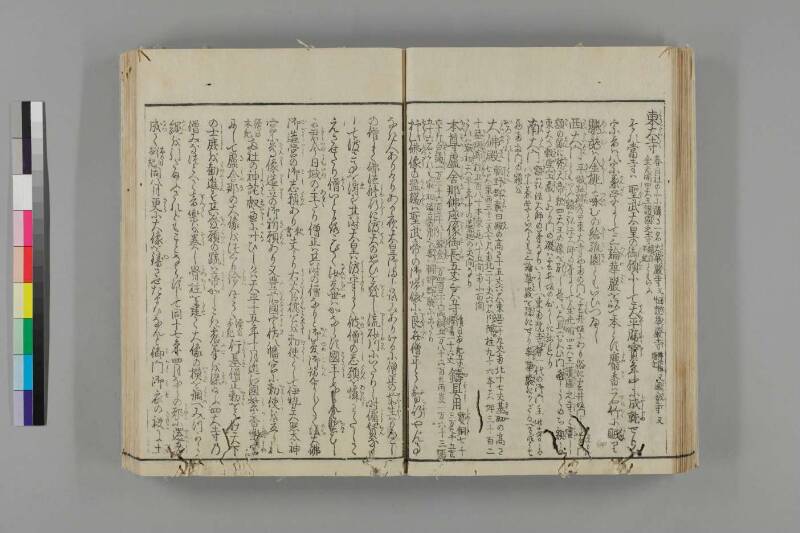
翻刻
東大寺(とうだいし)《割書:春日社の北に隣る一名 大蕐嚴寺(たいげごん )《割書:又》恒説蕐嚴寺(こうせつげごんじ)《割書:佛法傳|通記》《割書:又》國分寺(こくぶんじ)《割書:又》|金光明四天王護國之寺( ごこく )《割書:續日|本紀》ともいふ》
それ當寺は 聖武天皇(しやうむ )の御願(ごぐはん)にして天平勝寳(てんひやうしやうほう)年中に成就(じやうじゆ)せり
宗旨は八宗兼学( けんがく)にして三論蕐嚴( ろんけごん)を以て本とす麝香(じやかう)は石竹(せきちく)に眠(ねふ)り
鸚鵡(あふむ)は金桃(きんとう)に啄(つひば)むの給孤園(きうこをん)#1ともいひつへし
西大門(さいたいもん)《割書:平城趾跡考(な ら しせき )曰東大寺西南の門𬻿雲井坂(くも )にあり俗に雲井坂門とも国分門(こくぶんもん) |ともいふ額(がく)は弘法大師の筆にして金光明四天王護國之寺( ごこくしし)と書(しよ)し》
《割書:額(かく)の縁(ゑん)に梵天帝釈四天王(ほんてんたいしやく )の像を顕(あらは)し長 ̄サ八尺 亘(わたり)六尺此門 癈(はい)してのち額(がく)は|東大寺 糓屋(こくや)宝藏(ほうさう)にあり門の礎(いしつへ)は雲井坂のひかしに残れり》
南大門(なんたい )《割書:額(がく)は弘法大師の筆なりいにしへ東南院 寺務(じむ)一代の御門主此寺は|八宗兼学といへとも三論蕐嚴( けこん)を殊(こと)にせり争(いかでか)蕐嚴(けこん)にかぎるべからずとて》
《割書:西南両門の額を|おろされしと𬻿》
大佛殿(たいぶつでん)《割書:朝野群載(てうやくんさい)曰 殿(てん)の髙さ十五丈六尺東西二十九丈南北十七丈 基砌(きせい)の髙さ|七尺東西三十二丈七尺南北二十丈六尺 内陣(ないちんの)柱九十六本天坪三千百二》
《割書:十 葢(かい)廽廊(くはいろうの)柱(はしら)五百八十本東西八十五間南北百間|これは㝡初(さいしよ)天平年中の造建(ざうこん)の丈間なり
本尊(ほんそん)《振り仮名:盧舍那佛𫝶像|るしやなふつささう》御長(みたけ)五丈三尺五寸《割書:續日本紀五丈|釋書一十六丈》《振り仮名:鑄具󠄁用|ゐぐよう》《割書:《振り仮名:𤎼銅|じゆくとう》七千|三万九千五百》
《割書:六十斤 白錫(ひやくしやく)一万二千六百三十八斤 練金(れんきん)一万四百三十六両 銅(あかゞね)五万八千六百卄両炭一万六千三百|五十六石これも㝡初(さいしよ)造立(ざうりう)の用(よう)𬻿委(くはしく)は朝野群載(てうやぐんさい)に出たり》
抑も此 佛像(ぶつざう)の濫觴(らんじやう)は聖武帝の御帰依( きゑ)に良弁僧正(りやうべん )とて智行(ちぎやう)やん事
【左丁】
なき人ありけりある夜天皇御まどろみありけるに僧正の前生(せんじやう)はもろこし
の僧にて佛法修行( しゆぎやう)に渡天(とてん)の思ひを發(をこ)し流砂川(りうしやかは)にいたりし时 傭賃(ようちん)なく
して渡る事を得(ゑ)ず其时天皇は渡守(わたしもり)にて彼僧(かのそう)の志願(しぐはん)を憐(あはれみ)わたして
させたり僧(そう)いとよろこびて汝(なんぢ)來世(らいせ)はかならす國王(こくわう)とならんと誓(ちか)ひし
か君(きみ)今(いま)日域(にちいき)の主(あるじ)たり僧正は其时の僧なりと御夢(おんゆめ)御覧(ごらん)まし〳〵て後(のち)大佛
御造営(ござうりう)#2の御志願(こしぐはん)あり《割書:釈|書》夫より右大臣橘公(うたいしんたちはなのきみ)を勅使(ちよくし)として伊㔟天照太神
宮に尊像造立(そんさうざうりう)の御祈願( きくはん)あり又 豊前國(ふせんのくに)宇佐八幡宮(うさ )に勅使(ちよくし)を立られ
《割書:續日|本紀》両社の神詫(しんたく)#3叡慮(ゑいりよ)に叶(かな)ひしかば天平十五年十月近江國 紫香樂宮(しがらきのみや)
にして盧舎那(るしやな)の大像をつくり給(たまは)んとて《割書:續日|本紀》行基僧正(ぎやうき )勅(ちよく)をうけ天下
の士庶(ししよ)を勧進(くはんしん)す其 發願(ほつくはん)の䟽(しよ)は帝(いかと)かしこき震筆(みふで)#4を染(そめ)給ふ四大寺の
僧みなつとへて音樂(をんがく)を奏(そう)し骨柱(こつちう)を建(たて)て大像の摸(いかた)を調(とゝの)へみづから
縄(なは)を引たまふされどもことならずして同十七年四月ならの都(みやこ)に遷幸(せんかう)
成(なつ)て《割書:續日|本紀》同八月 更(さら)に大像を鑄(ゐ)させたまひなんと御門(みかど)御衣(みぞ)の袂(たもと)に土(つち)
現代語訳
## 東大寺
(春日大社の北に隣接する。別名を大華厳寺〔たいけごんじ〕ともいい、また恒説華厳寺〔こうせつけごんじ〕〔『仏法伝通記』〕、また国分寺〔こくぶんじ〕、また金光明四天王護国之寺〔こんこうみょうしてんのうごこくのてら〕〔『続日本紀』〕ともいう。)
そもそもこの寺は、聖武天皇の御願〔ごがん〕によって建立され、天平勝宝〔てんぴょうしょうほう〕年中(749〜757年)に完成した。
宗旨は八宗兼学〔はっしゅうけんがく〕であり、三論・華厳を根本とする。麝香は石竹〔せきちく〕の花に眠り、鸚鵡〔おうむ〕は金桃〔きんとう〕を啄〔ついば〕む——まさに給孤園〔ぎっこおん〕(祇園精舎)にたとえるべき霊地である。
**西大門(さいだいもん)**
〔『平城趾跡考』によれば、東大寺西南の門で、雲井坂〔くもいざか〕にある。俗に「雲井坂門」あるいは「国分門〔こくぶんもん〕」ともいう。扁額は弘法大師〔こうぼうだいし〕の筆によるもので、「金光明四天王護国之寺」と書かれている。
額の縁には梵天・帝釈・四天王の像が表されており、長さ八尺、幅六尺。この門が廃された後、扁額は東大寺穀屋〔こくや〕宝蔵に納められており、門の礎石は雲井坂の東に残っている。〕
**南大門(なんだいもん)**
〔扁額は弘法大師の筆である。昔、東南院の寺務として一代の御門主がおられたが、この寺は八宗兼学といえども三論・華厳を特に重んじている。「どうして華厳だけに限ることができようか」として、西南両門の扁額を下ろされたと伝えられる。〕
**大仏殿(だいぶつでん)**
〔『朝野群載〔ちょうやぐんさい〕』によれば、殿の高さ十五丈六尺、東西二十九丈、南北十七丈、基壇〔きだん〕の高さ七尺、東西三十二丈七尺、南北二十丈六尺、内陣の柱九十六本、天坪(天井面積)三千百二十。また回廊の柱五百八十本、東西八十五間、南北百間。これはもっとも最初の天平年中の造営時の寸法・規模である。〕
**本尊 盧舎那仏坐像〔るしゃなぶつざぞう〕**
御丈〔みたけ〕五丈三尺五寸〔『続日本紀』には五丈、『釈書』には一十六丈とある〕。
鋳具用〔鋳造に用いた材料〕:
〔熟銅〔じゅくどう〕七十三万九千五百六十斤、白錫〔しろすず〕一万二千六百三十八斤、練金〔れんきん〕一万四百三十六両、銅〔あかがね〕五万八千六百二十両、炭一万六千三百五十六石。これも最初の造立の際に用いたもので、詳しくは『朝野群載』に載っている。〕
そもそもこの仏像建立の濫觴〔らんしょう〕(始まり)は、聖武帝の御帰依〔おきえ〕によるものである。良弁僧正〔りょうべんそうじょう〕という、智行〔ちぎょう〕ともに並ぶものなき人物がおられた。
---
【左丁】
ある夜、天皇がまどろんでおられると、(夢の中で)僧正の前世はもろこし(唐・中国)の僧であり、仏法修行のために天竺〔てんじく〕へ渡ろうとの志を起こし、流砂川〔りゅうさがわ〕(砂漠の川)に至ったが、賃金がなくて渡ることができなかった。そのとき天皇(の前世)は渡守〔わたしもり〕(渡し守)であり、その僧の志願を憐れんで渡してあげた。僧はたいそう喜んで、「汝〔なんじ〕、来世には必ず国王となるであろう」と誓われた。君(天皇)が今、日域〔にちいき〕(日本)の主となっておられるのは、僧正がそのときの僧であるからだ——と御夢を御覧になり、その後、大仏御造営の御志願〔ごしがん〕が起こった。〔『釈書〔しゃくしょ〕』〕
それより右大臣橘公〔うだいじんたちばなのきみ〕を勅使〔ちょくし〕として、伊勢天照太神宮〔いせあまてらすおおかみのみや〕に尊像造立の御祈願があった。また豊前国〔ぶぜんのくに〕宇佐八幡宮〔うさはちまんぐう〕にも勅使を立てられ〔『続日本紀』〕、両社の神託が叡慮〔えいりょ〕(天皇の御心)に叶ったので、天平十五年(743年)十月、近江国紫香楽宮〔しがらきのみや〕において盧舎那の大像を造ろうと決まり〔『続日本紀』〕、行基僧正〔ぎょうきそうじょう〕が勅を受け、天下の士庶〔ししょ〕(武士・庶民)を勧進〔かんじん〕した。その発願の疏〔しょ〕(文書)は、帝がおそれ多くも御自ら震筆〔みふで〕を染められた。四大寺の僧がみな集まって音楽を奏し、骨柱〔こっちゅう〕(芯柱)を建てて大像の型〔いかた〕を整え、御自ら縄を引かれた。しかしことが成就せず、同十七年(745年)四月に奈良の都に遷幸〔せんこう〕され〔『続日本紀』〕、同年八月、改めて大像を鋳造しようと、御門〔みかど〕(天皇)が御衣〔みぞ〕の袂〔たもと〕に土を……
英語訳
## Tōdai-ji (東大寺)
*(Located to the north of Kasuga Shrine. Also known as Taikegonji [大華厳寺]; also called Kōsetsu Kegonji [恒説華厳寺] (according to the* Buppō Dentsū-ki *[仏法伝通記]); also called Kokubun-ji [国分寺]; and also Konkōmyō Shi-tennō Gokoku no Tera [金光明四天王護国之寺, "Temple Protecting the Nation by the Golden Light and the Four Heavenly Kings"] (according to the* Shoku Nihongi *[続日本紀]).)*
This temple was founded by the vow of Emperor Shōmu and was completed during the Tenpyō Shōhō era (749–757). Its doctrinal tradition is one of study encompassing all eight schools of Buddhism, with the Sanron (Three Treatises) and Kegon (Flower Garland) schools as its foundation. A place where musk deer sleep among pinks and parrots peck at golden peaches — it is truly a sacred precinct worthy of comparison to the Jetavana Grove (給孤園, Gikōon).
**West Great Gate (西大門, Saidaimon)**
*[According to the* Nara Shiseki Kō *[平城趾跡考], this is the southwestern gate of Tōdai-ji, located at Kumoi-zaka slope. It is popularly known as "Kumoi-zaka-mon" or "Kokubun-mon." The nameplate (gaku) was written by Kōbō Daishi [弘法大師, i.e., Kūkai] and bears the inscription "Konkōmyō Shi-tennō Gokoku no Tera."*
*The border of the plaque depicts images of Brahmā (梵天), Indra (帝釈), and the Four Heavenly Kings (四天王), measuring eight shaku in length and six shaku in width. After the gate fell into ruin, the plaque was stored in the Tōdai-ji Grain House (穀屋) Treasury (宝蔵), and the gate's foundation stones remain to the east of Kumoi-zaka.]*
**South Great Gate (南大門, Nandaimon)**
*[The nameplate was written by Kōbō Daishi. In ancient times, a certain temple administrator served as head of the Tōnain [東南院] for one generation. He maintained that while this temple embraces all eight schools, it particularly honors the Sanron and Kegon schools, and asked, "How could it be confined to Kegon alone?" — whereupon the plaques of both the west and south gates are said to have been removed.]*
**Great Buddha Hall (大仏殿, Daibutsuden)**
*[According to the* Chōya Gunzai *[朝野群載], the hall stands fifteen jō and six shaku tall, twenty-nine jō east to west, and seventeen jō north to south. The height of the stylobate (基砌) is seven shaku; east to west thirty-two jō and seven shaku, north to south twenty jō and six shaku. The inner sanctum has ninety-six pillars, and the ceiling area is 3,120 units. The surrounding corridors have 580 pillars, spanning eighty-five ken east to west and one hundred ken north to south. These are the dimensions from the original construction during the Tenpyō era.]*
**Principal Image: Seated Statue of Vairocana Buddha (盧舎那仏坐像, Rushana-butsu zazō)**
Height: five jō, three shaku, five sun. *(The* Shoku Nihongi *gives five jō; the* Shakusho *gives sixteen jō.)*
Materials used in casting:
*[Refined copper (熟銅): 739,560 kin; white tin (白錫): 12,638 kin; refined gold (練金): 10,436 ryō; copper (銅): 58,620 ryō; charcoal: 16,356 koku. These are the materials used in the original construction; for full details, see the* Chōya Gunzai*.]*
The origins (濫觴, ranshō) of this Buddha image lie in the devout faith of Emperor Shōmu. There was a monk of incomparable wisdom and practice named Rōben Sōjō (良弁僧正, Bishop Rōben).
---
**[Left page]**
One night, while the Emperor was dozing, he had a dream in which the bishop's previous life was revealed: he had been a monk in Tang China, and having aroused the aspiration to travel to India (天竺, Tenjiku) to practice the Buddhist Law, he arrived at the River of Flowing Sand (流砂川, Ryūsha-kawa — the desert river), but having no money for the fare, he could not cross. At that time, the Emperor (in a former life) was the ferryman, and moved with compassion by the monk's aspiration, he ferried him across free of charge. The monk rejoiced greatly and swore: "In your next life, you shall surely become a king of a nation." Now that His Majesty is lord of the Land of the Rising Sun (日域, Nichii-ki — Japan), and Sōjō is that very monk of old — so ran the imperial dream. After this vision, His Majesty conceived the great wish to erect the Great Buddha. *(* Shakusho *[釈書])*
Accordingly, the Minister of the Right, Lord Tachibana (右大臣橘公, Udaijin Tachibana no Kimi), was dispatched as imperial envoy to the Grand Shrine of Amaterasu at Ise to offer prayers for the casting of the sacred image. An envoy was also sent to Usa Hachiman Shrine (宇佐八幡宮) in Buzen Province. *(* Shoku Nihongi *)* When the divine oracles of both shrines accorded with the Emperor's wishes, in the tenth month of Tenpyō 15 (743), at the Shigaraki Palace (紫香楽宮) in Ōmi Province, it was determined that the great image of Vairocana should be made. *(* Shoku Nihongi *)* Bishop Gyōki (行基僧正) received the imperial command and solicited contributions (勧進, kanjin) from warriors and commoners throughout the land. The written vow (発願の疏, hotsugan no sho) was composed by the Emperor himself in his august hand. Monks from the four great temples all gathered, music was performed, the central pillar was erected, the mold (型, ikata) for the great image was prepared, and the Emperor himself pulled the rope. Yet the project did not succeed there, and in the fourth month of the seventeenth year (745), the court relocated to the capital of Nara. *(* Shoku Nihongi *)* In the eighth month of the same year, the Emperor resolved once again to cast the great image, and into the sleeve of his imperial robe he placed earth…
*(The text continues on the following page.)*