翻刻
【コマ32】
【右丁】
を包(つゝ)み御座(こさ)を築(つか)せらるれは氏の人〻同しやうに御座をそつかれける《割書:朝野|群載》
同十八年十月 聖武天皇(しやうむ )元正上皇(げんしやう )光明皇后(くはうみやうくはううう)金鐘寺(こんしやうじ)に行幸(みゆき)成て
大像の供養(くよう)あり佛の前後に一万五千七百余の燈明(とうみやう)をかゝげ給ふ《割書:續日|本紀》道師は
婆羅門僧正(ばらもん )咒願師(しゆぐはんし)は行基僧正(ぎやうぎ )とぞ聞へし《割書:東|鑑》㝡初(さいしよ)より八ヶ度まて𨸩め
鑄(ゐる)《割書:朝野|群載》遂(つい)に天平勝宝(てんひやうしやうほう)元年十月 其㓛( こう)こと〳〵く成就(じやうじゆ)す同四年四月に
開眼供養(かいげんくよう)あり《割書:續日|本紀》道師は菩提僧正(ぼだい )咒願師(じゆくはん )は道濟律師(たうさいりつし)講師(かうし)は隆尊(りうそん)
讀師(とくし)は延福(ゑんふく)とぞ聞(きこ)へし《割書:帝王|編年》
《割書:これよりはしめ㝡初(さいしよ)の供養(くよう)の时 行基僧正(ぎやうぎ )を導師(たうし)にと宣下(せんけ)を給ひしが僧正 加程(かほと) |の導師 凢僧(ほんそう)の身に應(にや)はぬ事にて侍る近頃に異朝(ゐてう)の僧(そう)來(きた)らんそれぞ導師(だうし)に》
《割書:足れりと辭(じ)し申されしが天平八年既に來朝の期(ご)なりとむかひ艤(ふなよそほひ)て難波(なには)の磯(いそ)|を漕(こぎ)はなるゝに法衣の衭(たもと)は只百花の風にひるかへるに異(こと)ならず音樂(をんがく)の響(ひゞき)は》
《割書:ともに萬水(ばんすい)の浪(なみ)に調(しら)べるほどこそあれ沖波(おきなみ)遥(はるか)によせ來る舩ありたがひに|それぞとや思ひけん櫓(ろ)櫂(かい)に舩を飛し見るがうちにちかつきぬれはたがひに》
《割書:うちゑみ只 旧友(きうゆう)に|異ならず《割書:帝王|編年》》
拾遺
霊山の釋迦の御前に契てし《振り仮名:眞󠄀如|しんによ》朽せす逢見つるかな 行基僧正
仝
迦毘羅衛(かびらゑ)にともに契(ちきり)し甲斐(かひ)ありて文殊(もんしゆ)のみかほ逢みつる哉 波羅門#1
【左丁】
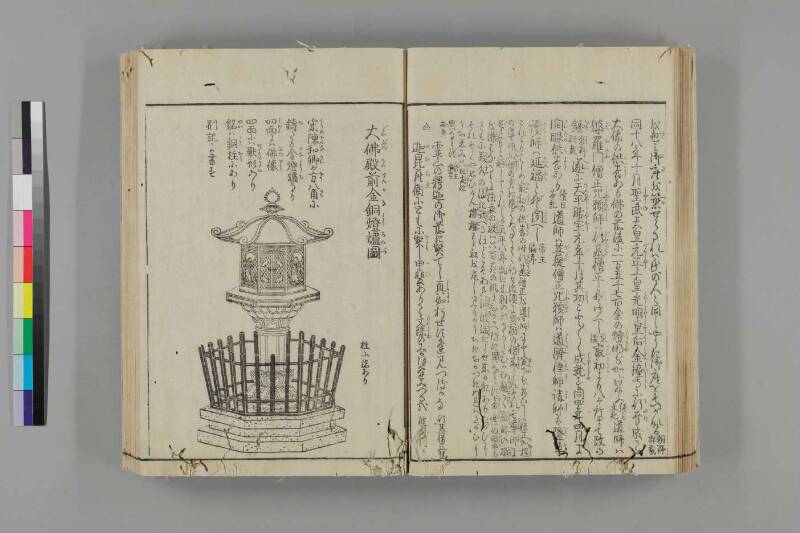
大佛殿前金銅燈爐圖(だいぶつてんせんかなとうろのづ)
柱に銘あり
宋陳和卿(そうのちんなけい)が方八角(ほう かく)に
鑄(ゐ)たる金燈爐(かなとうろ)なり
四面(しめん)には佛像(ぶつざう)
四面には獣形(けだものかたち)あり
銘(めい)は銅柱(とうちう)にあり
別記に書す
現代語訳
## 【右丁】
(つづき)……土を包んで御座〔ござ〕を築かせられると、氏の人々も同じように御座を築かれた。〔『朝野群載』〕
同十八年(746年)十月、聖武天皇・元正上皇〔げんしょうじょうこう〕・光明皇后〔こうみょうこうごう〕が金鐘寺〔こんしょうじ〕に行幸〔ぎょうこう〕なされ、大像の供養が行われた。仏の前後に一万五千七百余りの燈明〔とうみょう〕を掲げられた。〔『続日本紀』〕道師は婆羅門僧正〔ばらもんそうじょう〕、咒願師〔しゅがんし〕は行基僧正〔ぎょうきそうじょう〕であったと伝えられる。〔『東鑑〔あずまかがみ〕』〕最初より八度にわたって重ねて鋳造し〔『朝野群載』〕、ついに天平勝宝元年(749年)十月にそのすべての功が成就した。同四年(752年)四月に開眼供養〔かいげんくよう〕が行われた。〔『続日本紀』〕道師は菩提僧正〔ぼだいそうじょう〕、咒願師は道済律師〔どうさいりっし〕、講師は隆尊〔りゅうそん〕、読師〔どくし〕は延福〔えんぷく〕であったと伝えられる。〔『帝王編年〔ていおうへんねん〕』〕
〔これより以前、最初の供養の際には、行基僧正を導師にと宣下〔せんげ〕を賜ったが、僧正は「かほどの導師は、凡僧〔ぼんそう〕の身には相応〔ふさわ〕しくないことでございます。近ごろ異朝〔いちょう〕(外国)から僧が来ると聞いております。その方こそ導師にふさわしい」と辞退申し上げた。天平八年(736年)、いよいよ来朝の期〔ご〕が来たとして、船を整えて難波〔なにわ〕の磯〔いそ〕を漕ぎ離れると、法衣の袂〔たもと〕はまるで百花の風にひるがえるようであり、音楽の響きは万の水の波に調べるほどであった。沖の波の彼方から遥かに近づいてくる船があり、互いに「それぞあの人か」と思ったのであろうか、櫓〔ろ〕と櫂〔かい〕をせわしく動かして船を飛ばし、見るうちにも近づいてくると、互いにほほ笑み合い、まるで旧友に再会したかのようであったという。〔『帝王編年』〕〕
**拾遺〔しゅうい〕(歌)**
> 霊山の釋迦の御前に契〔ちぎ〕りてし 真如〔しんにょ〕朽〔く〕ちせず 逢い見つるかな
> ——行基僧正
> 迦毘羅衛〔かびらえ〕にともに契りし甲斐〔かい〕ありて 文殊〔もんじゅ〕のみかほ 逢い見つるかな
> ——婆羅門〔ばらもん〕(菩提僧正)
---
## 【左丁】
### 大仏殿前金銅燈炉図〔だいぶつでんまえこんどうとうろのず〕
> 柱に銘あり
宋の陳和卿〔ちんなけい〕が八角形に鋳造した金銅燈炉〔こんどうとうろ〕である。四面には仏像があり、四面には獣形〔じゅうけい〕(獣の姿)がある。銘〔めい〕は銅柱にあり、別記に書す。
英語訳
## [Right Page]
*(Continued from previous page)* …wrapped [earth] in the sleeves of his imperial robe and had a dais built, whereupon the people of his clan likewise built daises [in emulation of the Emperor's devotion]. *(Chōya Gunzai)*
In the tenth month of the eighteenth year of the same era [Tenpyō 18, 746], Emperor Shōmu, the Retired Empress Genshō, and Empress Kōmyō proceeded to Konshō-ji Temple for the worship of the great image. More than 15,700 votive lamps were lit before and behind the Buddha. *(Shoku Nihongi)* It is recorded that the presiding officiant (dōshi) was the Brahman Bishop [Bodhisena], and that the prayer-vow officiant (shugon-shi) was Bishop Gyōki. *(Azuma Kagami)* From the very beginning, the casting was repeated eight times in total *(Chōya Gunzai)*, and finally in the tenth month of the first year of Tenpyō Shōhō [749], all the work was brought to full completion. In the fourth month of the fourth year [Tenpyō Shōhō 4, 752], the Eye-Opening Ceremony (kaigen kuyō) was held. *(Shoku Nihongi)* The presiding officiant was Bishop Bodai [Bodhisena], the prayer-vow officiant was Vinaya Master Dōsai, the lecturer was Ryūson, and the reader was Empuku, as is recorded. *(Teio Hennen)*
*[Prior to all this, at the time of the first dedication ceremony, an imperial decree was issued appointing Bishop Gyōki as the presiding officiant. However, the bishop declined, saying: "Such a role as officiant is not fitting for a person of my ordinary clerical standing. I have heard that a monk from a foreign land will soon come to our country — he would be truly worthy to serve as officiant." In Tenpyō 8 [736], when the time of his arrival finally came, [Gyōki] prepared his boat and rowed out from the shores of Naniwa [present-day Osaka] to greet him. The sleeves of his Buddhist robes fluttered in the breeze just as flowers sway in the wind, and the sound of music carried over the waves of the sea. From far beyond the offshore waves, a ship could be seen drawing near — each party must have thought, "Is that not the very one we seek?" — for they rowed and paddled their vessels swiftly toward one another, and before long had drawn close. They smiled at each other, as though reuniting with an old friend. *(Teio Hennen)*]*
**Collected Poems (拾遺, Shūi)**
> *Reizan no / Shaka no omae ni / chigiri te shi / shinnyo kuchisezu / aimitsuru kana*
> ("On Mount Gridhrakūta, before the Lord Śākyamuni, we made our vow — and that true spirit, undecayed, has brought us to meet at last.")
> — Bishop Gyōki
> *Kabirāvastu ni / tomo ni chigirishi / kai arite / Monju no mikao / aimitsuru kana*
> ("In Kapilavastu we made our pledge together — and with good fruit, I have now beheld the august face of Mañjuśrī [i.e., Gyōki].")
> — Brahman [Bishop Bodhisena]
---
## [Left Page]
### Illustration of the Gilt-Bronze Lantern Before the Great Buddha Hall
*(大仏殿前金銅燈炉図, Daibutsuden-mae Kondō Tōro no Zu)*
> *There is an inscription on the pillar.*
This is an octagonal gilt-bronze lantern (金銅燈炉, kondō tōro) cast by Chin Nakei [Chen Hejing] of Song [China]. On four of its faces are images of Buddhas, and on the other four faces are figures of animals (獣形, jūkei). The inscription is found on the bronze pillar and is recorded in a separate note.