翻刻
【コマ33】
【右丁】
《割書:又 舎那(しやな)の大像を金色(ごんしき)となすべき黄金(くわうごん)をあつめさせたまふに本朝いまた黄金(くはうごん)なし|御門(みかど)和州(わしう)金峯山(きんぶせん)の金剛藏王(こんがうさうわう)に祈(いの)りてかの山の黄金を得て箔(はく)のたすけとせ》
《割書:よと良弁僧正(りやうべん )勅を蒙り丹誠(たんぜい)に祈(いの)りしかば藏王(さわう)の御告(おんつけ)ありその霊瑞(れいずい)にま|かせ近江國瀬多里に行しが老翁石上に釣(つり)たるゝあり僧正老翁はたれぞと》
《割書:問ふ老翁荅て我は比良明神(ひら )也此地は観音の霊地なりといひ果(おはつ)て消(けす)がごと|くに見へ給はず神約(しんやく)にまかせ菴(いほり)を結び如意輪の像を作りて祈(いのら)るゝ今の》
《割書:石山寺観音これ也《割書:釈|書》いくほどなくして天平卄一年二月奥州よりはし|めて黄金(くはうこん)を奉りしかば帝(みかと)《振り仮名:𠮉感|ゑいかん》まし〳〵て同四月に改元あり天平》
《割書:感寳元年(かんほう )と号す後に感(かん)を|勝(しやう)と改む《割書:續日本紀|此时よめる哥》》
《割書:万葉》
すべらきの御代さかへんとあつまなる陸奥山にこかね花咲く 家持
《割書:又かさねて黄金(くはうこん)九百両を奥州より奉る《割書:續日|本紀》此㓛( こう)によりて陸奥國守(むつのこくしゆ)|敬福(けいふく)に銀青光禄太夫(きんせいくはうろく )の官(くはん)を授(さづけ)らる《割書:釈|書》》
《割書: ◦㝡初造立より百七年を經て齊衡五年(さいかう )五月卄三日 毘盧舍那(びるしやな)の大像の御頭(みくじ)#1おのづ| から落(をつ)る帝王編年記長明方丈記平家物語等に見へたり》
《割書: ◦第二の再建(さいこん)は高倉院治𣴎四年十二月卄八日 平重衡卿(たいらのしげひらきやう)の兵火(ひやうくは)に罹(かゝり)て伽藍(がらん)は灰燼(くはいじん)と| なる三國無雙( ぶさう)#2の舎那(しやな)の像も御頭(みくし)鎔(わき)ながれて落(をち)させ給ふ《割書:平家|物語》再興なくてやあるへき》
《割書: とて後白河法皇 右大将頼朝公(うたいしやうよりとも ) 及び醍醐(だいご)の俊乗坊重源上人(しゆんじやうぼうちやうげん )に勅して再興ある| 建久六年三月十二日大佛供養あり主上(しゆしやう)行幸(みゆき)源頼朝公(みなもとのよりとも )参詣(さんけい)して八木(はちぼく)一万石》
《割書: 黄金一万两上絹一千疋寄進|せらるゝよし東鑑に見へたり》
《割書: ◦第三再興は正親院永禄十年十月十日當國 信貴城主(しきの )松永弾正忠久秀(まつながたんしやうのちうひさひで)の兵火に| 罹(かゝり)て大佛殿けふりとぞなりにける舎那佛(しやな )の御頭(みくし)も焼落(やけをち)けるが其後は世の中》
《割書: 乱りがはしく誰(たれ)有て継(つぎ)奉るべき工(たくみ)もなく年月をかさねけるが當國の武士山田|道安といふ人これを歎き富財(ふさい)を拋(なげうつ)て修補(しゆほ)す今の佛像これなりされども》#3
【左丁】
滑𥡳談曰
万葉は南都の西南
相去る事三里許に
窪田箸尾の両村
ありこゝより出る故に
窪田箸尾の二流あり
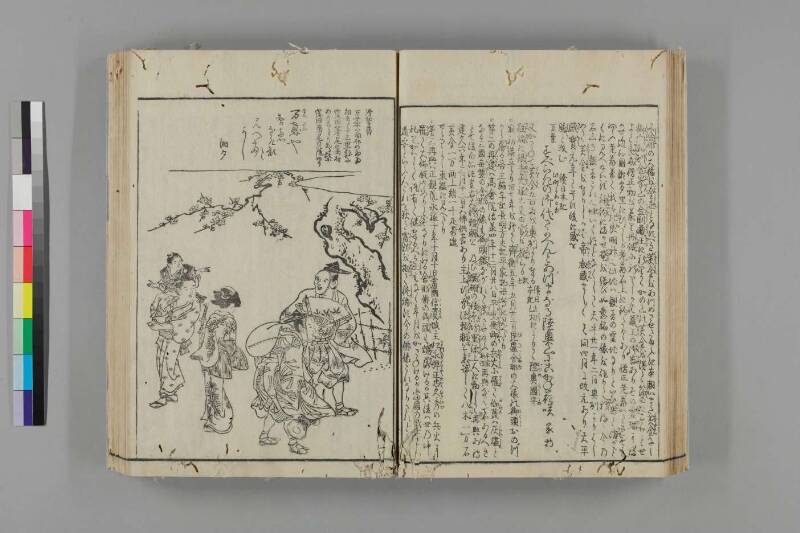
万歳(まんさい)や
智恵
なき顔
と
見へて
よし
湘夕
現代語訳
## 【右丁】
〔また、舎那〔しゃな〕の大像を金色にするための黄金を集めさせられたが、本朝〔ほんちょう〕(日本)にはいまだ黄金がなかった。帝〔みかど〕は、大和国〔やまとのくに〕の金峯山〔きんぷせん〕の金剛蔵王〔こんごうざおう〕に祈り、かの山の黄金を得て箔〔はく〕の助けとせよと、良弁僧正〔りょうべんそうじょう〕に勅を蒙〔こうむ〕らせた。良弁が丹誠〔たんせい〕をこめて祈ると、蔵王の御告〔おんつげ〕があり、その霊瑞〔れいずい〕にしたがって近江国〔おうみのくに〕の瀬田里〔せたのさと〕に赴いたところ、老翁〔ろうおう〕が石の上で釣りをしていた。僧正が「老翁はいかなる方か」と問うと、老翁は答えて「我は比良明神〔ひらみょうじん〕なり。この地は観音の霊地なり」と言い終わるや、消えるように姿が見えなくなった。神の約束にしたがい庵〔いおり〕を結び、如意輪〔にょいりん〕の像を作って祈られた。今の石山寺〔いしやまでら〕の観音がこれである。〔『釈書〔しゃくしょ〕』〕ほどなくして、天平二十一年(749年)二月、奥州〔おうしゅう〕よりはじめて黄金が奉られたので、帝は大いに感激なされ、同四月に改元があり、天平感宝元年〔てんぴょうかんぽうがんねん〕と号した。後に「感〔かん〕」を「勝〔しょう〕」と改めた。〔『続日本紀』。この時に詠まれた歌〕〕
**万葉集**
> すべらきの 御代栄えんと 東なる 陸奥山〔みちのくやま〕に 黄金花咲く
> ——家持〔やかもち〕
〔また重ねて黄金九百両を奥州より奉る。〔『続日本紀』〕この功〔こう〕によって、陸奥国守〔むつのくにのかみ〕・敬福〔きょうふく〕に銀青光禄大夫〔ぎんせいこうろくたいふ〕の官が授けられた。〔『釈書』〕〕
- 最初の造立より百七年を経て、斉衡五年〔さいこうごねん〕(858年)五月二十三日、毘盧舎那〔びるしゃな〕の大像の御頭〔みくし〕が自然に落ちた。これは『帝王編年記〔ていおうへんねんき〕』・『方丈記〔ほうじょうき〕』・『平家物語〔へいけものがたり〕』等に見える。
- 第二の再建は、高倉院〔たかくらいん〕の治承〔じしょう〕四年(1180年)十二月二十八日、平重衡卿〔たいらのしげひら〕の兵火〔へいか〕に罹〔かか〕って伽藍〔がらん〕は灰燼〔かいじん〕となった。三国無双〔さんごくぶそう〕の舎那の像も御頭〔みくし〕が溶け流れて落ちられた。〔『平家物語』〕「再興なくてあるべきか」として、後白河法皇〔ごしらかわほうおう〕が右大将頼朝公〔うだいしょうよりとも〕および醍醐〔だいご〕の俊乗坊重源上人〔しゅんじょうぼうちょうげんしょうにん〕に勅して再興が行われた。建久〔けんきゅう〕六年(1195年)三月十二日に大仏供養があり、主上〔しゅじょう〕が行幸され、源頼朝公〔みなもとのよりとも〕が参詣して八木〔はちぼく〕一万石・黄金一万両・上絹〔じょうきぬ〕一千疋〔ひき〕を寄進されたよしが、『東鑑〔あずまかがみ〕』に見える。
- 第三の再興は、正親院〔おうぎんいん〕・永禄〔えいろく〕十年(1567年)十月十日、当国〔とうこく〕(大和国)の信貴城主〔しぎのしろぬし〕・松永弾正忠久秀〔まつながたんじょうのちゅうひさひで〕の兵火に罹〔かか〕って大仏殿は煙となってしまった。舎那仏の御頭〔みくし〕も焼け落ちた。その後は世の中が乱れ、誰が継〔つ〕ぎ奉るべき職人〔たくみ〕もなく、年月を重ねたが、当国の武士・山田道安〔やまだどうあん〕という人がこれを歎き、富財〔ふさい〕を擲〔なげう〕って修補〔しゅうほ〕した。今の仏像がこれである。されども——〔以下、次ページへ続く〕
---
## 【左丁】
**『滑稽談〔こっけいだん〕』に曰く、**
万歳〔まんざい〕は南都〔なんと〕(奈良)の西南、相去ること三里ほどに、窪田〔くぼた〕・箸尾〔はしお〕の両村があり、ここより出る故に、窪田・箸尾の二流〔にりゅう〕がある。
> 万歳や 智恵なき顔と 見えてよし
> ——湘夕〔しょうせき〕
英語訳
## [Right Page]
*[Furthermore, as gold was being gathered to gild the great image of Vairocana (Śākyamuni) in gold, there was as yet no gold to be found in Japan. The Emperor prayed to Kongō Zaō [the principal deity] of Mount Kinpusen in Yamato Province, hoping to obtain gold from that mountain to assist with the gilding. He issued an imperial decree to Bishop Ryōben, bidding him pray with all sincerity. Ryōben prayed devoutly, whereupon an oracle was received from Zaō. Following the divine omen, he proceeded to Seta-no-sato in Ōmi Province, where he found an old man fishing on a rock. The bishop asked: "Who might you be, old one?" The old man replied: "I am the deity Hira Myōjin. This place is a sacred land of Kannon," and with those words, he vanished as if dissolved. Following the divine pledge, [Ryōben] built a hermitage and fashioned an image of Nyoirin [Kannon] and offered prayers. This is the Kannon of the present-day Ishiyama-dera Temple. *(Shakusho)* Before long, in the second month of Tenpyō 21 [749], gold was first sent as tribute from Ōshū (Mutsu Province). The Emperor was greatly moved, and in the fourth month of the same year, the era name was changed to Tenpyō Kampō 1. Later, the character *kan* (感) was changed to *shō* (勝). *(Shoku Nihongi. The following poem was composed at this time)*]*
**Man'yōshū**
> *Suberaki no / miyo sakaen to / azuma naru / Michinoku-yama ni / kogane hana saku*
> ("So that our Sovereign's reign may flourish — in the eastern mountains of Michinoku, golden flowers bloom.")
> — [Ōtomo no] Yakamochi
*[Furthermore, an additional nine hundred ryō of gold was sent as tribute from Ōshū. *(Shoku Nihongi)* In recognition of this achievement, Kyōfuku, the Governor of Mutsu Province, was awarded the court rank of Ginsei Kōroku Taifu. *(Shakusho)*]*
- One hundred and seven years after the initial construction, on the twenty-third day of the fifth month of Saikō 5 [858], the head of the great Vairocana image fell of its own accord. This is recorded in the *Teio Hennenki*, the *Hōjōki*, the *Heike Monogatari*, and other texts.
- The second reconstruction: On the twenty-eighth day of the twelfth month of Jishō 4 [1180], during the reign of the Retired Emperor Takakura, the temple complex was consumed in the conflagration set by Lord Taira no Shigehira. It was reduced to ashes. Even the Vairocana image — matchless across the three countries [Japan, China, and India] — had its head melted and fallen away. *(Heike Monogatari)* Declaring that there must surely be a restoration, Retired Emperor Go-Shirakawa issued an imperial decree to the Right Grand General Yoritomo and to the Venerable Chōgen of Shunjōbō of Daigo, ordering a reconstruction. On the twelfth day of the third month of Kenkyū 6 [1195], a great dedication ceremony for the Great Buddha was held. The reigning emperor made an imperial visit, and Minamoto no Yoritomo came in worship, donating ten thousand *koku* of rice [*hachimoku*], ten thousand *ryō* of gold, and one thousand bolts of finest silk — as recorded in the *Azuma Kagami*.
- The third reconstruction: On the tenth day of the tenth month of Eiroku 10 [1567], in what is recorded in the *Ōginin* [records], the Great Buddha Hall was reduced to smoke in the conflagration set by Matsunaga Danjo-no-chū Hisahide, lord of Shigi Castle in this province [Yamato]. The head of the Vairocana Buddha was also burned and fell. After that, the world fell into disorder, and there was no craftsman to take up the task of restoration. The years and months piled up, but a warrior of this province named Yamada Dōan lamented this state of affairs and threw open his personal wealth to undertake the repairs. The present Buddha image is the result of his efforts. However — *[continued on the following page]*
---
## [Left Page]
**According to the *Kokkei-dan* [Book of Humorous Tales]:**
*Manzai* [comic performers of the New Year] come from two villages called Kubota and Hashio, located approximately three *ri* [about twelve kilometers] to the southwest of Nanto [Nara]. Because they originate from these two villages, there are two lineages: the Kubota school and the Hashio school.
> *Manzai ya / chie naki kao to / mie te yoshi*
> ("Manzai performers — though they appear to have no wit at all, that is precisely their charm!")
> — Shōseki