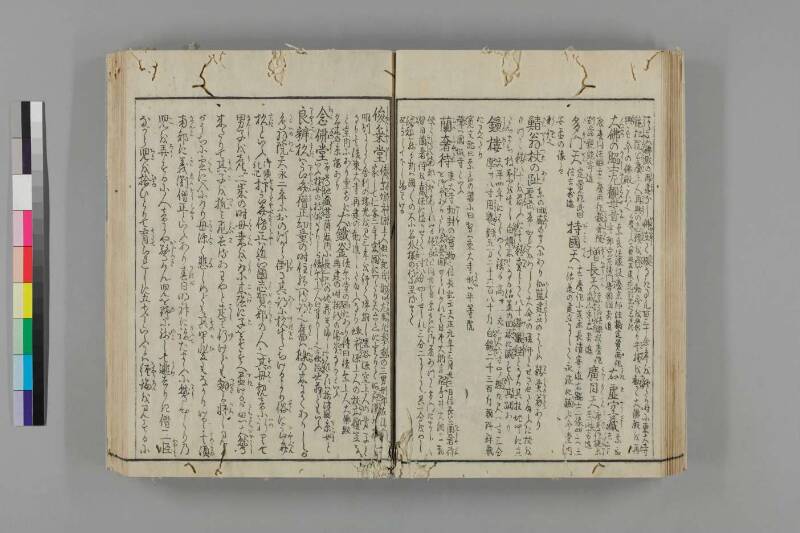
翻刻
【コマ34】
【右丁】
《割書:また大佛殿の再建(さいこん)なし佛(ほとけ)在(いまし)て殿(てん)なき事凢百三十余年を経たる时に東大寺|龍松院公慶上人(りうしやうゐんくはうけい )再興(さいこう)の志願(しくはん)を發(をこ)し勅命を蒙り貴賤(きせん)を勧(すゝめ)て大佛殿を再(さい) 》
《割書:興(こう)す今の佛殿これ也《割書:公慶上人大佛殿再建之記別記にしるす》》
大佛(たいぶつ)の《振り仮名:𦚰士|ケウシ》㔫(ひたり)観丗音(くはんせをん)《割書:奈良法眼扶慶京師法橋定覚两作|宇都宮左衛門督朝綱( かみ )寄進》右(みき)虚空藏(こくうざう)《割書:奈良|法印》
《割書:康慶同法眼雲慶两作 糓倉院(こくざうゐん)|別當親能寄進》增長天(ぞうちやうてん)《割書:奈良法眼扶慶作|畠山重忠(はたけやましけたゝ)寄進》廣目天(くはうもくてん)《割書:康慶(かうけい)作 梶原(かぢはら)|景时(かけとき)寄進》
多門天(たもんてん)《割書:定覚作武田|信吉寄進》持國天(ぢこくてん)《割書:雲慶作小笠原長清寄進右𦚰士二像四天王|は治𣴎の建立にして永禄にして滅(ほろ)ぶ今堂内》
《割書:安置の像は|新作也》
《振り仮名:鯖翁杖の趾|さはをうつゑ あと》《割書:東の囬廊(くはいろう)のまへにあり伽藍(からん)建立(こんりう)のはじめ鯖賣翁(さはうりのをきな)あり|聖武帝かれをめして大會の講師とせさせたまふに杖を》
《割書:もつて鯖(さば)八十を荷(にな)ふに其鯖( さば)変(へん)じて八十蕐嚴經( けこんきやう)となり其杖地中に立|たちまち枝葉( よう)を生し白槇木(ひやくしん )となる治𣴎の囬禄(くはいろく)に滅(めつ)す今 其趾(そのあと)あり》
鐘樓(しゆろう)《割書:天平四年にはじめて鑄(ゐ)る高サ一丈三尺六寸口ノ經(わたり)#1九尺三分|厚サ八寸 用熟銅(ようじゆくとう)#2五万二千六百八十斤 白錫(はくしやく)二千三百斤朝野群載》
《割書:に見へたり》
《割書:寛文記曰奈良の諺に曰㔟は東大寺 形(かたち)は平等院|聲(コヘ)は園城寺といふ》
蘭奢待(らんじやたい)《割書:東大寺 勅封(ちよくほう)の寳物也信長記云天正元年三月卄三日信長公 蘭奢待(らんしやたい)|を御望( のぞみ)ありたき旨(むね)奏聞(そうもん)せられければ日野大納言 飛鳥井大納言(あすか )勅》
《割書:使として南都へそ参られける信長公(のぶなが )同卄七日奈良に御着あつて多門にまし〳〵|翌日 蘭著待(らんじやたい)を《振り仮名:𦾔法|きうほう》にまかせて一寸八分( すん )切らせられ三分二にして其一分をめし》
《割書:置(をか)れて残る所は國〳〵の大小名 外様(とさま)の侍(きふらひ)に至るまて|配分(はいぶん)して下し賜りける》
【左丁】
俊乗堂(しゆんじやうだう) 《割書:俊乗坊重源上人(しゆんじやうぼうぢやうげん )姓は紀氏( し)瀧口㔫馬允季重(たきぐちさまのかみすへしけ)の三男刑部左衛門尉出|家して仁安二年 宋國(そうこく)にわたり天台山に登りて阿羅漢( らかん)を拜し》
《割書:明州にして舎利の瑞光を見三年を經て帰朝し黒谷源空上人の㐧子と|なり其後東大寺再建の勧進したまふなり《割書:釋|書》重源上人(ちやうげん )の杖 木履(ぼくり)笠な》
《割書:と堂内にあり堂前に|名木の糸桜あり》 大鐡釜(おほかま) 《割書:俊乗堂の西にあり傳曰俊乗上人大佛殿|再建の时 摂待(せつたい)の湯釜(ゆかま)なりといふ》
念佛堂(ねんぶつだう)《割書:本尊地蔵菩薩腹内に長一尺の地蔵尊ましますこれは摂津國 糸女(いとじよ)と|いふ逰女(ゆうじよ)の持佛(じぶつ)なりしが俊乗上人(しゆんじやう )に奉りし也 夜泣地蔵(よなきの )ともいふ》
良辨杦(りやうべんすぎ)は良弁僧正(りやうべんそうじやう)幼童(ようどう)の时 住(すみ)給へる跡(あと)也𦾔(もと)は櫟(いちゐ)の木にてありしが
鳥羽院(とはのゐん)天永二年におのづから倒(たを)る其跡( あと)に杦(すぎ)生(をい)たちけるより俗(ぞく)に良弁(りやうべん)
杦(すぎ)といふ《割書:御順|礼記》抑(そも〳〵)良弁僧正(りやうべんそうじやう)は近江國 志賀郡(しがのこほり)の人也 其母(そのはゝ)観音に祈(いの)りて
男子(なんし)を産(う) ̄ム二歳の时 母(はゝ)桒(くは)を取(とり)に木陰(こかげ)に子(こ)をぞすへ置(をき)けるが忽(たちまち)大鷲(おほわし)
來たりて其子(そのこ)を抓(つか)み飛去(とびさ)るあわやと走(はし)り行(ゆ)けども翅(つばさ)は輕(かろ)し見る
がうちに雲(くも)に入にけり母(はゝ)深(ふか)く悲(かな)しめども其(その)甲斐(かひ)もなかりけり其頃(そのころ)
南都(なんと)に義渕僧正(きゑんそうじやう)といふあり春日明神(かすが )に詣(もふて)たまふに鷲(わし)ひとりの
児(こ)を弄(ろう)するに人音にや驚(おどろき)けん児を野(の)に残(のこ)して逃(にけ)去りき僧正 怪(あやしみ)
ながら児(ちご)を拾(いろ)ひとりて育(そたて)られしに五才といふには經論(きやうろん)を見するに
現代語訳
## 【右丁】
〔また、大仏殿の再建はなされず、仏〔ほとけ〕はおわしても殿〔でん〕なき状態が凡そ百三十余年を経た時に、東大寺・龍松院〔りゅうしょういん〕の公慶上人〔こうけいしょうにん〕が再興の志願を起こし、勅命を蒙り、貴賤〔きせん〕を問わず勧進〔かんじん〕して大仏殿を再興した。今の仏殿がこれである。〔公慶上人・大仏殿再建之記は別記に記す〕〕
大仏の左〔ひだり〕に観世音〔かんぜおん〕《奈良法眼扶慶・京師法橋定覚の両作。宇都宮左衛門督朝綱〔うつのみやさえもんのかみともつな〕の寄進》、右〔みき〕に虚空蔵〔こくうぞう〕《奈良法印康慶・同法眼運慶の両作。穀倉院〔こくそういん〕別当親能〔ちかよし〕の寄進》。増長天〔ぞうちょうてん〕《奈良法眼扶慶作。畠山重忠〔はたけやましげただ〕の寄進》、広目天〔こうもくてん〕《康慶作。梶原景時〔かじわらかげとき〕の寄進》、多聞天〔たもんてん〕《定覚作。武田信吉〔たけだのぶよし〕の寄進》、持国天〔じこくてん〕《運慶作。小笠原長清〔おがさわらながきよ〕の寄進》。右の脇士〔きょうじ〕二像・四天王は治承〔じしょう〕の建立にして、永禄〔えいろく〕に滅〔ほろ〕ぶ。今、堂内に安置の像は新作なり。
**鯖翁杖の趾〔さばおうつえのあと〕** 東の回廊〔かいろう〕の前にある。伽藍建立の始め、鯖売りの翁〔おきな〕あり、聖武帝〔しょうむてい〕がかれを召して大会〔だいえ〕の講師〔こうし〕とされたところ、杖をもって鯖〔さば〕八十を担〔にな〕うに、その鯖が変じて八十の華厳経〔けごんきょう〕となり、その杖は地中に立ち、たちまち枝葉を生じて白槇木〔びゃくしんぼく〕となった。治承の回禄〔かいろく〕(火事)に滅〔めっ〕す。今その趾〔あと〕がある。
**鐘楼〔しょうろう〕** 天平四年(732年)にはじめて鋳〔い〕る。高さ一丈三尺六寸、口の径〔わたり〕九尺三分、厚さ八寸。用いた熟銅〔じゅくどう〕五万二千六百八十斤、白錫〔はくしゃく〕二千三百斤。〔『朝野群載〔ちょうやぐんさい〕』に見える〕
〔『寛文記〔かんぶんき〕』に曰く、奈良の諺〔ことわざ〕に「勢〔いきおい〕は東大寺、形〔かたち〕は平等院〔びょうどういん〕、声〔こえ〕は園城寺〔おんじょうじ〕」という。〕
**蘭奢待〔らんじゃたい〕** 東大寺・勅封〔ちょくほう〕の宝物なり。『信長記〔のぶながき〕』に云う。天正元年(1573年)三月二十三日、信長公が蘭奢待を御望みありたき旨を奏聞〔そうもん〕されたところ、日野大納言〔ひのだいなごん〕・飛鳥井大納言〔あすかいだいなごん〕が勅使として南都〔なんと〕へ参られた。信長公は同二十七日に奈良に御着になって多聞〔たもん〕においでになり、翌日、蘭奢待を旧法〔きゅうほう〕にしたがって一寸八分切らせられ、三分の二にして、その一分を召し置かれた。残るところは諸国の大小名〔だいしょうみょう〕・外様〔とざま〕の侍〔さむらい〕に至るまで配分して下し賜った。
---
## 【左丁】
**俊乗堂〔しゅんじょうどう〕** 俊乗坊重源上人〔しゅんじょうぼうちょうげんしょうにん〕は、姓は紀氏〔きし〕、滝口左馬允季重〔たきぐちさまのじょうすえしげ〕の三男、刑部左衛門尉〔ぎょうぶさえもんのじょう〕。出家して仁安〔にんあん〕二年(1167年)に宋国〔そうこく〕に渡り、天台山〔てんたいさん〕に登って阿羅漢〔あらかん〕を拝し、明州〔めいしゅう〕にて舎利〔しゃり〕の瑞光〔ずいこう〕を見た。三年を経て帰朝し、黒谷源空上人〔くろだにげんくうしょうにん〕(法然)の弟子となり、その後、東大寺再建の勧進〔かんじん〕をなされた。〔『釈書〔しゃくしょ〕』〕重源上人の杖・木履〔ぼくり〕・笠などが堂内にある。堂前に名木の糸桜〔いとざくら〕がある。
**大鉄釜〔おおてつがま〕** 俊乗堂の西にある。伝えに曰く、俊乗上人が大仏殿再建の時、接待〔せったい〕の湯釜〔ゆがま〕であったという。
**念仏堂〔ねんぶつどう〕** 本尊は地蔵菩薩〔じぞうぼさつ〕。腹内〔はらうち〕に長さ一尺の地蔵尊がおわします。これは摂津国〔せっつのくに〕の糸女〔いとじょ〕という遊女〔ゆうじょ〕の持仏〔じぶつ〕であったが、俊乗上人に奉ったものである。夜泣地蔵〔よなきじぞう〕ともいう。
**良弁杉〔りょうべんすぎ〕** 良弁僧正が幼童の時に住まわれた跡〔あと〕なり。もとは櫟〔いちい〕の木であったが、鳥羽院〔とばいん〕の天永〔てんえい〕二年(1111年)に自然に倒れた。その跡に杉が生え立ったことより、俗に良弁杉という。〔『御順礼記〔ごじゅんれいき〕』〕
そもそも良弁僧正は近江国〔おうみのくに〕志賀郡〔しがのこおり〕の人なり。その母が観音に祈って男子を産んだ。二歳の時、母が桑〔くわ〕を取りに木陰に子を置いておいたところ、たちまち大鷲〔おおわし〕が来てその子を掴み飛び去った。あわやと走り行けども、翅〔つばさ〕は軽く、見るうちに雲の中に入ってしまった。母は深く悲しんだが、その甲斐〔かい〕もなかった。その頃、南都〔なんと〕に義渕僧正〔ぎえんそうじょう〕という方がおり、春日明神〔かすがみょうじん〕に詣でられたところ、鷲が一人の児〔ちご〕をもてあそんでいたが、人の気配に驚いたか、児を野〔の〕に残して逃げ去った。僧正が不思議に思いながら児を拾い取って育てられたところ、五才という頃には経論〔きょうろん〕を見するに——〔以下、次ページへ続く〕
英語訳
## [Right Page]
*[Furthermore, the Great Buddha Hall was not rebuilt, and for approximately one hundred and thirty years the Buddha stood without a hall. At that time, the Venerable Kōkei of Ryūshōin at Tōdai-ji resolved to undertake a restoration and, receiving an imperial decree, solicited donations from people of all stations and rebuilt the Great Buddha Hall. The present Buddha Hall is that building. (The Record of the Venerable Kōkei's Reconstruction of the Great Buddha Hall is noted in a separate account.)]*
To the **left** of the Great Buddha stands **Kannon (Avalokiteśvara)** *(jointly carved by Hōgen Fukyō of Nara and Hokkyō Jōkaku of the capital; donated by Utsunomiya Saemon-no-kami Tomоtsuna)*; to the **right** stands **Kokūzō (Ākāśagarbha)** *(jointly carved by Hōin Kōkei and Hōgen Unkei of Nara; donated by Chikayoshi, Administrator of the Grain Storehouse)*. **Zōchō-ten** *(carved by Hōgen Fukyō of Nara; donated by Hatakeyama Shigetada)*; **Kōmoku-ten** *(carved by Kōkei; donated by Kajiwara Kagetoki)*; **Tamon-ten** *(carved by Jōkaku; donated by Takeda Nobuyoshi)*; **Jikoku-ten** *(carved by Unkei; donated by Ogasawara Nagakiyo)*. The two flanking attendant figures and the Four Heavenly Kings were constructed during the Jishō era [1177–81] and were destroyed during the Eiroku era [1558–70]. The images currently enshrined in the hall are new works.
**Site of the Old Man Saba's Staff** (*Saba-ō tsue no ato*) — Located in front of the eastern corridor. At the time of the founding of the temple complex, there was an old man who sold mackerel (*saba*). Emperor Shōmu summoned him to serve as the lecturer at a great assembly. As he carried eighty mackerel on a pole, the mackerel transformed into the eighty [fascicles of] the *Avatamsaka Sūtra* (Kegon-kyō), and the staff, standing in the ground, suddenly put forth branches and leaves and became a cypress tree (*byakushin*). It was destroyed in the great fire of the Jishō era. The site remains today.
**Bell Tower** (*Shōrō*) — First cast in Tenpyō 4 [732]. Height: 1 *jō* 3 *shaku* 6 *sun*; mouth diameter: 9 *shaku* 3 *bu*; thickness: 8 *sun*. Materials used: 52,680 *kin* of refined copper (*jukudō*), and 2,300 *kin* of refined tin (*hakushaku*). *(As recorded in the Chōya Gunzai.)*
*[The Kanbun-ki states: According to a proverb of Nara: "For grandeur, Tōdai-ji; for form, Byōdō-in; for voice [of its bell], Onjō-ji."]*
**Ranjatai** — This is a sealed imperial treasure of Tōdai-ji. According to the *Nobunaga-ki*: On the twenty-third day of the third month of Tenshō 1 [1573], Lord Nobunaga conveyed to the court his wish to have the Ranjatai. The Dainagon Hino and the Dainagon Asukai were dispatched as imperial envoys to Nanto [Nara]. Lord Nobunaga arrived in Nara on the twenty-seventh day of the same month and took up residence at Tamon. The following day, following established precedent, he had a piece of one *sun* and eight *bu* cut from the Ranjatai. He took two-thirds for himself, keeping one-third, and distributed the remainder among the lords great and small of the various provinces, down to the outer-domain samurai.
---
## [Left Page]
**Shunjō-dō** (Hall of Shunjōbō Chōgen) — The Venerable Shunjōbō Chōgen was of the Ki clan by birth, the third son of Takiguchi Sama-no-jō Sueshige, bearing the title Gyōbu Saemon-no-jō. He renounced the world, and in Nin'an 2 [1167] crossed to Song China, ascended Mount Tiantai, and venerated the arhats (*rakan*). At Mingzhou he witnessed a miraculous light emanating from the Buddha's relics (*shari*). After three years he returned to Japan, became a disciple of the Venerable Genku of Kurodani [i.e., Hōnen], and thereafter undertook the fundraising (*kanjin*) campaign for the reconstruction of Tōdai-ji. *(Shakusho.)* The Venerable Chōgen's staff, wooden clogs (*bokuri*), and hat are preserved within the hall. In front of the hall stands a renowned weeping cherry tree (*ito-zakura*).
**Great Iron Cauldron** — Located to the west of the Shunjō-dō. According to tradition, this was the cauldron used to prepare warm water offered to visitors (*settai*) during the Venerable Shunjō's reconstruction of the Great Buddha Hall.
**Nenbutsu-dō** (Nembutsu Hall) — The principal image is Jizō Bosatsu (Kṣitigarbha). Within its abdomen is enshrined a Jizō image one *shaku* in length. This was formerly the personal devotional image of a *yūjo* (courtesan) from Settsu Province named Itojo, who presented it to the Venerable Shunjō. It is also known as the *Yonaki Jizō* ("Night-Crying Jizō").
**Ryōben Sugi** (Ryōben's Cedar) — This is the site where the young Bishop Ryōben once resided. Originally it was a *ichiï* tree (Japanese yew); it fell of its own accord in Tennei 2 [1111], during the reign of Retired Emperor Toba. A cedar grew up in its place, and so it has been colloquially called "Ryōben's Cedar" ever since. *(御順礼記, Gojunrei-ki.)*
The story of Bishop Ryōben is as follows: He was a native of Shiga District in Ōmi Province. His mother prayed to Kannon and gave birth to a son. When the boy was two years old, his mother went out to gather mulberry leaves and left the child in the shade of a tree. Suddenly a great eagle came and seized the child and flew away. She ran after it in alarm, but the wings were swift, and before her eyes the eagle disappeared into the clouds. The mother grieved deeply, but to no avail. Around that time, there lived in Nanto a monk called Bishop Gien, who had come to worship at the Kasuga Myōjin shrine. He found an eagle playing with a small child; startled perhaps by the sound of a human, the eagle abandoned the child in the field and flew away. The bishop, finding this strange, picked up the child and raised him. By the time the boy was five years old, when shown sutras and treatises — *[continued on the following page]*