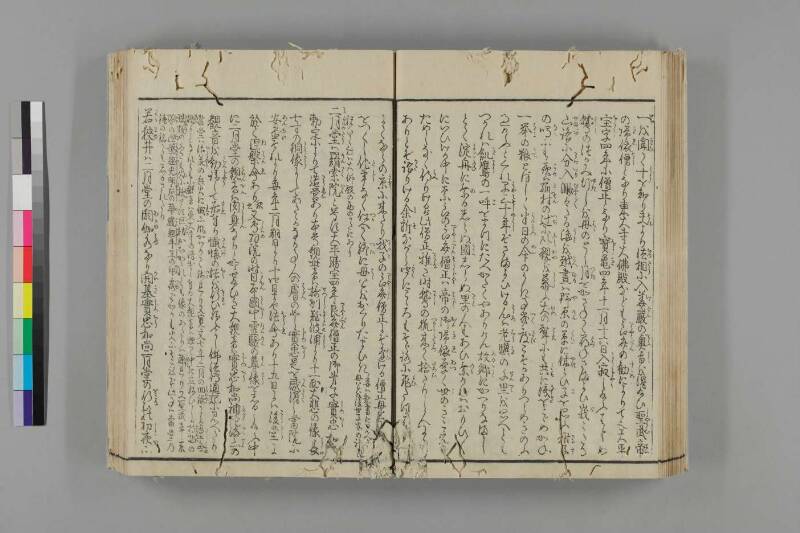
翻刻
【コマ36】
【右丁】
一(いち)を聞(きひ)て十(じう)を知り夫(それ)より法相(ほつさう)に入 華嚴(けごん)の奥旨(をふし)を得給ひ聖武帝(しやうむてい)
の帰依僧(きゑそう)となり東大寺大佛殿なども良弁(りやうべん)の勧(すゝめ)によりて也天平
宝字四年(ほうし )に僧正となり寳亀四年(ほうき )十一月十六日 入寂(にうじやく)し給ふはじめ
鷲(わし)のつかみ行(ゆき)しを母(はゝ)のとし月(つき)をかさねて尋(たづ)ねさまよひ峩々(が )たる
山路(やまぢ)に分入(わけいり)渺々(びやう〳〵)たる海(うみ)を越(こへ)晝(ひる)は野原(やけん)の草(くさ)に休(やす)らひ子(こ)を思ふ雉子(きゞす)
の鳴(なく)にも夜(よる)は孤村(こそん)の辻(つぢ)に卧(ふし)親(おや)を慕(した)ふ犬(いぬ)の聲(こゑ)にも共(とも)に涙(なみだ)をとゞめかね
一挙( きよ)の粮(かて)とぼしく半日(はんにち)の命(めい)のうき事 幾度(いくたび)こそかありつらめきのふ
過けふとくれ早(はや)三十年(みそしのとし)ぞさまよひける心(こゝろ)は老驥(らうき)#1の千里(せんり)を思へとも
つかれは飢鷹(きよう)の一呼( こ)をまつにたへかたくやありけん故郷(ふるさと)にかへりなまし
とて淀舟(よどふね)に乗(の)るしらぬ國(くに)しらぬ里(さと)の人もあひ乗(のり)けれはおもひ〳〵
にいひける中に奈良の良弁僧正(りやうべんそうじやう)は帝(みかど)の御帰依(おんきゑ)厚(あつ)く丗(よ)のきこえも
ためしなく侍(はへ)りけるが此僧正 稚(をさな)き时 鷲(わし)の抓來(つかみきたつ)て拾(ひろひ)たりし人にて
ありとぞ語(かた)りける余所(よそ)ながら聞(きく)にこゝろもそゞろに飛(とひ)たつばかり
【左丁】
にてならの京(きやう)に來たり我子(わかこ)の良弁僧正(りやうべん )にぞ逢(あひ)ける僧正母公に孝養(かうよう)
をつくし他事(たじ)なく仕(つか)へて終(つひ)に母公(はゝ )をおくりたまひき《割書:委は釈書に見へたり|母公を後丗子安の神と》
《割書:祝ひて社は大佛殿の西のかたにあり》
二月堂(にぐはつたう)は羂索院(けんざくゐん)と号す天平勝宗四年 良弁僧正(りやうべん )の御㐧子 實忠和尚(しつちう )
勅定によりて造営(さうゑい)あり本尊観世音を摂州(せつしう)難波浦(なにはのうら)より十一面大悲の像 長(みたけ)
七寸の銅像(とうさう)にしてあたゝかなる事人の膚(はたへ)の如し實忠(じつちう)是を感得(かんとく)し當院に
安置(あんちす)それより毎年二月朔日より十四日まで法會(ほうゑ)あり十五日には後堂(こうたう)に
於て《振り仮名:𣵀槃會|ねはんゑ》あり《割書:釋|書》又 鳥羽院(とはの )の时 日本國中(にほんこくちう)霊驗(れいけん)の尊像(そんさう)をしるし給ふ中
に二月堂の観音(くはんをん)は肉身(にくしん)なりとかゝせ給ひき大観音は實忠和尚(じつちう )補陀洛山(ふだらくせん)の
観音を勧請(くはんじやう)して居(すゑ)奉り懴悔(さんげ)の法(ほう)を行(をこな)ひ給ふよし佛法傳通記に見へたり
《割書:當堂は《振り仮名:治𣴎|ちしやう》の兵火に俄(にはか)に風かはりて残(のこ)れり又寛文七年二月の囬禄(くはいろく)には堂舎(たうしや)|煙(けふ)りとなれともに小観音は東大寺の僧出し奉る大観音は煙り中に立給ひしが持物(じぶつ)の》
《割書:珠数(しゆす)のふさも火(ひ)に損(そん)せす巨材(こさい)おちかゝれとも像のあたりは除(よき)れり又聖武帝宸|筆(ひつ)の《振り仮名:𣵀槃經|ねはんきやう》光明后(くはうみやうくう)の華嚴經(けこんきやう)《振り仮名:牛王の印|ごわう ゐん》露(つゆ)ばかりも火にそこねず此事は當堂の|鐘(かね)の銘にもしるされたり》
若狹井(わかさの )は二月堂の閼伽水(あかのみづ)なり開基(かいき)實忠和尚(じつちう )二月堂の行(をこな)ひの初夜(しよや)に
現代語訳
## 【右丁】
一を聞いて十を知り、それより法相〔ほっそう〕に入り、華厳〔けごん〕の奥旨〔おうし〕を会得された。聖武天皇〔しょうむてんのう〕の帰依僧〔きえそう〕となり、東大寺大仏殿なども良弁〔りょうべん〕の勧めによるものである。天平宝字四年〔760年〕に僧正〔そうじょう〕となり、宝亀四年〔773年〕十一月十六日に入寂〔にゅうじゃく〕された。
はじめ鷲に掴まれて連れ去られたのを、母は歳月を重ねて尋ね彷徨い、険しい山道に分け入り、広大な海を越え、昼は野原の草に休んでは子を思うキジの鳴き声にも、夜は人里離れた辻に臥してはひたすら親を慕う犬の声にも、ともに涙を抑えかねた。一日の食糧にも乏しく、半日の命もはかなく、幾度となくそのような辛い思いをしたことであろう。昨日が過ぎ今日が暮れ、早くも三十年の間さまよい続けた。心は老いた駿馬〔#1〕が千里を思うようであっても、疲れは飢えた鷹が一声呼ばれるのを待ちきれぬようであったのか、故郷に帰ってしまおうと思い、淀川の船〔よどふね〕に乗った。見知らぬ国、見知らぬ里の人々も乗り合わせ、それぞれに話をする中に、「奈良の良弁僧正は、帝の御帰依も篤く、世の評判も比べるものがないほどでいらっしゃるが、この僧正は幼い時に鷲に掴まれて連れてこられたのを拾った人であると」と語る者があった。聞くともなしに聞いて、心もそぞろに飛び立つばかり、
## 【左丁】
奈良の都に来て、我が子の良弁僧正についに逢うことができた。僧正は母上に孝養〔こうよう〕を尽くし、他のことに気を取られることなく仕えて、ついに母上をお見送りになった。
> 割注:詳しくは『釈書〔しゃくしょ〕』に見えたり。母上を後世、子安の神と祝いて、その社は大仏殿の西の方にあり。
---
**二月堂〔にがつどう〕**は羂索院〔けんざくいん〕と号する。天平勝宝四年〔752年〕、良弁僧正の御弟子・実忠和尚〔じっちゅうかしょう〕が勅定〔ちょくじょう〕によって造営した。本尊の観世音〔かんぜおん〕は摂州〔せっしゅう〕難波浦〔なにわのうら〕より〔迎えた〕十一面大悲〔じゅういちめんだいひ〕の像で、丈〔たけ〕七寸の銅像であり、温かなこと人の肌のようである。実忠はこれを感得〔かんとく〕し、当院に安置した。それより毎年二月一日より十四日まで法会〔ほうえ〕があり、十五日には後堂〔こうどう〕において涅槃会〔ねはんえ〕がある。
> 割注:〔出典〕『釈書』
また、鳥羽院〔とばのいん〕の御代に、日本国中の霊験〔れいけん〕ある尊像〔そんぞう〕をお記しになった中に、二月堂の観音は「肉身〔にくしん〕なり」とお書かせになった。大観音は実忠和尚が補陀落山〔ふだらくせん〕の観音を勧請〔かんじょう〕して据え奉り、懺悔〔さんげ〕の法〔ほう〕を行われたとのことが、『仏法伝通記〔ぶっぽうでんつうき〕』に見えたり。
> 割注:当堂は治承〔ちしょう〕の兵火の際に、にわかに風向きが変わって残った。また寛文七年〔1667年〕二月の火災には、堂舎は煙となったが、小観音は東大寺の僧が持ち出し奉った。大観音は煙の中に立っておられたが、持物〔じぶつ〕の数珠〔じゅず〕の房も火に損じず、巨材が落ちかかっても像のあたりは避けられた。また聖武帝宸筆〔しょうむていしんぴつ〕の涅槃経〔ねはんきょう〕、光明皇后〔こうみょうこうごう〕の華厳経〔けごんきょう〕、牛王の印〔ごおういん〕も露ほども火に損じなかった。このことは当堂の鐘の銘にも記されている。
---
**若狭井〔わかさのい〕**は二月堂の閼伽水〔あかのみず〕である。開基・実忠和尚は二月堂の行〔おこない〕の初夜〔しょや〕に……
英語訳
## [Right Page]
Hearing one thing and understanding ten, Ryōben entered the Hossō school of Buddhism and attained the innermost teachings of the Kegon (*Avatamsaka*) doctrine. He became the monk of personal devotion to Emperor Shōmu, and the Great Buddha Hall of Tōdai-ji and other edifices were built at his urging. In the fourth year of Tenpyō Hōji (760), he was appointed Bishop (*Sōjō*), and on the sixteenth day of the eleventh month of the fourth year of Hōki (773), he passed away.
From the time the eagle had first seized and carried him off, his mother searched and wandered for years on end. She pressed through steep mountain paths and crossed vast seas; by day she rested on the grasses of open fields, unable to hold back tears at the cry of a pheasant longing for its young; by night she lay down at crossroads in lonely hamlets, equally unable to restrain her tears at the sound of a dog yearning for its master. How many times must she have suffered, with scarce provisions for even a single day, and life itself hanging by half a day's thread. Yesterday passed, today faded—fully thirty years she had wandered thus. Though her heart was like an aged thoroughbred [#1] still dreaming of a thousand-league journey, her exhaustion was like that of a starving hawk barely able to wait for a single call. Thinking she might as well return to her home province, she boarded a boat on the Yodo River. Strangers from unknown lands and unfamiliar villages were also aboard and fell to talking among themselves; in the course of conversation, someone said: "The monk Ryōben, Bishop of Nara, enjoys the deep and devoted faith of the Emperor, and his fame in the world is without parallel—yet this very Bishop was, as a small child, seized and carried off by an eagle, and the person who picked him up brought him here." Hearing this quite by chance, her heart was so stirred she felt as if it might fly out of her chest.
## [Left Page]
She came to the capital of Nara and was at last reunited with her own child, Bishop Ryōben. The Bishop devoted himself wholly to the filial care of his mother, serving her without distraction in any other matter, and in the end he saw her through to the last.
> Marginal note: *Details may be found in the* Shakusho *[Biographies of Eminent Monks]. The mother was venerated by later generations as the deity Koyasu no Kami [a deity of safe childbirth], and her shrine stands to the west of the Great Buddha Hall.*
---
**Nigatsudō** (二月堂, the "Second-Month Hall") is designated by the name Kenzakuin (羂索院, "Hall of the Lasso of Compassion"). It was constructed in the fourth year of Tenpyō Shōhō (752) by the Venerable Jitchū (実忠和尚), a disciple of Bishop Ryōben, by imperial decree. The principal image of Kannon (Guanyin/Avalokiteśvara) is an Eleven-Faced Image of Great Compassion (*Jūichimen Daihi*) brought from the shores of Naniwa in Settsu Province (present-day Osaka). It is a bronze image of seven *sun* (approx. 21 cm) in height, warm to the touch like human skin. Jitchū experienced a wondrous response from this image and enshrined it in the hall. From that time onward, religious services have been held each year from the first to the fourteenth day of the second month, and on the fifteenth day a *Nehan-e* (涅槃會, Nirvana Ceremony) is held in the rear hall.
> Marginal note: *[Source:] Shakusho.*
Furthermore, during the reign of Retired Emperor Toba, when a record was made of the most efficacious sacred images throughout Japan, the Kannon of Nigatsudō was described as "a living body" (*nikujin*). It is recorded in the *Buppō Dentsūki* (仏法伝通記, *Records of the Transmission of the Dharma*) that the great Kannon image was summoned by Jitchū from Mount Fudaraku (Potalaka), enshrined there, and that he performed the rites of penitential confession (*sange no hō*).
> Marginal note: *During the military fires of the Jishō era [1177–1181], the wind suddenly shifted direction and the hall was spared. Again, in the great fire of the second month of the seventh year of Kanbun [1667], the hall buildings were consumed in smoke, but the small Kannon image was carried out by a monk of Tōdai-ji. The great Kannon stood amid the smoke, yet the tassel of the prayer beads it held as a sacred implement was not damaged by the fire, and even when great timbers fell, they were deflected from around the image. Moreover, the handwritten copy of the* Nirvana Sūtra *in the hand of Emperor Shōmu, the* Avatamsaka Sūtra *in the hand of Empress Kōmyō, and the* Gōin *(牛王印, a sacred talisman seal) were not harmed by fire in the slightest. This matter is also recorded in the inscription on the bell of this hall.*
---
**Wakasa Well** (若狭井) is the sacred water (*aka no mizu*) of Nigatsudō. The founder, the Venerable Jitchū, during the first watch (*shoya*) of the *Oconai* ritual at Nigatsudō …