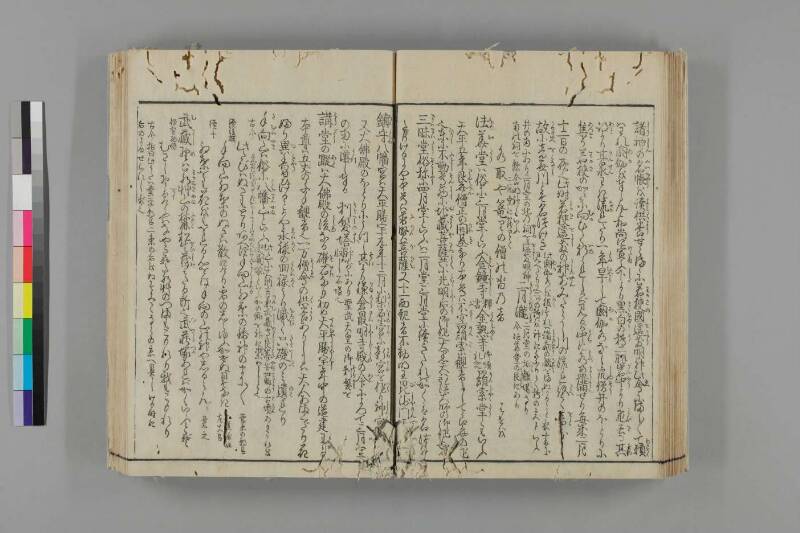
翻刻
【コマ38】
【右丁】
諸神(しよしん)の名帳(めいちやう)を讀(よみ)供養(くよう)せらるゝに若狹國(わかさの )遠敷明神(をにう )此會( ゑ)にまし〳〵て願(ねかはく)
はわれ閼伽(あか)を奉らんと和尚に宣(のたま)ふ下(した)より黒白(こくひやく)の鵜(う)二羽 岩中(がんちう)より飛去(とびさ)る其(その)
跡(あと)より甘泉(かんせん)わき流(なが)れたり一年( とせ)旱(ひでり)して闕伽水(あか )なし衆僧(しゆそう)井のほとりに
集(あつま)り若狹(わかさ)のかたに向(むか)ひて祈(いの)られしかば見るが中(うち)に水(みづ)盈滿(ようまん)せり毎歲二月
十二日の夜也此时 若狹(わかさ)遠敷(をにう)の神前(しんぜん)みたらし川の流れ絶(たへ)て音(をと)なし
故(かるがゆへ)に音蕪川(をとなし )とそ名つけき《割書:此 閼伽水(あか )を服(ふく)すれば諸病(しよびやう)の惱(なやみ)をまぬかるゝと釈書に|見へたり又二ッの鵜(う)を神に祭りて《振り仮名:鵜の宮|う 》といふ》
《割書:井の南にあり二月堂の北の祠(やしろ)を遠敷明神(をにう )|南の祠を飲食明神といふ》二月瀧(きさらぎのたき)《割書:二月堂の垢離塲(こりは)なり|今法華堂の艮(うしとら)にあり》
《割書:二月堂に籠りて》
水取や篭りの僧の沓の音 はせを
法華堂(ほつけだう)は俗に三月堂といふ金鐘寺(きんしやうじ)《割書:釋|書》金熟寺(こんしゆく )《割書:御順|礼記》羂索堂(けんじやくたう)ともいふ
天平五年 良弁僧正(りやうべん )の開基(かいき)なり本尊は不空羂索観音(ふくうけんさく )にして良弁の作
也 東(ひがし)に不動尊(ふどうそん)西(にし)に地蔵菩薩(ぢざうほさつ)共(とも)に光明后(くはうみやうぐう)の御作也大黒天は弘法大師の御作とかや
三昧堂(さんまいたう)俗称(ぞくしやう)に四月堂といふは二月堂三月堂に續きたればかくは名づけ
たりけるにや本尊は普賢菩薩(ふけんほさち)又十一面観音不動明王 毘沙門天(びしやもんでん)也
【左丁】
鎭守八幡宮(ちんしゆ )は天平勝宝元年十二月に梨原宮(なしはらのみや)に新宮(にゐみや)を作(つく)り神宮(しんくう)とし
又大佛殿のほとりにうつし其(それ)より鎌倉最明寺殿(かまくらさいみやうじとの)の命(めい)によつて三月堂
の南に遷(うつ)し奉る剃髪塔(そりかみのたう)《割書:神前にあり聖武天皇の御剃髪( そりかみ)を|収(をさめ)し石塔也》
講堂(こうだう)の蹤(あと)は大佛殿の後(うしろ)なる礎石(そせき)なり初め天平勝宝年中(てんひやうしやうぼう )の造建には
本尊は五丈の千手観音也 一万僧會( そうゑ)の供養(くよう)ありしには天人あまくだり花
ふり異香(ゐきやう)匂ひけるとかや永禄(ゑいろく)の囬禄(くはいろく)より滅(ほろび)て只(たゞ)礎(いしつへ)のみ遺(のこ)れり
手向山(たむけやま)は俗に八幡山(はちまんやま)といふ《割書:此山に大納言兼武蔵守良峯安世卿( けんむさしのかみよしみねやすよきよう)の古墳(こふん)ありこれを|武蔵塚(むさしつか)といふかの卿を神に崇(あが)めしと也》
《割書:古今 朱雀院のならにおはしましける时たむけ山にてよめる》
此たびはぬさもとりあへず手向山紅葉の錦神のまに〳〵 菅原の朝臣
《割書:續後撰》
手向山紅葉のぬさは散にけり雪のしらゆふかけぬ日そなき 《割書:入道摂政|㔫大臣》
《割書:続千》
紅葉をも花をもをれる心をは手向の山の神やしるらん 貫之
武蔵野(むさしの)は若艸山(わかくさやま)の麓(ふもと)松 生茂(をひしけ)りたる所也 武蔵塚(むさしつか)あればかくいふとぞ
《割書:伊㔟物語》
むさし野はけふはなやきそ若艸のつまもこもれり我もこもれり
《割書:古今抄曰此うたは業平朝臣二条の后をぬすみてならの京へ具しける时に|后のよませられし哥也》
現代語訳
## 【コマ38】
### 【右丁】
〔二月堂の閼伽水〕
諸神の名帳を読み、供養が行われていたところ、若狭国の遠敷明神がこの法会においでになり、「願わくは、われが閼伽水を奉ろう」と和尚に告げられた。すると、下の方から黒白の鵜が二羽、岩の中から飛び去り、その跡から甘い清水が湧き流れ出た。ある年、旱魃があって閼伽水が涸れたため、衆僧が井のほとりに集まり、若狭の方角に向かって祈ったところ、みるみるうちに水が満ち溢れた。これは毎年二月十二日の夜のことである。この時、若狭の遠敷神社の前にある「みたらし川」の流れが絶えて音がなくなった。それゆえ、(その川を)「音無川〔をとなしがわ〕」と名づけたという。
> 〔割書〕この閼伽水を服すれば、諸病の悩みを免れると釈書に見えたり。また、二羽の鵜を神に祀って「鵜の宮」という。
> 〔割書〕井の南にあり。二月堂の北の祠を遠敷明神、南の祠を飲食明神という。
**二月滝〔きさらぎのたき〕**
> 〔割書〕二月堂の垢離場である。今は法華堂の北東(艮)にある。
> 〔割書:二月堂に籠りて〕(松尾芭蕉)
水取や 籠りの僧の 沓の音 **芭蕉**
---
**法華堂〔ほっけどう〕**は俗に「三月堂」という。金鐘寺〔割書:釈書〕・金熟寺〔割書:御順礼記〕・羂索堂ともいう。天平五年(733)、良弁僧正の開基である。本尊は不空羂索観音で、良弁の作である。東に不動尊、西に地蔵菩薩があり、いずれも光明皇后の御作である。大黒天は弘法大師の御作とも伝えられる。
**三昧堂〔さんまいどう〕**は、俗称を「四月堂」という。二月堂・三月堂に続いているため、このように名づけたのであろうか。本尊は普賢菩薩。また、十一面観音・不動明王・毘沙門天もある。
---
### 【左丁】
**鎮守八幡宮〔ちんじゅはちまんぐう〕**は、天平勝宝元年(749)十二月に梨原宮に新宮を作り神宮として、さらに大仏殿のほとりに移し、その後、鎌倉の最明寺殿〔北条時頼〕の命によって三月堂の南に遷し奉った。
**剃髪塔〔そりかみのとう〕**
> 〔割書〕神前にあり。聖武天皇の御剃髪を収めた石塔である。
**講堂〔こうどう〕**の跡は、大仏殿の後ろにある礎石である。はじめ天平勝宝年中(749~757)の造建には、本尊は五丈の千手観音であった。一万人の僧による供養が行われた際には、天人が天から降りて花を降らし、異香が匂ったとも伝えられる。永禄の兵乱より滅んで、ただ礎石のみが残っている。
---
**手向山〔たむけやま〕**は、俗に「八幡山」という。
> 〔割書〕この山に大納言兼武蔵守・良峯安世卿の古墳があり、これを「武蔵塚」という。かの卿を神として崇めたとも言われる。
> 〔割書:古今集 朱雀院が奈良においでになった時、手向山にてよまれた〕
此たびは ぬさもとりあへず 手向山
紅葉の錦 神のまにまに **菅原の朝臣**
> 〔割書:続後撰〕
手向山 紅葉のぬさは 散にけり
雪のしらゆふ かけぬ日ぞなき **入道摂政太政大臣**
> 〔割書:続千〕
紅葉をも 花をも折れる 心をば
手向の山の 神やしるらん **貫之**
---
**武蔵野〔むさしの〕**は、若草山の麓に松が生い茂っている所である。武蔵塚があるため、このように呼ぶとのことだ。
> 〔割書:伊勢物語〕
むさし野は けふはなやきそ 若草の
つまもこもれり 我もこもれり
> 〔割書:古今抄にいわく、この歌は業平朝臣が二条の后を盗んで奈良の京へ連れ去った時に、后がよまれた歌である。〕
英語訳
## [Frame 38]
### [Right Page]
**[The Sacred Water of Nigatsudō (二月堂)]**
While the names of the various deities were being read aloud and memorial rites performed, the deity Onyū Myōjin of Wakasa Province appeared at this assembly and declared to the head monk: "If you please, I shall offer the sacred water (*aka*)." Thereupon, two cormorants — one black, one white — flew out from within the rocks below, and from the place where they had been, sweet pure water welled up and began to flow. In a year of drought, when the sacred water dried up, the assembled monks gathered at the well, turned toward the direction of Wakasa, and prayed. Before their eyes, the water filled to the brim. This occurs every year on the night of the twelfth day of the Second Month. At that time, the stream of the Mitarashi River before the Onyū Shrine in Wakasa ceases to flow and falls silent. For this reason, it was named *Otonashi-gawa* ("the Soundless River").
> [Marginal note] It is written in Buddhist records (*shakusho*) that drinking this sacred water (*aka*) cures all manner of illness. Also, the two cormorants are enshrined as deities, and the place is called "Cormorant Shrine" (*U-no-miya*).
> [Marginal note] Located to the south of the well. The northern shrine of Nigatsudō is called Onyū Myōjin; the southern shrine is called Onjiki Myōjin.
**Kisaragi Falls (二月滝 / *Kisaragi no taki*)**
> [Marginal note] This is the ritual purification site (*kori-ba*) for Nigatsudō. It is now located to the northeast (*ushitora*) of Hokkedō.
> [Caption: "Composed while in retreat at Nigatsudō"] *(Matsuo Bashō)*
> *Mizutori ya / komori no sō no / kutsu no oto*
> (The water-drawing ceremony — / the sound of the retreating monks' / wooden clogs)
> — **Bashō**
---
**Hokkedō (法華堂)**, commonly called *Sangatsudō* ("Third-Month Hall"), is also known as Kinshōji [per *Shakusho*], Konshukuji [per *Gojunreiki*], and Kenjaku-dō. It was founded by the high monk Rōben in the fifth year of Tenpyō (733). The principal image is the Fukūkenjaku Kannon, carved by Rōben himself. To the east stands a Fudō-son, and to the west a Jizō Bosatsu, both said to be the work of Empress Kōmyō. The Daikokuten is said to have been made by Kōbō Daishi (Kūkai).
**Sanmaidō (三昧堂)**, commonly called *Shigatsudō* ("Fourth-Month Hall"), was perhaps given this name because it follows in succession after Nigatsudō and Sangatsudō. The principal images are Fugen Bosatsu, the Eleven-Faced Kannon (*Jūichimen Kannon*), Fudō Myōō, and Bishamonten.
---
### [Left Page]
**The Tutelary Hachiman Shrine (鎮守八幡宮)**: In the twelfth month of the first year of Tenpyō Shōhō (749), a new shrine was built at Nashihara-no-miya and established as a divine sanctuary; it was later relocated to the vicinity of the Great Buddha Hall, and subsequently, by order of the Lord of Saimyōji of Kamakura [Hōjō Tokiyori], it was moved and enshrined to the south of Sangatsudō.
**Sorigami-no-tō (剃髪塔, "Hair-Offering Pagoda")**
> [Marginal note] Located before the shrine; a stone pagoda in which the shorn hair of Emperor Shōmu is enshrined.
**The Lecture Hall (講堂)**: Its remains are the foundation stones behind the Great Buddha Hall. When first constructed during the Tenpyō Shōhō era (749–757), the principal image was a thousand-armed Kannon (*Senju Kannon*) five *jō* in height. It is said that during the memorial service attended by ten thousand monks, celestial beings descended from heaven, scattering flowers while a wondrous fragrance filled the air. The hall was destroyed in the upheaval of the Eiroku era, and now only the foundation stones remain.
---
**Tamukeyama (手向山)**, commonly called *Hachiman-yama* ("Hachiman Mountain"):
> [Marginal note] On this mountain there is an ancient burial mound of Lord Yoshimine no Yasuyo, Grand Counselor and Governor of Musashi, known as "Musashi-zuka." It is also said that the lord was revered and enshrined as a deity.
> [Note: From the *Kokinshū*; composed at Tamukeyama when the Suzaku-in visited Nara]
> *Kono tabi wa / nusa mo toriaezu / tamukeyama /
> momiji no nishiki / kami no manimani*
>
> On this journey / I could not even prepare offerings —
> At Tamukeyama / may the brocade of autumn leaves /
> be at the gods' disposal.
> — **Sugawara no Ason** *(Sugawara no Michizane)*
> [From the *Shokugosen*:]
> *Tamukeyama / momiji no nusa wa / chiriniken /
> yuki no shirayū / kakenu hi zo naki*
>
> At Tamukeyama / the crimson-leaf offerings / have scattered away;
> not a day passes / without white sacred streamers of snow being hung.
> — **Nyūdō Sesshō Daijō-daijin** *(Retired regent and Chancellor)*
> [From the *Shokusenzai*:]
> *Momiji o mo / hana o mo oreru / kokoro o ba /
> tamuke no yama no / kami ya shiruran*
>
> The heart that breaks off / both autumn leaves and blossoms — /
> does the god of / Tamuke Mountain / know of it?
> — **Tsurayuki** *(Ki no Tsurayuki)*
---
**Musashino (武蔵野)** is a place at the foot of Wakakusa-yama where pine trees grow thickly. It is called by this name because of the presence of Musashi-zuka.
> [From the *Ise Monogatari*:]
> *Musashino wa / kyō wa na yaki so / wakakusa no /
> tsuma mo komore ri / ware mo komore ri*
>
> Do not set fire to Musashino today! /
> Among the young grasses / my spouse is hidden, /
> and I too am hidden.
> [Marginal note: According to the *Kokinshū-shō*, this poem was composed by the consort Nijō-no-kisaki when Ariwara no Narihira abducted her and took her to the old capital of Nara.]