翻刻
【コマ39】
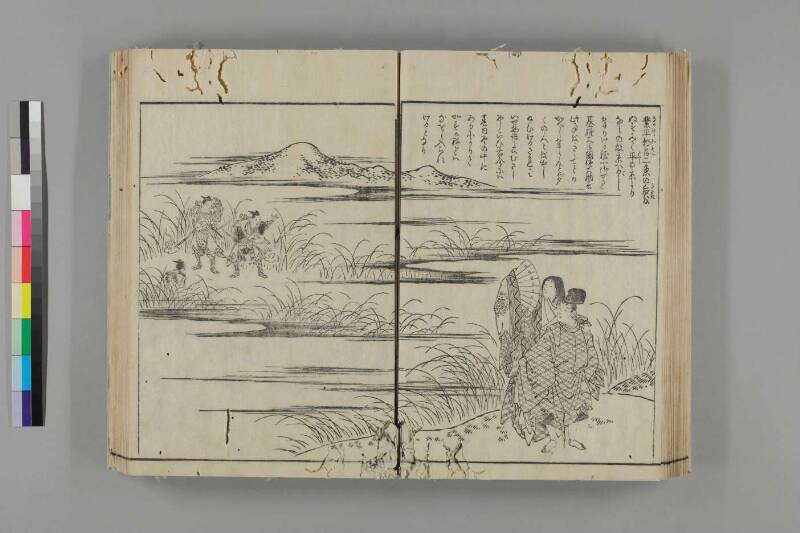
【見開き 図】
【右丁】
業平朝臣(なりひらあそん)二条の后(きさき)を
ぬすみて平(たいら)の京より
ならの故京へ具(く)し
奉りける程に御せうと
基經大臣国國經大納言
此事をきゝてとり
かへし奉らんと多
くの人〻を出し
給ひけるされば
いせ物語にはむさし
野といひ古今には
春日野の中に
あるによりて
かすか野とは
なをし入られ
けるとなり
現代語訳
## 【コマ39】
### 【見開き図・説明文】
業平朝臣(なりひらのあそん)が二条の后(きさき)を連れ出し、平(たいら)の都(京)から奈良の旧都へとお連れ申し上げたところ、御兄上の基経大臣・国経大納言がこのことをお聞きになり、后をお取り返しになろうと、多くの人々を遣わされた。それゆえ、(例の歌は)『伊勢物語』では「武蔵野」と記されているが、『古今和歌集』では(その場所が)春日野の中にあるとして、「春日野」と改めて入れられたとのことである。
英語訳
## [Frame 39]
### [Double-Page Spread Illustration with Explanatory Text]
When Lord Narihira (Ariwara no Narihira) stole away with the consort Nijō-no-kisaki and conveyed her from the capital of Taira [i.e., Heiankyō, Kyoto] to the old capital of Nara, her elder brothers — Minister Mototsune and Grand Counselor Kunitsune — heard of the matter and dispatched a great number of people to bring the consort back. For this reason, while the [poem in question] is recorded in the *Ise Monogatari* as referring to "Musashino," in the *Kokinshū* the location is identified as being within Kasugano, and so the word was revised and entered as "Kasugano" instead.