翻刻
【コマ7】
【右丁】
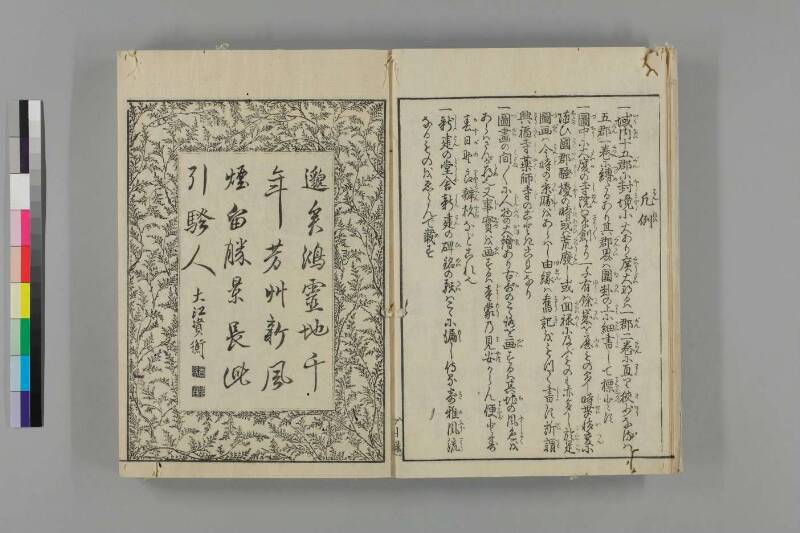
凢例(はんれい)
一 域内(いくない)十五郡( ぐん)に封境(ほうきやう)小大あり廣大(くはうだい)なるは一郡( ぐん)二巻( くはん)に亙(わた)り狹少(させう)なるは
五郡( ぐん)一巻( くはん)に縳(つゞめ)たるあり其 郡界(ぐんかい)は圍卦(ゐけい)#3の上(かみ)に細書(さいしよ)して標(みちしるべ)とす
一 圖中(づちう)に大廈(たいか)の寺院(しゐん)は草創(さう〳〵)より一千有餘歲( ゆうよさい)を歴(ふる)もの多し時世(じせい)の移変(いへん)に
随(したが)ひ國郡(こくくん)騷擾(そうしやう)の時(とき)或(あるひ)は荒廢(くはうはい)し或は囬禄(くはいろく)に及ぶものも亦多し於是(こゝにをいつ)
圖画(づぐは)は今時(こんじ)の景勝(けいしやう)をあらはし由縁(ゆゑん)は《振り仮名:𦾔記|きうき》をもつて書(しよ)す所謂(いはゆる)
興福寺(こうふくし)藥師寺(やくしじ)のごときこれなり
一 圖畵(づぐは)の《振り仮名:間〳〵|はざま 》に人物(じんぶつ)の大繪(おほゑ)あり古哥(こか)のこゝろを画(ぐは)するは其地( ち)の風色(ふうしよく)を
あらはさんが為(ため)也又 事實(じじつ)を画(ぐは)するは童蒙(どうもう)の見安(みやす)からん便(よすが)とす
春日野(かすがの)良辨杦(りやうべんすぎ)などこれ也
一 新建(しんこん)の堂舎(どうしや)新建(しんこん)の碑銘(ひめい)の類(るい)はこゝに漏(もら)し侍る奇雅(きか)風流(ふうりう)
なるものをゑらんで載(の)す
【左丁】
邈矣鴻靈地千
年芳艸新風
煙留勝景長此
引騷人 《割書:大江資衡》【印】#1【印】#2
現代語訳
【右丁】
**凡例**
一、国内十五郡には境域の広狭があり、広大な郡は一郡で二巻にわたり、狭小な郡は五郡をまとめて一巻に収めたものもある。各郡の境界は、囲み枠の上部に細字で記して目印とした。
一、図中に掲載した大きな寺院は、草創より千余年を経たものが多く、時世の移り変わりに従い、国郡が騒乱の時に、あるいは荒廃し、あるいは火災に遭ったものも亦多い。そこで、図画は現在の景観を描き、由来については旧記をもって記した。いわゆる興福寺・薬師寺のごときがこれにあたる。
一、図画の合間に人物の大きな絵がある。古歌の心を画いたものは、その土地の風情を表すためであり、また事実を画いたものは、子どもや初学者にも見やすいよう配慮したものである。春日野・良弁杉などがこれにあたる。
一、新しく建てられた堂舎や新しく建てられた碑銘の類はここでは省き、風雅で趣のあるものを選んで掲載した。
【左丁】
(漢詩)
邈矣鴻靈の地、
千年 芳草新たなり。
風煙 勝景を留め、
長くここに騒人を引く。
大江資衡
英語訳
【Right Page】
**Editorial Notes (Hanrei)**
1. Among the fifteen districts (gun) within the province, there are differences in the size of territorial boundaries. The larger districts span two volumes each, while the smaller ones may have five districts consolidated into a single volume. The boundary of each district is noted in small characters above the border frame, serving as a guide.
2. Many of the great temple complexes depicted in these illustrations have a history of over a thousand years since their founding. As times have changed, and during periods of unrest across the provinces, many have fallen into ruin or been destroyed by fire. Therefore, the illustrations depict the scenery as it appears today, while the historical background is recorded based on old chronicles. Kōfuku-ji Temple and Yakushi-ji Temple are examples of this.
3. Among the illustrations, there are large-format figure paintings inserted at intervals. Those depicting the spirit of classical poems are intended to evoke the character and atmosphere of each locale, while those depicting actual historical events are meant to make the content easily accessible to young and inexperienced readers. The illustrations of Kasugano and the Rōben Cedar are examples of this.
4. Newly constructed halls and newly erected stone monuments and the like have been omitted here; only those things of refined elegance and artistic charm have been selected and included.
【Left Page】
*(Chinese-style poem)*
How vast is this land of great and numinous spirit —
A thousand years have passed, yet the fragrant grasses are ever new.
Mist and haze preserve these scenes of surpassing beauty,
Drawing wandering poets here, now and always.
Ōe Sukehira