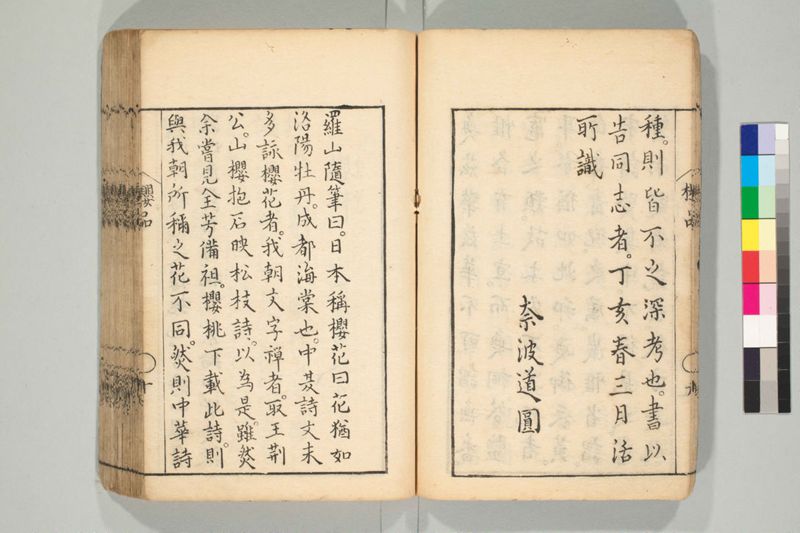
翻刻
【右丁】
種。則皆不之深考也。書以
告同志者。丁亥春三月活
所識
奈波道円
【左丁】
羅山随筆曰。日本称桜花曰花猶如
洛陽牡丹。成都海棠也。中其詩文末
多詠桜花者。我朝文字禅者。取王荊
公。山桜抱石映松枝詩。以為是。雖然
余嘗見全芳備祖。桜桃下載此詩。則
与我朝所称之花不同。然則中華詩
現代語訳
【右丁】
種がないということである。つまり皆、深く考察していないのである。同志の者に告げるためにこれを書く。丁亥の春三月、活所にて記す
奈波道円
【左丁】
羅山随筆に曰く、日本では桜花を花と称するのは、ちょうど洛陽の牡丹、成都の海棠のようなものである。中でもその詩文には桜花を詠んだものが最も多い。我が朝の文字禅者は、王荊公の「山桜抱石映松枝」の詩を取って、これを正しいものとしている。しかしながら、私はかつて『全芳備祖』を見たところ、桜桃の項目の下にこの詩が載せられている。これは我が朝で称するところの花とは異なる。そうであれば中華の詩は
英語訳
【Right page】
varieties do not exist. That is to say, they all have not examined this deeply. I write this to inform like-minded people. Recorded at Kassho in the third month of spring in the year Teigai.
Naha Dōen
【Left page】
The Razan Essays state: In Japan, calling cherry blossoms "hana" (flower) is just like calling peonies in Luoyang or crabapple blossoms in Chengdu by that name. Among poetry and prose, those that sing of cherry blossoms are the most numerous. The literary Zen practitioners of our court take Wang Jinggong's poem "Mountain cherry embracing stone, reflecting pine branches" as correct. However, when I once examined the "Quanfang Beizu" (Complete Collection of Fragrant Plants), I found this poem listed under the entry for cherry (sakuranbo). This is different from the flower we call by that name in our court. If that is so, then Chinese poetry