翻刻
【右丁】
いはく桜待中納言(さくらまちのちうなごん)此花のさかり数日(すじつ)
なき事をかなしみ泰山府君を祭(まつ)りて
三七日の齢(よはひ)をのべたりとそ
千早振現人神のかみたれは
花のよはひは延ひにけるかな
万葉集(まんようしう)にも花のさかり七日は過(すぎ)てとよめり
【左丁】
【上段・図】
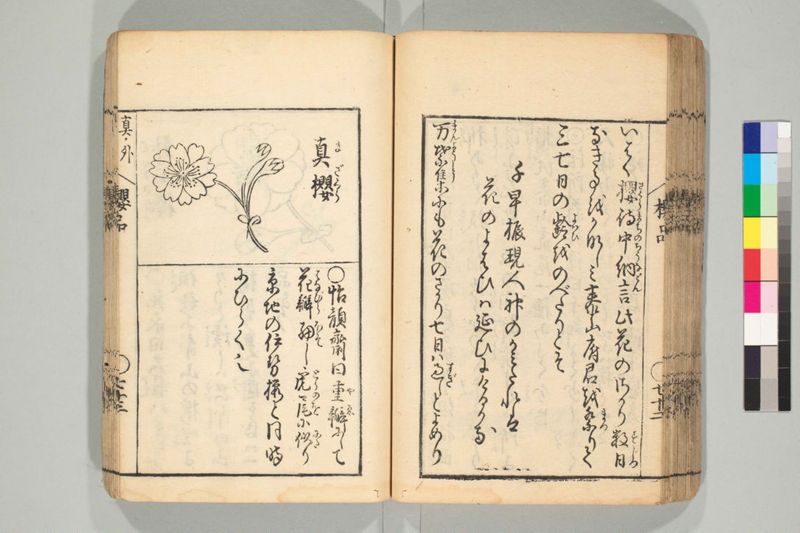
真桜(まざくら)
【下段】
○怡顔斎曰 重弁(やゑ)にして
花弁(はなびら)細(ほそ)し虎尾(とらのを)に似(にた)り
京地の伊勢桜と同時
にひらく也
現代語訳
【右丁】
(続き)いわく、桜待中納言(さくらまちのちゅうなごん)は、この花の盛りが数日しか続かないことを悲しみ、泰山府君を祀って、三七日(二十一日)の命(齢)を延ばしたとのことである。
千早振る現人神の神なれば
花の齢は延びにけるかな
(また)『万葉集』にも「花の盛り七日は過ぎて」と詠まれている。
【左丁】
【上段・図】
真桜(まざくら)
【下段】
○怡顔斎いわく、八重咲きであって、花弁が細い。虎尾(とらのを)に似ている。京都における伊勢桜と同じ時期に開く。
英語訳
【Right folio】
(Continued) — it is told that Sakuramachi no Chūnagon, lamenting that the peak bloom of this flower lasted only a few days, offered prayers to Taizanbukun and thereby extended its life (*yowai*) by three-times-seven days (twenty-one days).
Being a god made manifest in human form (*arahitogami*),
the life of the blossoms was indeed prolonged.
Furthermore, in the *Man'yōshū* as well, there is a poem that reads: "Seven days have passed since the flowers were at their peak…"
【Left folio】
【Upper section – illustration】
Mazakura (True Cherry)
【Lower section】
○Itangansai states: It has double blossoms (*yaezaki*), and the petals are slender. It resembles the Toranoo variety. In Kyoto, it blooms at the same time as the Ise cherry (*Ise-zakura*).