翻刻
【柱】行状記標題 二
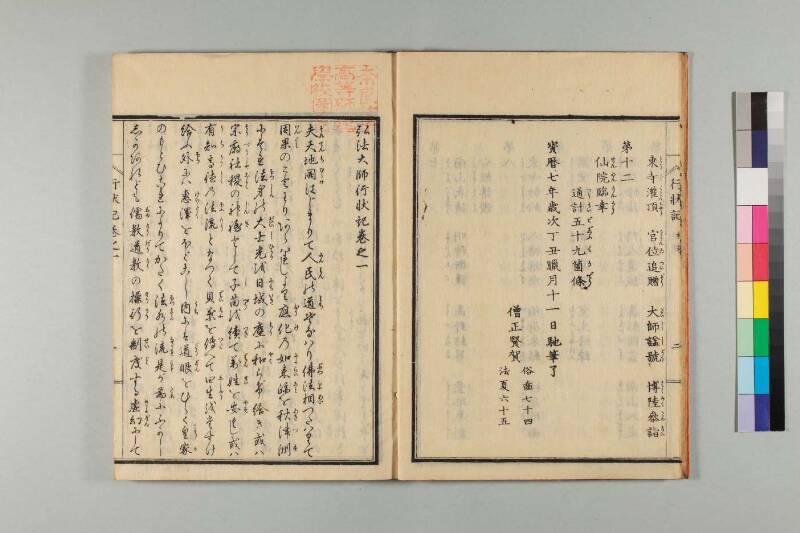
東寺(とうじ)灌(くわん)頂(ぢやう) 官位(くわんゐ)追贈(ついぞう) 大師(だいし)諡号(しがう) 博(はく)陸(ろく)参詣(さんけい)
第十二
仙(せん)院(ゐん)臨幸(りんかう)
通計(つうけい)五十(ごじふ)九(く)箇(か)條(でう)
宝暦七年歳次丁丑臘月十一日馳筆了
僧正賢賀 俗歯七十四
法夏六十五
弘法大師行状記巻之一
夫(それ)天地(てんち)開(ひらけ)はじまりて人民(にんみん)の道(みち)そなはり仏法(ぶつほふ)相(あい)つたはりて
因果(いんぐわ)のことわりあらはれしより応化(おうけ)の如来(によらい)跡(あと)を秋津(あきつ)洲(す)
にたれ法身(ほつしん)の大士(だいし)光(ひかり)を日域(にちいき)の塵(ちり)に和(やは)らげ給き或は
宗廟(そうべう)社稷(しやしよく)の神祇(じんぎ)として子(し)苗(べう)を続(つぎ)て万(ばん)姓(せい)を安(やす)くし或は
有(う)知(ち)高徳(かうとく)の法(ほふ)流(りう)となつて貝葉(ばいえふ)を伝(つた)へて四(し)生(しやう)をたすけ
給ふ外(ほか)には恵沢(けいたく)をほどこし内(うち)には道(だう)眼(げん)をひらく皇家(くわうか)
のもとひこれによりてかたく法水(ほつすゐ)の流(ながれ)是(これ)が為(ため)にふかし
しかあれども儒教(じゆけう)道教(だうけう)の操行(さうかう)を制度(せいど)する虚(きよ)幻(げん)にして
【柱】行状記巻之一 一
現代語訳
【柱】行状記標題 二
東寺での灌頂 官位の追贈 大師の諡号 博陸の参詣
第十二
仙院の臨幸
通計 五十九箇条
宝暦七年(1757年)丁丑の年、臘月十一日に書き終える
僧正賢賀 俗齢七十四歳
法臘六十五歳
弘法大師行状記 巻之一
そもそも天地が開け始まり人民の道が備わり、仏法が次々と伝わって因果の理が現れてより、応化の如来は秋津洲(日本)にその跡を垂れ、法身の大士は日本の塵(俗世)に光を和らげてお与えになった。あるいは宗廟・社稷の神祇として、子孫を継いで万民を安らかにし、あるいは有知・高徳の法流となって仏典を伝えて四生(すべての生き物)を助けてくださる。外には恵みの露を施し、内には道眼を開く。皇家の基はこれによって堅固であり、法水の流れはこのゆえに深い。
しかしながら、儒教・道教の操行を制度とするものは虚幻にして、
【柱】行状記巻之一 一
英語訳
[Column title] Table of Contents for the Record of Life and Conduct, No. 2
Esoteric initiation at Tōji; Posthumous conferral of court rank; The posthumous title of Daishi; The visit of the Hakuriku [chancellor] to the temple
Chapter Twelve
The imperial visit to the Hermitage
Total: fifty-nine articles
Completed in brushwork on the eleventh day of the twelfth month of the seventh year of Hōreki (1757), the year of Hinoto-Ushi
Sōjō Kenga, age in secular years: seventy-four
Buddhist seniority: sixty-five rains [years since ordination]
---
Record of the Life and Conduct of Kōbō Daishi, Volume One
From the very beginning, when heaven and earth first opened and the way of humanity was established, and the Buddhist Dharma was transmitted in succession so that the principle of cause and effect became manifest — since that time, the Nirmāṇakāya Tathāgata has left traces upon the island of Akitsushima [Japan], and the Dharmakāya Bodhisattva has softened his radiance into the dust of this land of Japan [a divine concealment of brilliance]. In some cases, as the deities of the ancestral shrines and altars of the land, they have continued the line of descendants and brought peace to all people; in other cases, as the stream of learned and virtuous Dharma, they have transmitted the palm-leaf scriptures and aided all living beings of the four modes of birth. Outwardly, they have bestowed their grace and blessings; inwardly, they have opened the eye of the Way. The foundations of the imperial house are made firm by this, and the flow of the Dharma-water runs deep because of it.
Nevertheless, those who make the moral conduct of Confucianism and Taoism their system are [dealing in] illusion and emptiness,
[Column title] Record of Life and Conduct, Volume 1, No. 1