翻刻
【柱】行状記巻之一 二
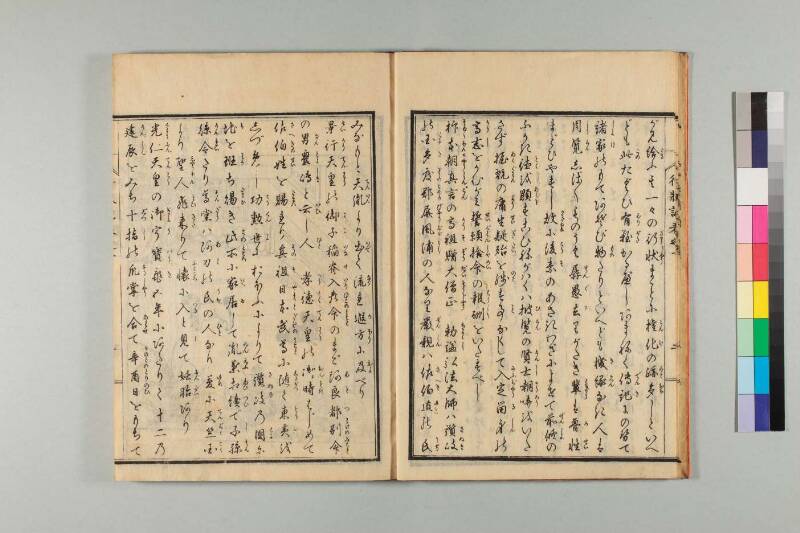
がみ給ふ其一々の行状まことに権化(ごんけ)の跡(あと)多(おほ)しといへ
ども此(この)たぐひ有難(ありがた)かるべしあまねく伝記(でんき)にのせて
諸家(しよけ)のもてあそび物(もの)たりといへども機縁(きえん)なき人は
用(よう)覧(らん)しば〳〵ものうく孱愚(せんぐ)去(さ)りがたき輩(ともがら)は魯(ろ)性(せい)
まどひやすし故(かるがゆゑ)に後(こう)素(そ)のあさきわざによせて前(ぜん)修(しゆ)の
ふかき徳(とく)を顕(あらは)すこひねがはくは被(ひ)覧(らん)の賢士(けんし)朝(てう)哢(ろう)をいた
さず握願(あくぐわん)の庸(よう)生(せい)疑(ぎ)殆(たい)を残(のこ)す事(こと)なくして入定(にふぢやう)留(る)身(しん)の
高志(かうし)をかむがみ誓願(せいぐわん)捨命(しやめい)の報酬(はうしう)をいたすべし
抑(そも〳〵)本朝(ほんちやう)真言(しんごん)の高祖(かうそ)贈(ぞう)大(だい)僧正(そうじやう) 勅(ちよく)諡(し)弘法大師は讃岐(さぬき)
の国(くに)多度(たどの)郡(こほり)屏風(ぎやうぶが)浦(うら)の人なり厳親(げんしん)は佐伯(さへき)値(あたい)の氏(うぢ)
みなもと天(てん)胤(いん)より出(いで)て流(なが)れ遐方(かほう)に及べり
景行(けいかう)天皇(てんわう)の御子(みこ)稲(いな)背(せ)入(いり)彦(ひこの)命(みこと)のまご阿(あ)良(と)都(つ)別(わけの)命(みこと)
の男(なん)豊嶋(とよしま)と云(いひ)し人 孝徳(かうとく)天皇(てんわう)の御(おん)時(とき)はじめて
佐伯(さへき)姓(せい)を賜(たまは)れり其(その)祖(そ)日本(やまと)武(たけるの)尊(みこと)に随(したがつ)て東夷(とうい)を
しづめし世(よ)におほふによりて讃岐(さぬき)の国(くに)に
地(ち)を班(わか)ち賜(たまひ)き此(この)所(ところ)に家(いへ)居(ゐ)して胤(ゐん)葉(えふ)相続(あひつひ)で子孫(しそん)
■(けん)令(れい)たり尊堂(そんだう)は阿刀(あと)の氏(うぢ)の人(ひと)なり夢(ゆめ)に天竺(てんぢく)国(こく)
より聖人(しやうにん)飛来(とひきた)りて懐(ふところ)に入(いる)と見(み)て妊胎(にんたい)あり
光仁(くわうにん)天皇(てんわう)の御宇(ぎよう)五年にあたりて十二の
建(けん)辰(しん)をみち十(じつ)指(し)の爪(さう)掌(しやう)を合(あわせ)て辛酉(かのとのとり)日(のひ)をもちて
【柱】行状記巻之一 三
現代語訳
【柱】行状記巻之一 二
(前ページより続く)……をご覧になっておられる。その一つ一つの行状は、まことに権化(化身として現れた聖者)の跡が多いと言えるが、このような類いは有り難いものであるはずだ。広く伝記に記載されて、諸家の楽しみとなっているとはいえ、それを受け取る機縁のない人は、読み覧ることがしばしば億劫となり、才能が乏しく愚かさを脱しがたい者は、その鈍い性質ゆえに迷いやすい。それゆえ、後学の浅い者の学びに寄せて、先人の深い徳を顕わそうとするものである。願わくは、この書をご覧になる賢い方々は朝笑(嘲弄)をなさらず、願いを持つ凡庸な衆生も疑いや危うさを残すことなく、(大師が)入定留身されたその高い志を仰ぎ見て、誓願・捨命の報酬を尽くされるよう。
そもそも、本朝(日本)真言宗の高祖にして、贈大僧正、勅諡・弘法大師は、讃岐の国多度郡屛風浦の人である。父君は佐伯直(あたい)という氏の人で、その源は天皇の血統より出て、流れは遠方にまで及んでいる。景行天皇の御子・稲背入彦命の孫、阿良都別命の子に豊嶋という人がいたが、孝徳天皇の御代に初めて佐伯の姓を賜った。その祖先は日本武尊に従って東夷を鎮めた功績が世を覆うほど大きかったので、讃岐の国に土地を分け与えられたのである。この地に居を構えて、その血脈は相次いで子孫は皆、優れた者であった。母君は阿刀氏の人である。夢に天竺(インド)の国から聖人が飛来して懐に入るとご覧になり、妊娠された。光仁天皇の御代、(宝亀)五年にあたり、十二の(月の)辰(干支)が満ちて、十指の爪(手)と掌を合わせて(合掌して)、辛酉の日をもって(御誕生になった)……
【柱】行状記巻之一 三
英語訳
[Column title] Record of Life and Conduct, Volume 1, No. 2
(Continued from the previous page) ...gazing upon it. Each and every one of the acts and deeds [recorded here] may truly be said to abound in the traces of a manifestation [of a buddha or bodhisattva in human form], and things of this kind ought indeed to be considered deeply precious. Although they have been widely recorded in biographies and have become a source of delight for people of various houses and traditions, those who lack the karmic affinity to receive them will find reading and reviewing them to be tedious more often than not, while those of meager capacity who cannot easily shed their dullness will, by reason of their slow nature, easily fall into confusion. For this reason, this work draws upon the shallow endeavors of later learners in order to make manifest the profound virtue of those who cultivated [the Way] before. It is our earnest wish that the wise persons who come to read this work will not mock it with ridicule, and that ordinary beings who cherish their vows will leave no trace of doubt or peril, but instead look up with reverence upon the lofty aspiration of [the Daishi's] remaining in meditative repose [nyūjō ryūshin], and duly render what is owed in return for his vows and self-sacrifice.
Now then, the patriarch of the Shingon school in our land of Japan, the posthumously conferred Daisōjō [Archbishop], the Kōbō Daishi by imperial posthumous name — he was a person of Byōbu-no-ura in Tado District, Sanuki Province. His honorable father was of the Saeki no Atai clan, whose origins flowed from the imperial lineage and whose line extended to distant regions. A man named Toyoshima — grandson of Prince Inase-irihiko no Mikoto, son of Emperor Keikō, and son of Prince Aratsuwake no Mikoto — was the first to be granted the surname Saeki during the reign of Emperor Kōtoku. His ancestors, having followed Yamato Takeru no Mikoto in pacifying the eastern barbarians, a meritorious service that covered the world, were granted land in Sanuki Province. They established their household in this place, and their lineage continued in succession, their descendants all persons of distinction. His revered mother was a person of the Ato clan. She dreamed that a sage came flying from the land of India [Tenjiku] and entered her bosom, and upon seeing this dream she conceived. In the fifth year of Emperor Kōnin's reign, when the twelve [zodiacal] signs of the year were fulfilled and complete, with ten fingers and palms pressed together [in reverent anjali], on the day of Kanoto-tori [the fifty-eighth day of the sexagenary cycle]...
[Column title] Record of Life and Conduct, Volume 1, No. 3