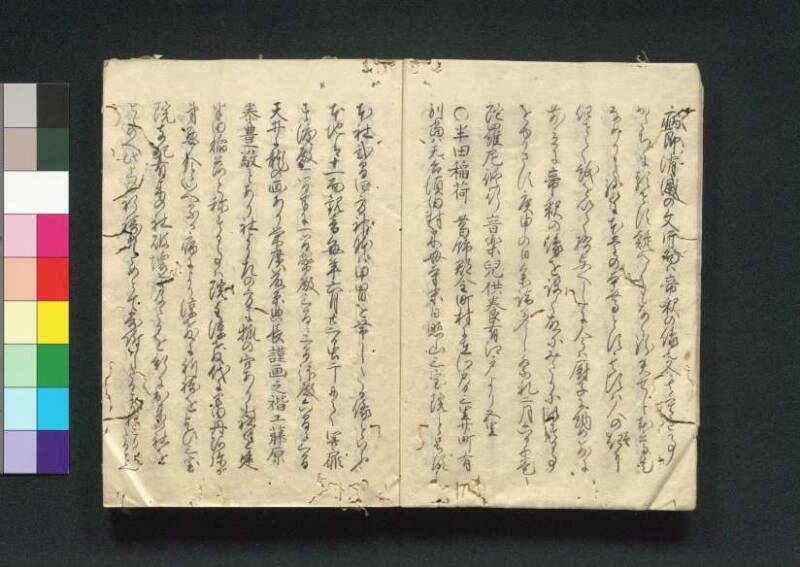
翻刻
病即消滅の文片面は帝釈天の像也又其重き事
かたちに類せす疑へくもなく紛失せし本尊是
なめりと終に本堂の本尊とす其頃は人の《見せ消ち:望|起》に
任せて紙を以て摺与へしに今は厨子に納め別に
前立に帝釈の像を設く故にみたりに拝する事
をゆるさす庚申の日参詣多し祭礼二月六日千巻【他資料「十巻」】
陀羅尼修行音楽児供養有江戸より五里
○半田稲荷 葛飾郡金町村に在江戸より三里廿町有
別当は天台須田村木母寺末日照山三宝院と号す
本社弐間四方神体は甲冑を帯したる像といふ
本地は十一面観音毎年六月廿二日虫干にて開扉
す渡殿一間半に一間幣殿三間に二間拝殿六間に三間
天井に龍の画あり栄広藤原典長謹□#1工楷工藤原
泰豊敬とあり社より左の方に狐の穴あり小社を建
半田稲荷と称する事は院主淳教代に半田丹阿弥が
弟要人といへるか病により淳教に祈祷を乞ひ三宝
院支配有来の社破壊に及たるを新に出来の社を#2
とゝのへ此上の祈祷のためとて寄附したるよりおこり
たると也
現代語訳
「病即消滅」の文字があり、片面は帝釈天の像である。またその重さが形に似合わず、疑いもなく紛失した本尊がこれであろうと、ついに本堂の本尊とした。その頃は人の願いに任せて紙を以て摺り与えていたが、今は厨子に納め、別に前立として帝釈の像を設けている。故にみだりに拝することを許さない。庚申の日に参詣が多い。祭礼は二月六日で千巻陀羅尼修行、音楽、児供養がある。江戸より五里の距離にある。
○半田稲荷 葛飾郡金町村にあり、江戸より三里二十町の距離がある。別当は天台宗で須田村木母寺の末寺、日照山三宝院と号する。
本社は二間四方で、神体は甲冑を帯びた像という。本地は十一面観音で、毎年六月二十二日の虫干しで開扉する。渡殿は一間半に一間、幣殿は三間に二間、拝殿は六間に三間で、天井に龍の画がある。「栄広藤原典長謹○工楷工藤原泰豊敬」とある。社より左の方に狐の穴があり、小社を建てている。半田稲荷と称することは、院主淳教の代に半田丹阿弥の弟要人という者が病気により淳教に祈祷を乞い、三宝院支配下にあった社が破壊に及んだのを新たに出来た社を整え、この上の祈祷のためとして寄附したことから起こったという。
英語訳
bearing the text "byō soku shōmetsu" (illness immediately vanishes), and one side shows an image of Taishakuten. Moreover, its weight is disproportionate to its form, and without doubt this must be the lost principal deity, so it was finally made the principal deity of the main hall. In those days, they would make paper rubbings at people's requests, but now it is housed in a zushi (miniature shrine), with a separate standing image of Taishaku placed in front. Therefore, casual worship is not permitted. There are many pilgrims on kōshin days. The festival is held on February 6th with thousand-scroll dhāraṇī practice, music, and children's memorial services. It is five ri from Edo.
○Handa Inari: Located in Kanamachi Village, Katsushika District, three ri and twenty chō from Edo. The bettō (temple administrator) belongs to the Tendai sect as a branch of Mokuboji Temple in Suda Village, called Nisshōzan Sanpōin.
The main shrine is two ken square, and the sacred body is said to be a figure wearing armor. The honji (original Buddhist form) is Eleven-faced Kannon, and the doors are opened annually on June 22nd for mushboshi (airing against insects). The connecting hall is one and a half ken by one ken, the offering hall is three ken by two ken, and the worship hall is six ken by three ken, with a painting of a dragon on the ceiling. It bears the inscription "Eikō Fujiwara Norinaga kin[...] kō kai kō Fujiwara Yasutoyo kei." To the left of the shrine is a fox hole with a small shrine built there. The reason it is called Handa Inari is that during the time of head priest Junkyō, a person called Yōjin, the younger brother of Handa Tan'ami, fell ill and requested prayers from Junkyō. When the shrine under Sanpōin's administration fell into ruin, he had a new shrine built and donated it for the purpose of these prayers, which is how it came to be so named.