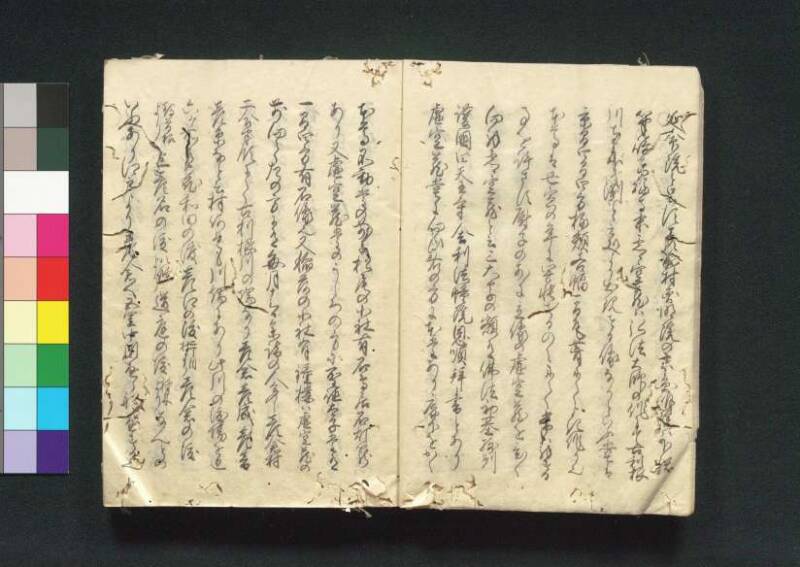
翻刻
延命院と号す彦成村円明院の末延命院は下総
もす若岡村円明院の妻恋雅達は下拙
筆崎#1東福寺末にして空蔵は弘法大師の作にて古利根
川ちよぼが淵と云処より出現せる像なりといふ堂は
京間四間四方椽頬#2各幅一間瓦葺にてよき作り也
本尊は丑寅の年に開帳するのみにて常は拝する
事を許さす厨子の前に立像の虚空蔵を置く
向拝虚空蔵と云三大字の額有仏法初基摂州
護国四天王寺舎利法幢院恩順拝書とあり
虚空蔵堂に向ひ右の方に本堂あり廊下をかく
本尊不動堂の前に松尾の小社有石鳥居石灯籠
あり又虚空蔵堂のうしろの方に聖徳太子堂有
一間四方有石像也又稲荷の小社有鐘楼は虚空蔵の
前向て左の方に有毎月十三日参詣の人多し彦倉村
二合半領にて古利根川の端なり差倉彦音
彦糸なと云村何れも川端にあり此川の渡場近辺
六ケ所有花和田の渡彦江の渡《割書:二丁目|村#3より》彦倉の渡
《割書:鶴曽根|より》より上彦名の渡《割書:八条#4|より》道庭の渡《割書:柿木#5|より》なんとの
いふあり江戸より彦倉へ中川通り船も通する也
現代語訳
延命院と号する。彦成村円明院の末寺である。延命院は下総国若岡村円明院の末でもある。妻恋雅達は下総国筆崎東福寺の末寺であり、虚空蔵は弘法大師の作で、古利根川の「ちよぼが淵」という所より出現した像であるという。堂は京間四間四方で、縁側は各幅一間、瓦葺きで良い造りである。本尊は丑年と寅年にのみ開帳し、常時は拝することを許さず、厨子の前に立像の虚空蔵を置いている。向拝に「虚空蔵」という三文字の額があり、「仏法初基摂州護国四天王寺舎利法幢院恩順拝書」とある。
虚空蔵堂に向かって右の方に本堂があり、廊下で繋がっている。本尊は不動明王で、堂の前に松尾の小社があり、石鳥居と石灯籠がある。また虚空蔵堂の後ろの方に聖徳太子堂があり、一間四方で石像である。また稲荷の小社がある。鐘楼は虚空蔵の前に向かって左の方にある。毎月十三日に参詣の人が多い。彦倉村は二合半領で古利根川の端にある。差倉、彦音、彦糸などという村は何れも川端にある。この川の渡場は近辺に六ヶ所あり、花和田の渡、彦江の渡(二丁目村より)、彦倉の渡(鶴曽根より)、上彦名の渡(八条より)、道庭の渡(柿木より)などという。江戸より彦倉へは中川通りの船も通じている。
英語訳
It is called Enmei-in. It is a branch temple of Enmyō-in in Hikonari Village. Enmei-in is also a branch of Enmyō-in in Wakaoka Village, Shimōsa Province. Tsumakoi Gatatsu is a branch of Tōfukuji in Fudesaki, Shimōsa Province. The Kokūzō statue is said to be carved by Kōbō Daishi and to have emerged from a place called "Chiyoba-ga-fuchi" on the old Tone River. The hall is four ken square in Kyoto measurements, with verandas one ken wide on each side, tiled roof, and of good construction. The principal image is only opened for viewing in the years of the Ox and Tiger; it is not normally permitted to be viewed, and a standing statue of Kokūzō is placed in front of the tabernacle. There is a plaque with the three characters "Kokūzō" on the front worship area, inscribed "Buppō Shoki Sesshū Gokoku Shitennōji Shari Hōdōin Onjun haishyo."
To the right facing the Kokūzō Hall is the main hall, connected by a corridor. The principal deity is Fudō Myōō, and in front of the hall is a small Matsuo shrine with a stone torii and stone lanterns. Also behind the Kokūzō Hall is a Shōtoku Taishi Hall, one ken square with a stone statue. There is also a small Inari shrine. The bell tower is to the left facing the front of the Kokūzō Hall. Many people make pilgrimages on the 13th of each month. Hikokura Village is a two-and-a-half gō territory at the edge of the old Tone River. Villages called Sashikura, Hikone, Hikoito and others are all located along the riverbank. There are six ferry crossings near this river: Hanawada-no-watashi, Hikoe-no-watashi (from Nichōme Village), Hikokura-no-watashi (from Tsurusone), Kami-Hikona-no-watashi (from Hachijō), Dōba-no-watashi (from Kakinoki), and so forth. Boats also run from Edo to Hikokura via the Nakagawa route.