翻刻
さるはとうやら
こふやら
げいしやと成
すゞみぶねで
かねをもふけ
はゝをらく〳〵と
すごしおとこの子より
むすめがよいとよろ
こびけりかにはさるを
たづねんとおもへども
てがゝりもなく
かめにすゞみに
ござれと
すゝめ
られ
せなかへ
のせていで
けり
むかしはさるをのせ
こんどはかにをのせる
いんねんといふものは
あじなもの
なり
【亀】
せんせい
よしのを
見給ひ
うつくしい
のが
ある
現代語訳
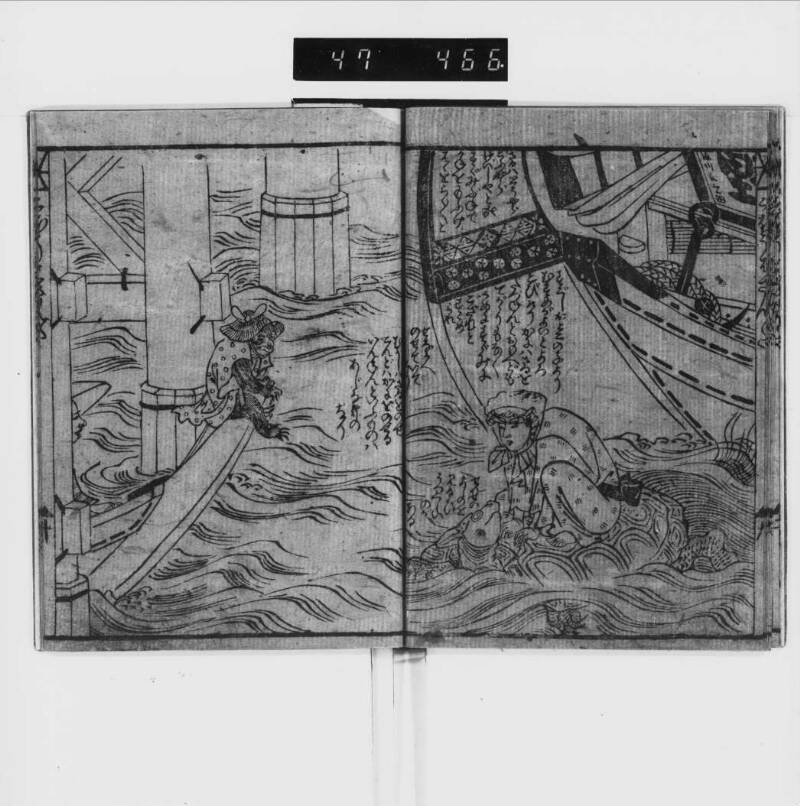
猿はどうやらこうやら芸者となり、涼み船で金をも儲け、母を楽々と過ごさせ、男の子より娘が良いと喜んでいた。蟹は猿を尋ねようと思えども手がかりもなく、亀に「涼みに来なさい」と勧められ、背中へ乗せて出かけた。昔は猿を乗せ、今度は蟹を乗せる。因縁というものは味なものなり。
【亀】
先生、吉野を御覧なさい。美しいのがある。
英語訳
The monkey somehow managed to become a geisha, earning money on pleasure boats for evening cool, allowing his mother to live comfortably. He rejoiced that having a daughter was better than having a son. The crab wanted to search for the monkey but had no clues. When the turtle recommended "come for some evening cool," he loaded the crab on his back and set out. In the past he carried the monkey, now he carries the crab. What we call fate is indeed a curious thing.
【Turtle】
Master, look at Yoshino. There are beautiful ones there.