翻刻
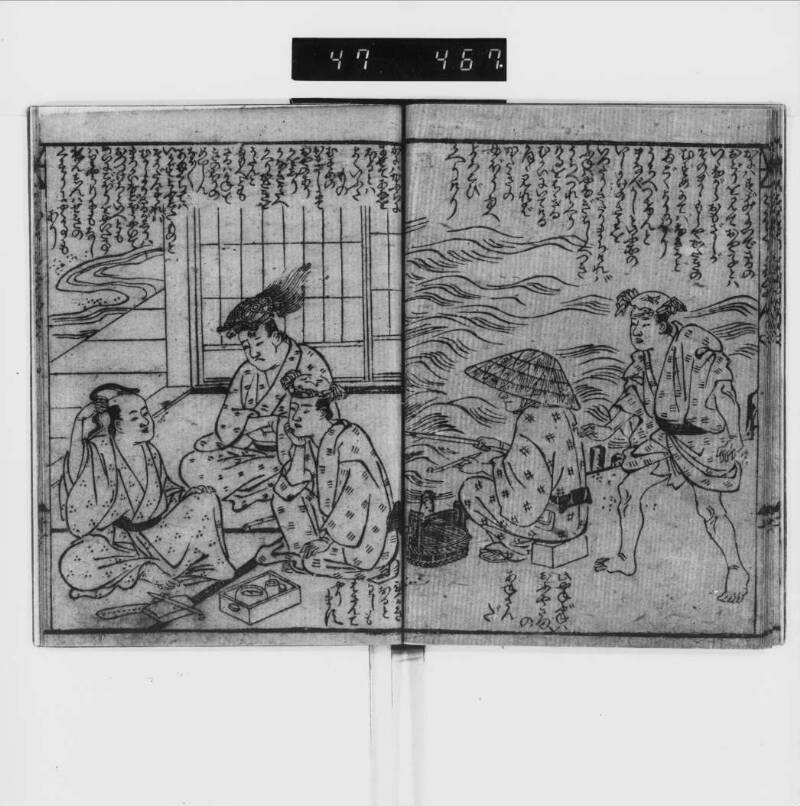
かにはすゞみにいでさるの
おどりを見ておや子とは
いゝながらおもざしが
そのまゝもしやかたきの
むすめにてはなきかと
〔両ごく〕よりあがり
うちへつけんと
〔まなべかし〕#1といふ所の
いしかけのきわを
いつたりきたりまちければ
ふねはやなぎはしへつき
うちへつれかへり
けるをはゝざる
むかいにいてける
かほゝ見れば
かたきの
女ぼうゆへ
よろこび
かへりけり
【釣り人】
此やねぶねは
おふやさま
の
あねさん
だ
【本文】
かにはかふらに
にせてあなを
ほるとは
よくいふた
もの
むすめの
おもざしにて
おやのあり
かをしり
うなきかたへ
かへりかたきを
うたんと
おもへとも
さるはかねて
きのほりの
めいじん
なか〳〵
あまくちでは
いかずとふしたものと
そうだんすれは
むかしよりさるがしりは
まつかいなごぼうやいて
おつつけろといへとも
ついにごぼうをやいた事
はりやうりにもなし
ねんしん#2はせきの
くすりにやく事も
あり
【蟹】
ひつかき
おると
わしも
はさんて
やり
ます
現代語訳
蟹は涼みに出て猿の踊りを見て、親子とは言いながら面差しがそのまま、もしや敵の娘ではないかと、両国より上がり、家へ着けようと真鍋河岸という所の石垣の際を行ったり来たりして待っていれば、船は柳橋へ着き、家へ連れ帰ったのを、母猿が迎えに出てきた顔を見れば、敵の女房故、喜んで帰った。
【釣り人】
この屋根船はお武家様のお姉さんだ。
【本文】
蟹は瓦に似せて穴を掘るとはよく言ったもの。娘の面差しにて親のありかを知り、住まいの方へ帰り、敵を討とうと思えども、猿は兼ねて木登りの名人、なかなか甘口では行かずと、古したものと相談すれば、昔より「猿が尻は真っ赤い、牛蒡を焼いて追っつけろ」と言えども、ついに牛蒡を焼いた事は料理にもなし。しかし人参は咳の薬に焼く事もあり。
【蟹】
引っ掻いておると、私も挟んでやります。
英語訳
The crab went out for evening cool and saw the monkey's dancing. Though they were parent and child, the facial features were exactly the same - could this possibly be the enemy's daughter? Coming up from Ryogoku, waiting to follow them home by going back and forth along the stone embankment at a place called Manabe Wharf, the boat docked at Yanagi Bridge. When they were taken home, the mother monkey came out to greet them, and seeing her face, he recognized the enemy's wife, so he returned home with joy.
【Fisherman】
This houseboat belongs to a samurai's elder sister.
【Main text】
It's well said that "the crab digs holes resembling roof tiles." Knowing the parent's whereabouts from the daughter's facial features, he returned toward their dwelling to take revenge on his enemy. However, the monkey had long been a master tree climber - gentle methods would certainly not work. Consulting with an old-timer, they said that since ancient times people say "the monkey's bottom is bright red - roast burdock root and chase him with it," but roasting burdock root serves no culinary purpose. However, carrots when roasted can sometimes serve as cough medicine.
【Crab】
While you're scratching, I'll pinch him too.