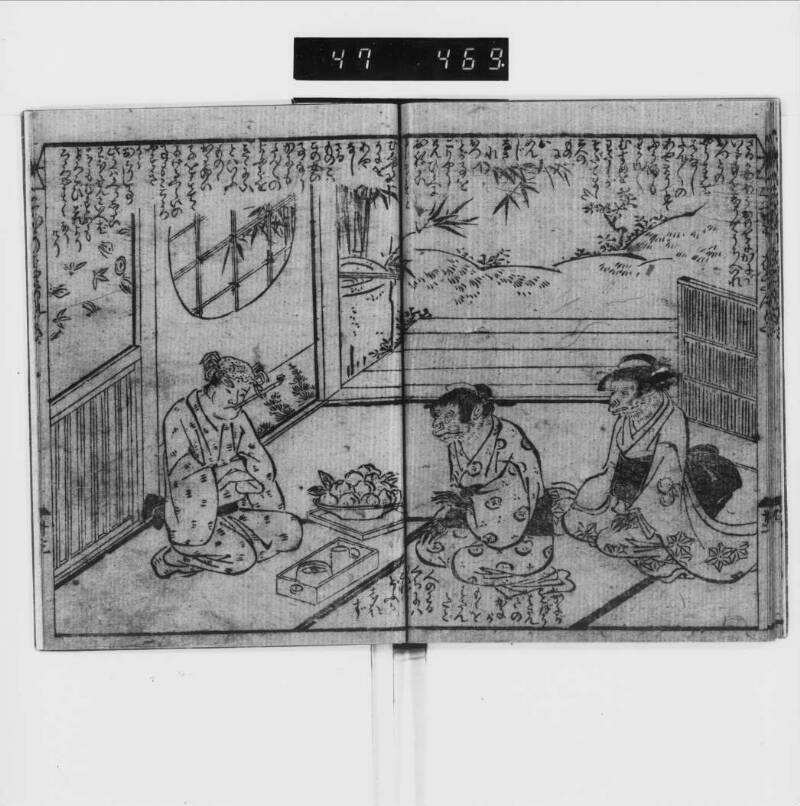
翻刻
さるか女ぼうおもてにかにが
いる事をしりてうちへいれ
おつとの
やうすを
はなし
たん〳〵の
あやまりにて
ふうふも
わかれ〳〵
むすめを
わたしが
そだてました
二人の
もの
に
お
めん
じ
なさ
れ
おつ
とが事を
ごりやう
けnひとへに
おねがい
申ますと
むしやうに
かにを
あや
なし
さる
ものとは
この女の
事なり
かにも
たん〳〵の
よふすを
きゝにくい
とはいふ
ものゝ
かわゆい
子をすてゝ
にけるくらいの
事もこゝろ
やすき
から
おこりし事
此うへはかへりしだい
わぼくせんといへば
はゝもむすめも
よろこびこれより
こゝろやすくなり
けり
かにが
ごぼう
はさん
だの
かに
が
もゝを
はさん
だと
人のわる
くちには
□□□□【とじ目にあり読めず】
これは
どふか
しれ
ず
現代語訳
猿が女房を表に蟹がいる事を知って家へ入れ、夫の様子を話した。全くの誤りにて、夫婦も別れ別れ、娘を私が育てました。二人のものにお目にかけなされ、夫が事をご了解ください、ひとえにお願い申しますと。
無性に蟹を謝らせ、猿のものとは、この女の事なり。蟹も全くの様子を聞きにくいとは言うものの、可愛い子を捨てて逃げるくらいの事も心安きから起こりし事。この上は帰り次第、和睦せんと言えば、母も娘も喜び、これより心安くなりけり。
「蟹が牛蒡を挟んだ」の蟹が桃を挟んだと、人の悪口には[綴じ目にあり読めず]、これはどうか知れず。
英語訳
The monkey's wife, knowing that the crab was outside, let him into the house and told him about her husband's situation. It was entirely a mistake, and the husband and wife were separated. "I have raised our daughter. Please look favorably upon these two, and I beg you to forgive my husband's actions," she pleaded.
The one who made the crab apologize so earnestly - that monkey - was this woman. Though the crab said it was difficult to hear about the whole situation, even the matter of abandoning a beloved child and fleeing arose from taking things too lightly. "From now on, when he returns, let us make peace," she said, and both mother and daughter rejoiced, and from then on their hearts were at ease.
From "the crab pinched a burdock root" to "the crab pinched a peach" - in people's malicious gossip [text unreadable due to binding], this is somehow unknowable.