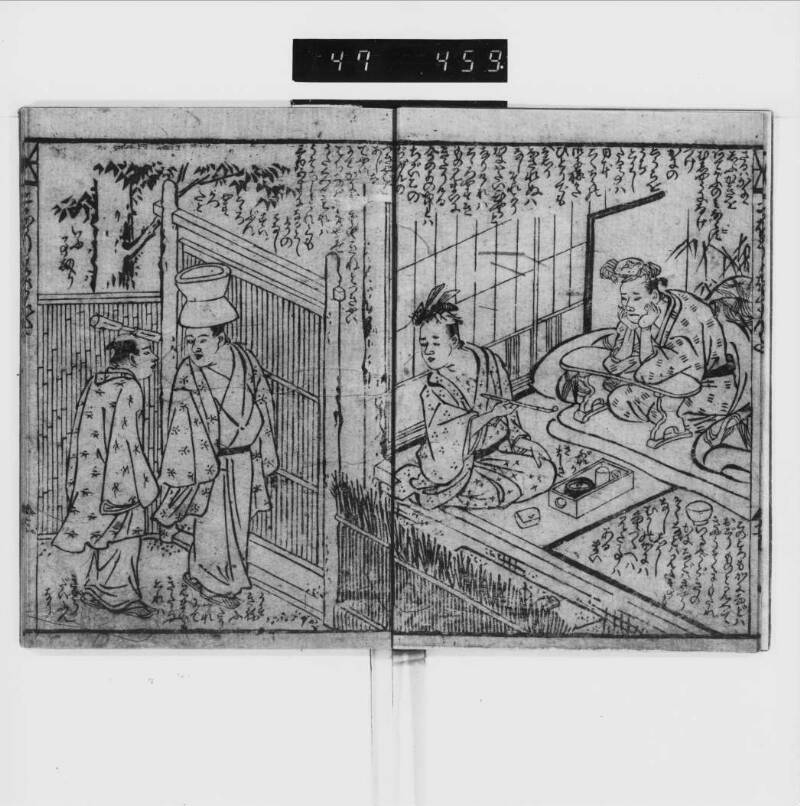
翻刻
さるはかにゝ
しぶかきを
あてがふのみならす
むしやうになげ
つけ
かにの
こうらを
うち
こわし
たる事は
日本
こくちうの
御子様かた
ひとりでも
おしりなされぬは
なしそれより
かにはたいびやうと
なりけれは
こゝろやすき
もの見まいに
きたりける
今のよの中とは
ちがいこの
ぢぶんの
つきやいは
あじな
でやい
にてかに□□□やきねとつきやい
はちな□□□りやわせ
うたくつ□□れは【うたくつてみれは】
うそ□し□れとも【うそらしけれとも】
三百五十になるとし
よりの
はなし
すい
ぶん
こゝろ
やす
かつ
たと
いふ
事成り
このころのかになどは
おごりものと見へて
きやうそくにもたれ
いる今どきの
かになどはきやう
そくなどは見た事も
なししかし
むかしのかには
唐つくへは
見た事は
ある
まい
うす
きね
ふ
たり
つれ
にて
見まいに
きたる
これは
きやう
だいふん
なり
現代語訳
猿は蟹に
渋柿を
当てがうのみならず
無性になげ
つけ
蟹の
甲羅を
打ち
壊した
ことは
日本
国中の
お子様方で
一人でも
お知りにならない者は
ない。それより
蟹は大病と
なったので
心安い
者が見舞いに
来たのである。
今の世の中とは
違い、この
時分の
付き合いは
味な
ものであった。
蟹「やきねとの付き合い
は親しみやすく
歌を詠んでみれば
嘘らしけれども
三百五十になる年
寄りの
話、
すい
分
心
安
かっ
た」と
いう
ことである。
この頃の蟹などは
驕りものと見えて
経俗にももたれて
いる。今時の
蟹などは経
俗などは見たことも
ない。しかし
昔の蟹には
唐机は
見たことは
ある
まい。
臼
杵
二人
連れ
にて
見舞いに
来る。
これは
兄
弟分
である。
英語訳
The monkey not only
threw astringent persimmons
at the crab
but threw them violently,
breaking
the crab's
shell -
this incident
is known by every
child throughout
Japan,
without exception.
After this,
the crab became seriously ill,
so his close
friends came
to visit him.
Unlike
the present world, the
social relationships of that
time
were quite
charming.
The crab said: "Relationships with intimate friends
are warm and friendly.
When I compose poems,
though they may sound false,
the stories of this
old one
who is three hundred fifty years old
were quite
comforting."
The crabs of these days
appear to be arrogant,
leaning on Buddhist scriptures.
Today's crabs
have never even seen
such scriptures.
However,
the crabs of old
have probably never
seen Chinese
desks either.
A mortar
and pestle,
two companions
together,
come to visit.
These are
sworn
brothers.