翻刻
【コマ6】
【右丁】
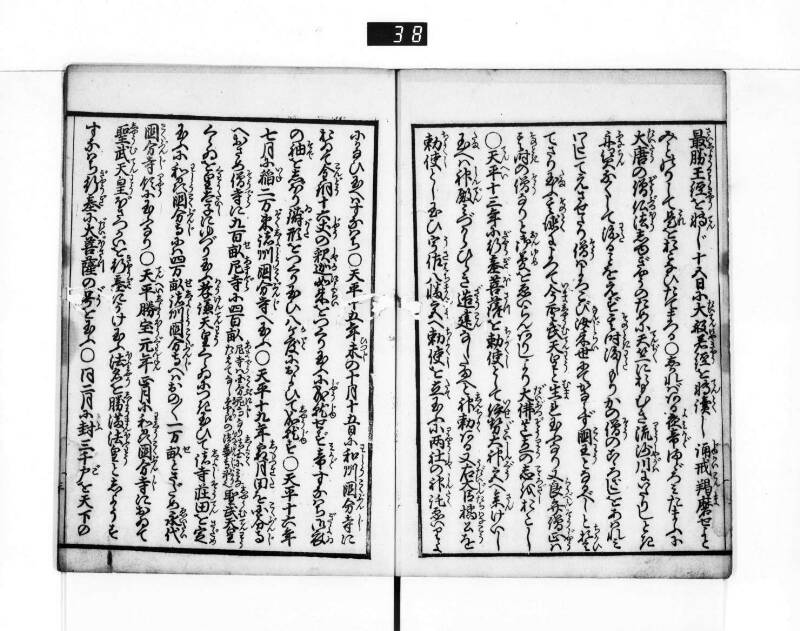
最勝王經(さいしようわうきやう)を轉(てん)じ十五日に大般若經(たいはんにやきやう)を轉讀(てんとく)し誦戒羯磨(じゆかいこんま)せよと
みことのりして是(これ)をおこなひたてまつる○しかればある夜(よ)帝(みかど)まどろみたまふに
大唐(たいたう)の僧(ぞう)佛法(ぶつほう)しゆぎやうのために天竺(てんぢく)におもむき流沙川(りうしやがは)にいたりしとき
舟賃(ふなちん)なくして渡(わた)ることをえず其时(そのとき)渡(わた)しもりかの僧(そう)のこゝろざしをあはれみ
わたしてえさせたり僧(そう)はよろこび汝(なんじ)來世(らい )にてかならず國王(こくわう)となるべしと誓(ちかひ)
てさり玉(たま)ふ其徳(そのとく)によつて今(いま)聖武天皇(しやうむてんわう)と生(むま)れ玉ふなり又 良弁僧正(らうべんそうじやう)は
其时(そのとき)の僧(そう)なりと御夢(おんゆめ)をゑいらんありしより大佛道立(だいぶつぞうりう)の志(こゝろざし)をおこし
○天平(てんへい)十三年に行基菩薩(ぎやうぎぼさつ)を勅使(ちよくし)として伊㔟大神宮(いせだいしんぐう)へ参(さん)けいし
玉(たま)へは神殿(しんでん)みづからひらき造建(ざうこん)なしたまへと神勅(しんちよく)ある又 右大臣橘公(うだいじんたちはなこう)を
勅使(ちよくし)とし玉ひ宇佐八幡宮(うさはちまんぐう)へ勅使(ちよくし)を立(たて)玉ふに兩社(りやうしや)の神託(しんたく)ゑいりよ
【左丁】
にかなひ玉へはすなはち○天平十五年 未(ひつじ)の十月十五日に和州國分寺(わしうこくぶんじ)に
おゐて金銅(こんどう)十六丈( じやう)の釈迦如来(しやかによらい)をつくり玉ふに成就(じやうじゆ)せず帝(みかど)すなはち御衣(ぎよゐ)
の袖(そで)をしぼり鑄形(ゐがた)をつくり玉ひ八个度( かど)におよひて成就(しやうじゆ)す○天平十六年
七月に稲(いね)二万束( ぞく)諸州國分寺(しよしうこくぶんじ)へ玉ふ○天平十九年 霜月(しもつき)田(た)を國分寺(こくぶんじ)
へおさめ僧寺(そうでら)に九百畒( せ)尼寺(あまでら)に四百畒《割書:尼寺(あまでら)は國分尼寺(こくぶにじ)なり諸国(しよこく)にみな|たえてなし奈良(なら)の法蕐寺(ほつけじ)斗(ばかり)也》聖武天皇(しやうむてんわう)
くらゐを皇太子(くわうたいし)にゆづり玉ふ孝謙天皇(かうけんてんわう)くらゐにつき玉ひて諸寺(しよし)荘田(そうてん)を定(さだめ)
玉ふに和州國分寺(わしうこくぶんじ)には四万畒( せ)諸州國分寺(しよしうこくぶんじ)へはおの〳〵一万畒( せ)とさだめ永代(ゑいたい)
國分寺領(こくぶんじりやう)に玉ふなり○天平勝宝元年(てんへいしようほうぐわんねん)正月に和刕國分寺(わしうこくぶんじ)におゐて
聖武天皇(しやうむてんわう)ぼさつかいを行基(きやうぎ)にうけ玉ふ法名(ほふみやう)を勝満法皇(しようまんほふわう)としようす
すなはち行基(ぎやうぎ)に大菩薩(だいぼさつ)の号(がう)を玉ふ○同二月に封(ふ)三千戸( ご)を天下の
現代語訳
【右丁】
……『最勝王経』を転読し、十五日には『大般若経』を転読し、誦戒・羯磨を行うよう詔して、これを奉行した。
○さて、ある夜、帝がまどろんでいらっしゃると、(夢の中で)大唐の僧が仏法修行のために天竺へ赴き、流沙の川にさしかかったとき、舟賃がなくて渡ることができなかった。そのとき渡し守がその僧の志を哀れんで渡してやった。僧は喜び、「汝は来世において必ず国王となるであろう」と誓ってお立ち去りになった。その徳によって、今(この世に)聖武天皇としてお生まれになったのである。また、良弁僧正はそのときの僧(渡し守)であったと、御夢をご覧になってから、大仏造立の志をお起こしになった。
○天平十三年に、行基菩薩を勅使として伊勢大神宮へ参詣させ給うと、神殿がみずから開き、「(大仏を)造り建てよ」との神勅があった。また右大臣橘公を勅使とされ、宇佐八幡宮へ勅使を立て給うと、両社の神託が叡慮
【左丁】
にかない給ったので、すなわち○天平十五年(未年)十月十五日に、大和国分寺において金銅十六丈の釈迦如来を造り給うたが、成就せず、帝はすなわち御衣の袖を絞って鋳型を作り給い、八度に及んでようやく成就した。
○天平十六年七月に、稲二万束を諸州の国分寺へ賜った。
○天平十九年霜月(十一月)に、田を国分寺へ納め、僧寺に九百畝、尼寺に四百畝〔割書:尼寺とは国分尼寺のことである。諸国にはみなすでになく、奈良の法華寺ばかりである〕を賜った。聖武天皇は位を皇太子に譲り給い、孝謙天皇が位につき給い、諸寺の荘田を定め給うに、大和国分寺には四万畝、諸州の国分寺へはそれぞれ一万畝と定め、永代の国分寺領とされた。
○天平勝宝元年正月に、大和国分寺において聖武天皇が行基より菩薩戒を受け給い、法名を勝満法皇と称した。すなわち行基に大菩薩の号を賜った。
○同二月に、封三千戸を天下の……
英語訳
【Right Page】
...the *Saishōō-kyō* (*Suvarṇaprabhāsa Sūtra*) was to be recited in full on the eighth day, the *Daihanya-kyō* (*Mahāprajñāpāramitā Sūtra*) on the fifteenth day, and the ceremony of reciting the precepts and performing *katsuma* (*karma*, formal ecclesiastical acts) was to be conducted. This was duly carried out by imperial decree.
○ One night, as the Emperor dozed off, he had a dream in which a monk from Great Tang (China) was traveling to India (*Tenjiku*) to train in the Buddhist teachings. Upon reaching the River of Flowing Sands (*Ryūsha-gawa*), the monk had no ferry fare and was unable to cross. At that moment, the ferryman, moved by compassion for the monk's devout purpose, ferried him across at no charge. The monk rejoiced and vowed: "In your next life, you shall surely become a king of the realm," and departed. It was by virtue of that meritorious act that he was reborn in this life as Emperor Shōmu. Furthermore, it was revealed that the Monk Rōben Sōjō had been that Tang monk. From the time of receiving this dream-vision, the Emperor conceived the aspiration to construct the Great Buddha.
○ In Tenpyō 13, Gyōgi Bosatsu was dispatched as imperial envoy to the Great Shrine of Ise. The doors of the shrine opened of their own accord, and a divine oracle was received commanding: "Build it (the Great Buddha)." The Right Minister, Lord Tachibana, was also dispatched as imperial envoy to the Usa Hachiman Shrine. The divine oracles of both shrines accorded with the imperial will,
【Left Page】
and accordingly, ○ on the fifteenth day of the tenth month of Tenpyō 15 (the Year of the Sheep), construction began at the Yamato Kokubunji on a gilt-bronze image of Śākyamuni Tathāgata, sixteen *jō* (approximately 48 meters) in height. However, it could not be completed successfully. The Emperor wrung out the sleeve of his own robe and used it to form the casting mold; after eight attempts, it was finally completed successfully.
○ In the seventh month of Tenpyō 16, twenty thousand sheaves of rice were granted to the Kokubunji temples of the various provinces.
○ In the eleventh month (*Shimotsuki*) of Tenpyō 19, rice paddies were granted to the Kokubunji temples: nine hundred *se* to the monks' temples, and four hundred *se* to the nunneries. [Marginal note: The "nunnery" here refers to the Kokubuni-ji (National Nunneries). None now survive in any province; only the Hokke-ji in Nara remains.] Emperor Shōmu abdicated in favor of the crown prince, and Empress Kōken ascended to the throne. In determining the estate lands (*shōden*) for the various temples, the Yamato Kokubunji was granted four hundred thousand *se*, and the Kokubunji temples of the various provinces were each granted ten thousand *se*, designated as permanent Kokubunji temple domains.
○ In the first month of Tenpyō Shōhō 1, at the Yamato Kokubunji, Emperor Shōmu received the Bodhisattva Precepts (*bosatsu-kai*) from Gyōgi, and was given the Dharma name Shōman Hōō. Thereupon, the title "Great Bodhisattva" (*Dai Bosatsu*) was bestowed upon Gyōgi.
○ In the second month of the same year, an endowment of three thousand households (*fū*) to the Kokubunji temples throughout the land...
[Text continues on the next page]