翻刻
【コマ7】
【右丁】
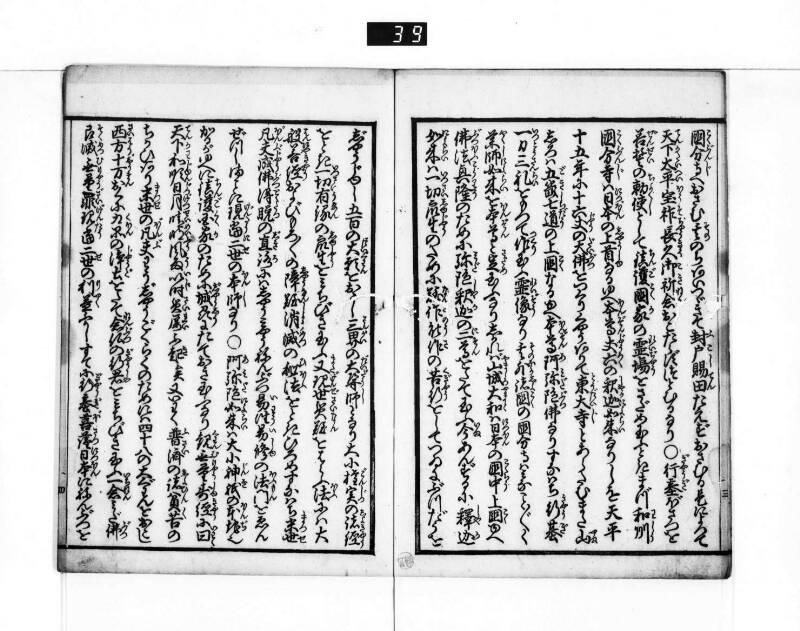
國分寺(こくぶんじ)へおさむ其(その)のちあいつゞきて封戸賜田(ふこしてん)たえずおさむる是によつて
天下太平(てんかたいへい)宝祚長久(ほうそぢやうきう)御祈念(こきねん)おこたらずつとむるなり○《振り仮名:行基ぼさつ|ぎやうぎ 》を
善誓(ぜんせい)の勅使(ちよくし)として鎮護國家(ちんごこくか)の霊塲(れいぢやう)をさだめ玉ふときまづ和州(わしう)
國分寺(こくぶんじ)は日本(につぼん)の上首(しやうしゆ)なるゆへ本尊(ほんぞん)丈六(じやうろく)の釈迦如來(しやかによらい)なりしを天平
十五年に十六丈( じやう)の大佛(だいぶつ)をつくりくやうありて東大寺(とうだいじ)とあらたむまた山(やま)
しろは五畿七道(ごきしちだう)の上國( こく)なるゆへ本尊(ほんぞん)阿弥陀佛(あみだぶつ)なりすなはち行基(きやうぎ)
一刀三礼(いつとうさんらい)をもつて作(つくり)玉ふ霊像(れいぞう)なり其外(そのほか)諸國(しよこく)の國分寺はみなこと〴〵く
薬師如來(やくしによらい)を本尊(ほんぞん)と定(さだめ)玉ふなりしかれば山城(やましろ)大和(やまと)は日本(につほん)の國中(こくちう)上國( こく)ゆへ
佛法(ぶつほふ)興隆(こうりう)のために弥陀(みだ)釈迦(しやか)の二尊(にそん)をたて玉ふ今(いま)あんずるに釈迦(しやか)
如來(によらい)は一切衆生(いつさいしゆじやう)のために難作能作(なんさのうさ)の苦行(くぎやう)をしてつゐにぶつだうを
【左丁】
じやうじゆし五百の大願(だいぐわん)をおこし三界(さんがい)の大導師(だいだうし)となり大小 権実(ごんじつ)の諸經(しよきやう)
をとき一切有縁(いつさいうゑん)の衆生(しゆしやう)をみちびき玉ふ又(また)現世(げんぜ)災難(さいなん)をはらふ法(ほふ)には大
般若經(はんにやきやう)およびもろ〳〵の障難(しやうなん)消滅(しようめつ)の秘法(ひほふ)をときひろめすなはち末世(まつせ)
凡夫(ぼんぶ)成佛得脱(じやうぶつとくたつ)の直路(じきろ)にはしやうみやうねんぶつ易往易修(いわういしゆ)の法門(ほふもん)をゑん
ぜつしまことに現當二世(げんたうに せ )の本師(ほんし)なり○阿弥陀如來(あみだによらい)は大小 神祇(じんぎ)の本地(ほんぢ)也
かるがゆへに鎮護國家(ちんごくか)のために城刕(じやうしう)にたておき玉ふなり観無量壽經(くわんむりやうしゆきやう)に曰(いわく)
《振り仮名:天下和順日月晴明風雨以时災厲ふ起矣|てんかわじゆんじつげつせいめいふうういじさいれい き 》又いわく普済(ふさい)の諸貧苦(しよひんく)の
ちかひあり末世(まつせ)の凡夫(ぼんぶ)わうじやうごくらくのためには四十八の大ぐわんをおこし
《振り仮名:西方十万おく|さいはうじうまん 》に九品(くほん)の浄土(じやうど)をたて念佛(ねんぶつ)の行者(ぎやうしや)をみちびき玉ふ《振り仮名:一念みだ佛|いちねん ぶつ》
即滅無量罪(そくめつむりやうざい)現當二世(げんたう せ )の利益(りやく)ふかしすてに行基菩薩(ぎやうぎぼさつ)日本(につほん)にねんぶつを
現代語訳
【右丁】
……国分寺へ納める。その後も引き続き、封戸・賜田が絶えることなく納められた。これによって、天下太平・宝祚長久の御祈念を怠ることなく勤めるのである。
○行基菩薩を善誓(ぜんせい)の勅使として鎮護国家の霊場を定め給うとき、まず大和国分寺は日本の(国分寺の)筆頭であるゆえ、本尊は丈六の釈迦如来であったが、天平十五年に十六丈の大仏を造って供養があり、東大寺と改めた。また山城国は五畿七道のなかの上国であるゆえ、本尊は阿弥陀仏であり、すなわち行基が一刀三礼をもって刻み給った霊像である。その他の諸国の国分寺は、ことごとく薬師如来を本尊と定め給うた。しかれば山城・大和は日本の国々の中でも上国であるゆえ、仏法興隆のために阿弥陀・釈迦の二尊をお立てになった。
今つらつら考えるに、釈迦如来は一切衆生のために難作能作の苦行をなし、ついに仏道を
【左丁】
成就し、五百の大願を起こし、三界の大導師となり、大小・権実のもろもろの経を説いて、一切有縁の衆生を導き給う。また現世の災難を払う法には、『大般若経』およびもろもろの障難消滅の秘法を説き広め、すなわち末世の凡夫が成仏得脱する直路には、称名念仏・易往易修の法門を演説し、まことに現当二世の本師である。
○阿弥陀如来は、大小の神祇の本地(ほんじ)である。それゆえ、鎮護国家のために山城国にお立て置きになった。『観無量寿経』に曰く、「天下和順、日月晴明、風雨以時、災厲不起」(天下が和らかに順い、日月は清く明らかで、風雨は時にかない、災いや疫病は起こらない)と。また曰く、あまねく諸々の貧苦を救う誓いがある。末世の凡夫が往生極楽するためには、四十八の大願を起こし、西方十万億(国土の彼方)に九品の浄土を建て、念仏の行者を導き給う。「一念(に)弥陀仏(を称えれば)、即ち無量の罪を滅す」とあり、現当二世の利益は深い。すでに行基菩薩は日本に念仏を……
英語訳
【Right Page】
...were submitted to the Kokubunji temples. Thereafter, endowments of households (*fuko*) and granted rice fields (*shiden*) continued to be submitted without interruption. By virtue of this, prayers for peace throughout the realm and the eternal prosperity of the imperial line were performed without fail.
○ When Gyōgi Bosatsu was dispatched as the envoy of the good vow (*zensei no chokushi*) to determine the sacred sites for the protection of the nation, it was established that the Yamato Kokubunji, being the foremost of all Kokubunji temples in Japan, had as its principal image a *jōroku* (approximately 4.8 meters) image of Śākyamuni Tathāgata. However, in Tenpyō 15, a great Buddha of sixteen *jō* (approximately 48 meters) was constructed and consecrated, and the temple was renamed Tōdai-ji. The province of Yamashiro, being the highest-ranking province among the Five Home Provinces and Seven Circuits (*Goki Shichidō*), had Amitābha Buddha (*Amida Butsu*) as its principal image — a sacred image carved by Gyōgi himself through the practice of one cut and three bows (*ittō sanrai*). As for the Kokubunji temples of all other provinces, Bhaiṣajyaguru (*Yakushi Nyorai*, the Healing Buddha) was established as the principal image in every case. Thus, because Yamashiro and Yamato were the highest-ranking provinces in Japan, the two honored ones of Amitābha and Śākyamuni were enshrined for the promotion of Buddhism.
Upon reflection, Śākyamuni Tathāgata underwent difficult yet willingly chosen austerities (*nansa nōsa*) for the sake of all sentient beings, and ultimately achieved
【Left Page】
the attainment of Buddhahood, gave rise to five hundred great vows, became the Great Teacher of the Three Realms (*sangai*), and preached the various sūtras — both major and minor, provisional and true — thereby guiding all sentient beings with karmic connection to him. Furthermore, for the method of dispelling disasters in this present world, he preached and spread the *Mahāprajñāpāramitā Sūtra* and various secret methods for eliminating obstacles and calamities; and for the direct path by which ordinary people of the degenerate age may attain Buddhahood and liberation, he expounded the teaching of oral nenbutsu (*shōmyō nenbutsu*) — easy to proceed upon, easy to practice — making him truly the Fundamental Teacher (*honshi*) for both this life and the life to come.
○ Amitābha Tathāgata is the original ground (*honji*) of deities both great and small. For this reason, he was enshrined in Yamashiro province for the protection of the nation. The *Kanmuryōju-kyō* (*Amitāyurdhyāna Sūtra*) states: "When the realm is at peace and in harmony, the sun and moon shine bright and clear, the winds and rains come in their proper seasons, and disasters and plagues do not arise." Furthermore, it is stated that there exists a vow to universally save all those in poverty and suffering. For the sake of the ordinary people of the degenerate age to achieve rebirth in the Pure Land of ultimate bliss, Amitābha raised forty-eight great vows, established the Pure Land of nine grades of birth (*kubon*) ten billion lands to the west, and guides those who practice nenbutsu. "With a single recitation of the name of Amida Buddha, immeasurable sins are instantly extinguished" — the benefits for both this life and the next are profound. Already, Gyōgi Bosatsu had spread the nenbutsu practice throughout Japan...
[Text continues on the next page]