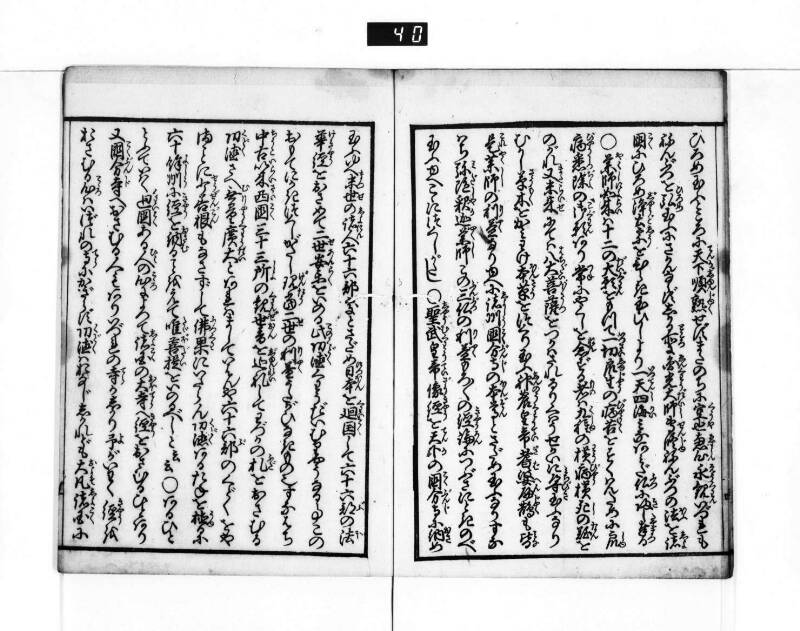
翻刻
【コマ8】
【右丁】
ひろめ玉ふところに天下(てんか)順熟(じゆんじゆく)せずまたのちに空也(くうや)恵心(ゑしん)永観(えうくわん)いづれも
ねんぶつを弘(ひろめ)玉ふにさかんならずしかる所(ところ)に圓光大師(ゑんくわいだいし)専修(せんじゆ)ねんぶつの法(ほふ)を諸(しよ)
國(こく)にひろめ浄土宗(じやうどしう)をひらき玉ひしより一天四海(いつてんしかい)みなあみだ仏(ふつ)に皈(き)し奉(たてまつ)る
○薬師如来(やくしによらい)は十二の大願(だいぐわん)をもつて一切衆生(いつさいしゆじやう)の病苦(びやうく)をすくはんために衆(しゆ)
病悉除(びやうしつぢよ)の御願(こぐわん)あり常(つね)にやくしを念(ねん)ずる者(もの)は九種(くしゆ)の横病(わうびやう)横死( し)の難(なん)を
のがれ又(また)未來(らいせ)にては八大菩薩(はちだいぼさつ)をつかはされるりくはうせかいに導(みちびき)玉ふなり
むかし草木(さうもく)をかみわけ本草(ほんさう)をつくり玉ふ神農(しんのう)皇帝(くわうてい)#1耆婆(ぎば)扁鵲(へんじやく)も皆(みな)
是(これ)薬師(やくし)の利益(りやく)なりゆへに諸州國分寺(しよしうこくぶんじ)の本尊(ほんぞん)とさだめ玉ふなりすな
はち弥陀(みだ)釈迦(しやか)薬師(やくし)この三仏(さんぶつ)の利益(りやく)もろ〳〵の經論(きやうろん)につぶさにときのべ
玉ふゆへこゝにつくしがたし○聖武皇帝(しやうむくわうてい)像經(ざうきやう)を天下(てんか)の國分寺(こくぶんじ)に納(おさ)め
【左丁】
玉ふゆへ末世(まつせ)の諸人(しよにん)六十六部處とさだめ日本(につほん)を廻国(くわいこく)して六十六部( ぶ)の法(ほ)
蕐經(けきやう)をおさめて二世安楽( せあんらく)をいのる此(この)㓛徳(くどく)くわうだいむりやうなる事この
おもてにかきつくしがたし現當二世(げんたう せ )の利益(りやく)うたがひなきもの也すなはち
中古以來(ちうこいらい)西國三十三所(さいこく しよ)の観世音(くわんぜおん)を巡礼(じゆんれい)してわづかの札(ふだ)をおさむる
㓛徳(くどく)さへ無量廣大(むりやうくわうだい)とあれはましていはんや六十六部( ぶ)のくどくをや
まことに少善根(せうぜんごん)もなさずして佛果(ふつくわ)にいたらん㓛徳(くどく)あるたねを植(うゆ)るに
六十余州( よしう)に經(きやう)を納(おさむ)ることをえて唯(たゞ)菩提(ぼだい)をいのるべしと云云○あるひと
とふていはく㢠国(くわいこく)ある人(ひと)の心(こゝろ)によつて諸国(しよこく)の大寺(おほてら)へ經(きやう)をおさむるひとあり
又 國分寺(こくぶんじ)へおさむる人もありいづれの寺(てら)かしかり予(よ)がいわく經(きやう)を
おさむる心(こゝろ)はいづれの寺(てら)にかぎらず㓛徳(くどく)はおなじしかれども大凡(およそ)諸国(しよこく)に
現代語訳
【右丁】
……(行基菩薩が日本に)念仏を広め給うたところ、天下は(なかなか)順熟せず、またその後に空也・恵心・永観がいずれも念仏を弘め給ったが、さほど盛んにはならなかった。しかるところに、円光大師(法然上人)が専修念仏の法を諸国に広め、浄土宗を開き給うてより、一天四海のすべての人々が阿弥陀仏に帰し奉るようになった。
○薬師如来は十二の大願をもって一切衆生の病苦を救わんがために、あらゆる病をことごとく除く御願がある。常に薬師を念ずる者は、九種の横死・横病の難を逃れ、また来世においては八大菩薩が遣わされて、浄瑠璃(瑠璃光)の世界へと導き給うのである。昔、草木をかき分けて本草(薬草)を著し給うた神農皇帝、また耆婆・扁鵲(の名医たち)も、皆これ薬師如来の利益(りやく)によるものである。ゆえに諸州国分寺の本尊と定め給うたのである。すなわち、阿弥陀・釈迦・薬師、この三仏の利益は、もろもろの経論に詳しく説き述べ給うているゆえ、ここには書き尽くしがたい。
○聖武皇帝が経典(法華経)を天下の国分寺に納め
【左丁】
給うたゆえ、末世の諸人はそれを六十六部の所(納経所)と定め、日本を廻国して六十六部の法華経を納めて、二世(現世・来世)の安楽を祈る。この功徳が広大無量であることは、この紙面に書き尽くしがたい。現当二世の利益のあることは疑いなきものである。すなわち、中古(中世)以来、西国三十三所の観世音を巡礼して、わずかの札を納める功徳でさえ無量広大であるというのならば、まして六十六部の功徳においてはなおさらのことである。まことに、少しの善根をも積まずして仏果(悟り)に至ることはできない。功徳あるたねを植えることを求めるならば、六十余州に経を納めることをもって、ただひとすじに菩提(悟り)を祈るべきである、という。
○ある人が問うて言うには、廻国する人の心によって、諸国の大寺へ経を納める人もあり、また国分寺へ納める人もあるが、いずれの寺がよりふさわしいのか、と。私(筆者)が答えて言うには、経を納める心はいずれの寺に限らず、功徳は同じである。しかしながら、大凡(おおよそ)諸国に……
英語訳
【Right Page】
...(Gyōgi Bosatsu) spread the nenbutsu practice throughout Japan, yet the realm did not readily come to peace and harmony. Thereafter, Kūya, Eshin, and Eikan each spread the nenbutsu, yet it did not flourish greatly. Then, when Enkō Daishi (Hōnen Shōnin) spread the teaching of exclusive nenbutsu (*senju nenbutsu*) throughout the provinces and founded the Jōdo school, all people under heaven throughout the four seas came to take refuge in Amida Buddha.
○ Bhaiṣajyaguru (Yakushi Nyorai, the Healing Buddha) holds twelve great vows for the purpose of saving all sentient beings from the suffering of illness, including the vow to completely eliminate all diseases. Those who constantly contemplate Yakushi are spared the calamities of nine kinds of untimely illness and untimely death, and in the life to come, the Eight Great Bodhisattvas are sent to guide them to the world of Lapis Lazuli (*Rurikō sekai*, the Pure Land of Bhaiṣajyaguru). In ancient times, the Emperor Shennong, who parted the grasses and trees to compile the *Bencao* (materia medica), and the legendary physicians Jīvaka and Bian Que — all of these were manifestations of the grace and benefit (*riyaku*) of Yakushi Nyorai. It is for this reason that Yakushi was established as the principal image of the Kokubunji temples of all the provinces. The benefits of these three Buddhas — Amitābha, Śākyamuni, and Bhaiṣajyaguru — are expounded in detail throughout the various sūtras and śāstras, and therefore cannot be exhaustively described here.
○ Because Emperor Shōmu submitted copies of the sūtras (the *Lotus Sūtra*) to the Kokubunji temples throughout the realm,
【Left Page】
the people of later degenerate ages designated these as the sites for the sixty-six-province pilgrimage (*rokujūroku-bu*), traveled throughout Japan, submitted sixty-six copies of the *Lotus Sūtra*, and prayed for peace and happiness in both this life and the next. The magnitude of this merit is so vast and immeasurable that it cannot be written out fully on this page. That the benefits for both this life and the next are assured is beyond doubt. That is to say, since even the merit of making the pilgrimage to the Thirty-Three Kannon Sites of the Western Provinces (*Saigoku Sanjūsansho*) and submitting even a simple votive slip (*fuda*) is said to be immeasurable and vast, how much more so must be the merit of the sixty-six-province pilgrimage. Truly, one cannot reach the fruit of Buddhahood (*butsuka*) without cultivating even a small root of goodness. If one seeks to plant the seeds of merit, one should submit sūtras throughout the sixty-odd provinces, praying solely for enlightenment (*bodai*) — so it is said.
○ Someone posed the following question: depending on the intention of the person on pilgrimage, there are those who submit sūtras to the great temples of the various provinces, and those who submit them to the Kokubunji temples — which of these temples is more appropriate? To this I reply: regardless of which temple one submits the sūtras to, as long as the heart behind the offering is the same, the merit is equal. Nevertheless, speaking generally of the various provinces...
[Text continues on the next page]