翻刻
【コマ9】
【右丁】
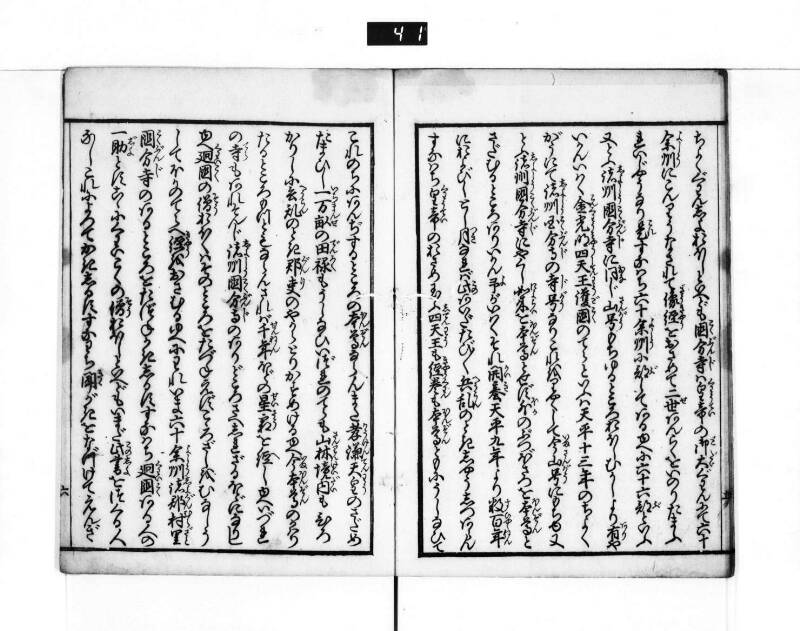
ちよくぐわんしよおほしといへども國分寺(こくぶんじ)は皇帝(くわうてい)の《振り仮名:御大ぐわん|ごだい 》にて六十
余州(よしう)にこんりうなされて像經(ざうきやう)をおさめて《振り仮名:二世あんらく| せ 》をいのりたまふ
れいじやうなり是(これ)すなはち六十余州( よしう)に部(ぶ)してあるゆへに六十六部( ぶ)といふ
又とふ諸州國分寺(しよしうこくぶんじ)に同(おな)じ山号(さんがう)もちゆるところおほしむかしより有(あり)や
いかんいはく《振り仮名:金光明四天王護國のてら|こんくわうみやうしてんわうごこく 》といふは天平十三年のちよく
がうにて諸州国分寺(しよしうこくぶんじ)の寺号(じがう)なりこれをりやくして今(いま)山号(さんがう)にもちゆ又
とふ諸州國分寺(しよしうこくぶんじ)に《振り仮名:やくし如来| によらい》を本尊(ほんぞん)とせず外(ほか)のぶつぼさつを本尊(ほんぞん)と
さだむるところありいかん予(よ)がいはくそれ開基(かいき)天平九年より数百年(すひやくねん)
におよびしとし月(つき)なれば此(この)あいだたび〳〵兵乱(へうらん)のときしやうしつあらん
すなはち皇帝(くわうてい)のおさめ玉ふ四天王(してんわう)も經巻(きやうくわん)も本尊(ほんぞん)ともにうしなひて
【左丁】
これのちにあんぢするところの本尊(ほんぞん)ならんまた孝謙天皇(かうけんてんわう)のさだめ
たまひし一万畒(いちまんせ)の田禄(でんろく)もうしなひいづれのてらも山林境内(さんりんけいだい)もひろ
かりしに兵乱(へうらん)のとき郡吏(ぐんり)のやからとりかすめけるゆへ今(いま)本尊(ほんぞん)のかはり
たるところもつともならんされば千年(せんねん)ほどの星霜(せいさう)を經(へ)しゆへいづれ
の寺(てら)もあれそんじ諸州國分寺(しよしうこくぶんじ)のありどころさへしれざるほどになりし
ゆへ㢠國(くわいこく)の僧(そう)おほくはそのところをたづねえずこゝろざしをむなしう
してほかのてらへ經(きやう)をおさむるゆへにわれいま六十余州( よしう)諸郡村里(しよぐんむらざと)
國分寺(こくぶんじ)のあるところをたづねかきしるすなはち㢠國(くわいこく)ある人の
一助( じよ)とすこゝにくわいこくの僧(そう)おほしといへどもいまだ此書(このしよ)をつくる人
なしこれによつてかきしるすなわち聞(きゝ)がきをなづけてえんぎ
現代語訳
【右丁】
……(諸国に)勅願所は多いといえども、国分寺は皇帝の御大願によって六十余州に建立され、(写)経を納めて二世(現世・来世)の安楽を祈り給うた霊場である。これすなわち、六十余州に分かれて存在するがゆえに「六十六部」と呼ぶのである。
また(ある人が)問うていわく、「諸州国分寺に同じ山号を用いるところが多い。昔よりそうであったのか、いかに」と。(私が)答えていわく、「金光明四天王護国の寺」というのは、天平十三年(七四一)の勅号(天皇の命令による寺号)であり、諸州国分寺の寺号である。これを略して、今(も)山号に用いている(のである)。
また(ある人が)問うていわく、「諸州国分寺に薬師如来を本尊とせず、他の仏・菩薩を本尊と定めているところがある。いかなることか」と。私がいわく、「そもそも開基(創建)は天平九年(七三七)より数百年に及ぶ歳月を経ているゆえ、この間にたびたび兵乱のとき、焼失することがあったであろう。すなわち皇帝が納め給うた四天王(像)も経巻も本尊も共に失われて、
【左丁】
のちにあらためて安置されるところの本尊となったのであろう。また孝謙天皇がお定めになった一万畝(せ)の田禄(寺領)も失われ、いずれの寺も山林境内も広かったものが、兵乱のとき郡吏(地方官)の輩が取り掠めたゆえ、今(の時代に)本尊が変わっているところも、もっともなことである。されば千年ほどの星霜(長い年月)を経たゆえ、いずれの寺も荒れ損じて、諸州国分寺のある場所さえ分からないほどになってしまったゆえ、廻国の僧(六十六部行者)の多くはその場所を尋ね得ず、志をむなしくして他の寺へ経を納めることとなる。ゆえに、私は今、六十余州の諸郡・村・里において、国分寺のある場所を尋ねて書き記す。すなわち、廻国ある人の一助とする(ためである)。ここに廻国の僧は多いといえども、いまだこの書を作る人なし。これによって書き記す。すなわち、(人から)聞き書きしたものを名づけて、縁起(と申す)……」
英語訳
【Right Page】
...(in the various provinces,) although there are many temples established by imperial vow (*chokuganjo*), the Kokubunji temples are sacred sites built throughout more than sixty provinces by the great vow of the Emperor himself, where (copied) sūtras were enshrined and prayers were offered for well-being in both this life and the next. It is precisely because they are distributed (*bu*) across more than sixty provinces that the practice is called the "sixty-six-province" (*rokujūroku-bu*) pilgrimage.
Someone further asked: "There are many Kokubunji temples across the provinces that share the same mountain name (*sangō*). Has this been the case since ancient times? How did this come about?" I replied: "The designation 'Temple of the Golden Light, the Four Heavenly Kings, and the Protection of the Nation' (*Konkōmyō Shitennō Gokoku no Tera*) was the temple name (*jigō*) conferred by imperial decree in the thirteenth year of Tenpyō (741), and it serves as the temple name for all Kokubunji temples across the provinces. This has been abbreviated and is still used today as the mountain name (*sangō*)."
Someone further asked: "There are Kokubunji temples among the provinces that have not established Bhaiṣajyaguru (Yakushi Nyorai) as their principal image (*honzon*), but have instead designated other buddhas or bodhisattvas as the principal image. How is this to be understood?" I replied: "The founding (*kaiki*) of these temples dates from the ninth year of Tenpyō (737), and several hundred years have elapsed since then. During this long period, there must surely have been repeated occasions when fires broke out during times of war and conflict, resulting in destruction. Thus, the images of the Four Heavenly Kings, the sūtra scrolls, and the principal images that the Emperor had enshrined were all lost together,
【Left Page】
and whatever principal images were later installed in their place would naturally differ from the originals. Furthermore, the temple landholdings (*denroku*) of ten thousand *se* (畝) established by Empress Kōken were also lost, and the extensive forested precincts that each temple once possessed were seized and plundered by local officials (*gunri*) during times of war. Therefore, it is entirely understandable that the principal images of the temples today should differ from the originals. Moreover, since approximately one thousand years have passed, every one of these temples has fallen into ruin and disrepair, to the point where even the locations of the Kokubunji temples throughout the provinces have become largely unknown. As a result, the majority of pilgrim monks (*kai-koku no sō*) making the circuit of the provinces are unable to locate them, and their intentions go unfulfilled, leading them to submit their sūtras at other temples instead. For this reason, I have now sought out and recorded in writing the locations of the Kokubunji temples in the various districts, villages, and hamlets across more than sixty provinces — to serve as an aid to those making the provincial pilgrimage. Although there are many who undertake the circuit of the provinces, no one has yet compiled such a work as this. It is for this reason that I have set it down in writing. This record of what I have heard and gathered — I have named it the *Engi* (Record of Origins)..."