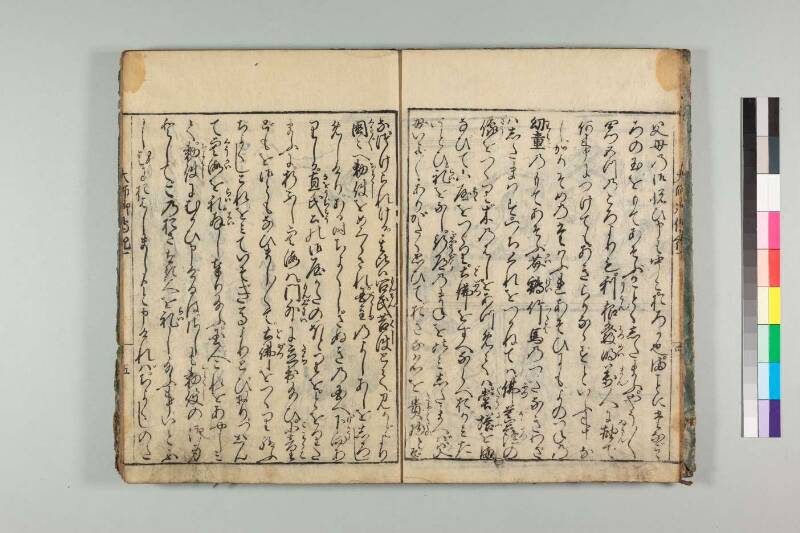
翻刻
【御幼稚奇瑞多事】
父母の喜ひ申も中々。おろか也。まことにたなごゝ
ろの玉をもてあそぶかことくしたまふ。やう〳〵
四つ五つのころよりも。利根(りこん)発明(はつめい)万人に抽(ぬきん)で
て何事につけてもあきらかならずといふ事な
し。かりそめのたはふれあそひにも。よのつねの
幼童(わらべ)のもてあそぶ芥(かい)鶏(けい)行(こう)馬(ば)のつたなきわざ
はしたまはず。つちくれをつかねては。仏(ぶつ)菩薩(ぼさつ)の
像をつくり。木のはしをあつめては。堂(だう)塔(たう)をま
なびて小 屋(おく)をつくり。土(ど)仏(ぶつ)をすへならべおかみた
うとひ。礼(れい)をなし。行道(ぎやうだう)のまねを能くしたまへば。父(ふ)
母(も)いよ〳〵ありがたく思ひて。おさな名を貴(たふと)物(もの)とぞ
なづけられける。其頃は問(もん)民(みん)苦(く)使(し)とて。みかどより
国々(くに〴〵)へ勅使(ちよくし)をめくらされ。国主(こくしゆ)のよしあしをしろし
めしけり。ある時ちよくし。さぬきの国へ下向(げかう)あ
りしか。直(なを)氏(うぢ)公(こう)の御やかたのほとりを。とをりた
まふに。折ふし空海は。門外(もんぐわい)に立出給ひ。小童(こわらは)
どもを御ともなひまし〳〵て。土(ど)仏(ぶつ)をつくり給ふ
ちよくしこれをみて。いそぎ馬よりとびおり。つゝしん
て空海(くうかい)を礼拝(らいはい)し奉り給ふ。国人これをあやしみ
て。勅使(ちよくし)にむかひ申けるは。さしも勅使(ちよくし)の御身
として。このおさなき人を礼(らい)し給ふ事いとふし
むにおはしまし候と申ければ。ちよくしのた
現代語訳
【御幼少時の奇瑞多事】
父母の喜びようは言葉では表現しきれないほどであった。まことに掌中の珠を愛でるかのようになさった。ようやく四つ五つの頃からも、利発聡明で万人に抜きん出て、何事についても明らかでないということはなかった。ちょっとした戯れ遊びにも、世の常の幼童が遊ぶ芥子鶏行馬のような拙い遊戯はなさらなかった。土くれを集めては仏菩薩の像を作り、木の端を集めては堂塔を模して小屋を作り、土仏を据え並べて拝み崇め、礼をなし、行道の真似を上手になさったので、父母はいよいよありがたく思って、幼名を貴物とお名付けになった。その頃は問民苦使といって、帝より国々へ勅使を派遣され、国主の良し悪しをお調べになった。ある時勅使が讃岐の国へ下向があった際、直氏公の御屋敷のほとりを通りなさると、折しも空海は門外に立ち出でになり、小童どもをお供になさって土仏をお作りになっていた。勅使これを見て、急いで馬より飛び降り、慎んで空海を礼拝し奉った。国人これを怪しんで、勅使に向かって申すには「あれほどの勅使の御身として、このお幼い人を礼拝なさることは不審に思われます」と申したところ、勅使は...
英語訳
【Many Miraculous Signs in His Early Childhood】
The parents' joy was beyond what words could express. Truly they cherished him like a precious jewel in their palms. From around the age of four or five, he was intelligent and brilliant, surpassing all others, and there was nothing unclear about anything he did. Even in casual playful games, he did not engage in the clumsy pastimes of ordinary children like playing with mustard seeds, chickens, or toy horses. He would gather clods of earth to make images of Buddhas and Bodhisattvas, collect pieces of wood to build small huts modeled after temple halls and pagodas, arrange clay Buddhas in rows to worship and revere them, perform rituals, and skillfully imitate religious processions. His parents found this increasingly wonderful and gave him the childhood name Tafutomono (Precious One). In those days, there were "inspectors of people's hardships" - imperial messengers sent by the Emperor to various provinces to investigate whether provincial governors were good or bad. One time when an imperial messenger came down to Sanuki Province and was passing near Lord Naoshi's mansion, Kūkai happened to be standing outside the gate with some small children, making clay Buddhas. When the imperial messenger saw this, he quickly dismounted from his horse and respectfully bowed to Kūkai. The local people found this strange and said to the imperial messenger, "For someone of your exalted position as an imperial messenger to bow to this young child seems very peculiar." The imperial messenger then...