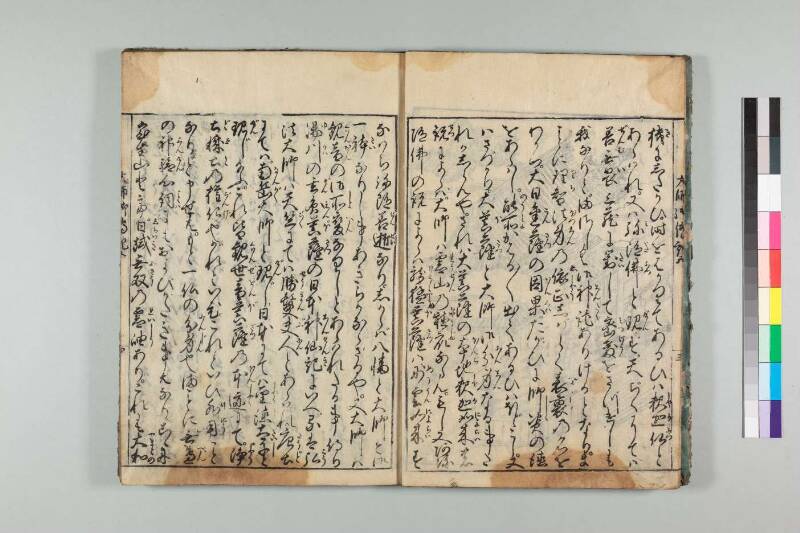
翻刻
機(き)にしたかひ。時をはかりてあるひは釈迦(しやか)仏(ふつ)と
あらはれ。又は弥陀(みだ)仏(ふつ)と現(げん)ず。天ぢくにては
善無畏(ぜんむい)三蔵に対(たい)して密教(みつけう)をさづけしも
我なりと。まさしく此 信託(しんたく)ありけるとなり。ま
ことに理智(りち)法身(ほつしん)の依正(ゑしやう)しばらく表裏(へうり)の名を
わかち。大日 金(こん)薩(さつ)の因果(いんくは)。たがひに師資(しゝ)の徳
をあらはし。能(のう)所(しよ)かはる〳〵出てあるひはほどこし。又
はさづかり。大菩薩(ぼさつ)と大師御 分身(ぶんしん)なる事た
れかしらんや。されは大菩薩の本地(ほんぢ)釈迦(しやか)如来(によらい)の
説(せつ)によらば。大師は霊山(れうぜん)の聴衆(ちやうじゆ)ならん。もし又阿弥
陀仏の説によらは龍猛(りうみやう)菩薩(ほさつ)は妙雲(めううん)如来(によらい)す
なはち弥陀 善逝(ぜんぜい)なり。しからば八幡と大師と御
一 体(たい)なりし事あきらかならざるや。又大師は
観音(くはんおん)の御 所変(しよへん)なりしとあらはれたる事侍り
湯川(ゆかは)の玄円(げんえん)菩薩(ぼさつ)の日本 神仙(しんせん)記(き)にいへるは弘(こう)
法大師は天 竺(ぢく)にては勝鬘(せうまん)夫人(ぶにん)とあらはれ。唐土(たうど)
にては南岳(なんがく)大師と現(げん)じ。日本にては聖徳(しやうとく)太子(たいし)と
現(げん)じ給ふ。これ皆 観世音(くはんぜをん)菩薩(ぼさつ)の本迹(ほんしやく)にて。浄(じやう)
土(ど)穢土(ゑど)の権化(ごんけ)也。かれといひ。これといひ外用(けゆう)こと
なりと申せ共。もと一仏の分身(ふんじん)也まことに無辺(むへん)
の神(しん)験(けん)心詞(ことは)にもおよびがたき事共なり。こゝに
室生山とて。日域(じちいき)無双(ふさう)の霊岫(れいしう)あり。これも大和(やまとの)
【室生山福田の事】
現代語訳
(八幡大菩薩は)機に従い、時を計って、あるいは釈迦仏と現れ、また阿弥陀仏と現ずる。天竺においては善無畏三蔵に対して密教を授けたのも我なりと、まさしくこの神託があったということである。まことに、理智・法身の依正はしばらく表裏の名を分かち、大日・金剛薩埵の因果は、互いに師資の徳を現わし、能・所が代わる代わる出て、あるいは施し、またあるいは授かる。大菩薩と大師とが御分身であることを、誰が知ろうか。されば大菩薩の本地である釈迦如来の説によれば、大師は霊山の聴衆であろう。もしまた阿弥陀仏の説によれば、龍猛菩薩は妙雲如来、すなわち弥陀善逝である。しからば、八幡と大師とが御一体であることは、明らかではないか。また、大師は観音の御所変であると現れた事がある。湯川の玄円菩薩の『日本神仙記』に言えるは、弘法大師は天竺にては勝鬘夫人と現れ、唐土にては南岳大師と現じ、日本にては聖徳太子と現じ給う。これ皆、観世音菩薩の本迹にて、浄土・穢土の権化なり。かれといい、これといい、外用は異なると申せども、もとは一仏の分身なり。まことに無辺の神験、心詞にも及びがたき事どもなり。ここに室生山とて、日域無双の霊岫あり。これも大和の——
【室生山福田の事】
英語訳
(Hachiman Daibosatsu,) in accordance with the capacities of sentient beings and judging the times, appears sometimes as Śākyamuni Buddha and at other times manifests as Amitābha Buddha. It is said that there was indeed a divine oracle declaring: "It was I who, in India, transmitted the esoteric teachings to the Tripiṭaka Master Śubhākarasiṃha." Truly, the dependent and proper states (*eishō*) of the Dharma-body of Principle and Wisdom temporarily divide into the names of inner and outer aspects; the causes and effects of Mahāvairocana and Vajrasattva mutually manifest the virtue of teacher and disciple, with the roles of giver and receiver alternating — now bestowing, now receiving. Who could know that Daibosatsu and the Great Master are manifestations of one and the same being? Thus, according to the teaching of Śākyamuni Tathāgata, who is the original ground (*honji*) of the Great Bodhisattva, the Great Master must be among the congregation on Vulture Peak. And if one follows the teaching concerning Amitābha Buddha, then Nāgārjuna Bodhisattva is Myōun Tathāgata — that is, Amitābha, the Well-Gone One (*Sugata*). This being so, is it not abundantly clear that Hachiman and the Great Master are of one body? Furthermore, there are accounts that reveal the Great Master to be a transformation of Kannon (Avalokiteśvara). In the *Nihon Shinsenki* (Record of Japanese Divine Sages) by Genen Bosatsu of Yukawa, it is written: Kōbō Daishi appeared in India as Queen Śrīmālā, manifested in China as the Great Master Nanyue, and appeared in Japan as Prince Shōtoku. All of these are the original and manifest traces (*honjaku*) of Kanzeon Bosatsu (Avalokiteśvara), and are his transformative incarnations (*gonge*) in the Pure Land and the defiled world alike. Although one might say this one and that one differ in their outward functions, they are all, at root, manifestations of a single Buddha. Truly, these are miraculous deeds of boundless divine efficacy, beyond the reach of heart or words. Here there is a place called Mount Murō, a peerless sacred peak in the realm of Japan. This too, in Yamato—
【On the Sacred Ground of Mount Murō】