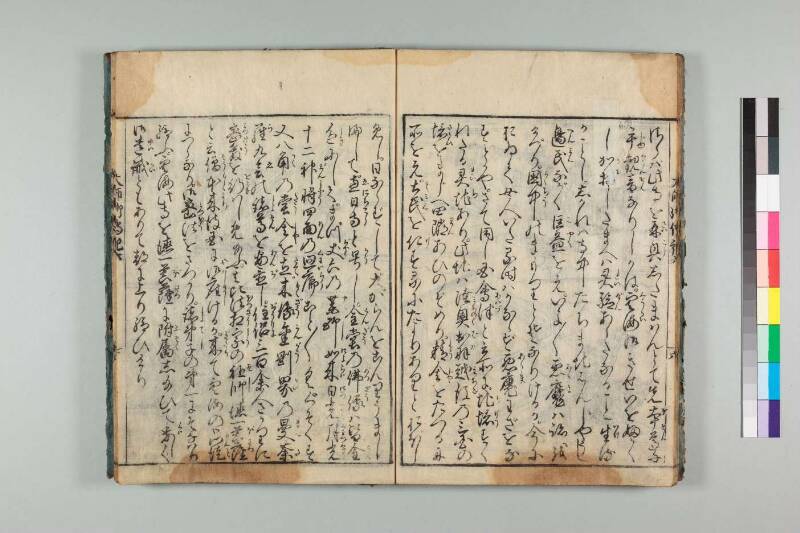
翻刻
さらば此寺を再興(さいこう)したまはんとて先 本尊(ほそん)千
手(じゆ)観音(くはんをん)なりしかは。空海(くうかい)御きせいをふかく
して加持(かぢ)したまへは。霊験(れいげん)あらたなること生(いけ)る
かことし。しかれは寺中たちまちはんじやうし
辺民(へんみん)ながく巨益(こやく)をえ。いよ〳〵悪魔は跡を
けづり。国中(こくちう)のまもりとそなりけるか。今に
おゐて女人いたる時はかならず悪魔(あくま)わざをな
すとかや。さて同し国 会津(あいづ)と云所に。地境(ちけう)すく
れたる霊地(れいち)あり。此地は陸奥(みちのく)出羽(では)越後(えちご)の三国の
境(さかひ)をまじへ四 隣(りん)あひのぞめり。精舎(しやうじや)をたつるに
所をえ。土民(どみん)を化(け)するにたよりありとおぼし
めし、日ならずして。大がらんをこんりうまし
まして。恵日(えにち)寺(てら)と号(かう)し。金堂(こんだう)の仏像(ぶつざう)は皆金(こん)
色(しき)にして。まづ丈(ぢやう)六の薬師(やくし)如来(によらい)日光(につくはう)月光(ぐわつくはう)
十二 神将(じんしやう)四面の回廊(くわいらう)こと〳〵くぐそくす
又 八角(かく)の堂舎(だうしや)を立(たて)。木像(もくざう)金剛(こんがう)界(かい)の曼荼(まんだ)
羅(ら)九会(ゑ)の諸尊(しよそん)を安置(あんぢ)し。住侶(ぢうりよ)三百余人さかりに
密教(みつけう)を行(をこな)はしめ給ふ。其頃 法相(ほつさう)宗(しう)の祖師(そし)徳一 菩薩(ぼさつ)
と云 僧(そう)本来(もとより)彼国に御座(おはしまし)けるか。来て空海の門徒(もんと)
につらなり。御 密法(みつほう)をさづかり。諸(しよ)弟子(でし)の第一にそなはり
給ふ。空海此寺を徳一 菩薩(ぼさつ)に附属(ふぞく)し給ひて委(くは)しく
御 遺戒(ゆいかい)ともありて都に上り給ひけり
現代語訳
それではこの寺を再興しようとして、まず本尊である千手観音に、空海が御気勢を深めて加持されると、霊験はあらたかなること生けるもののごとくであった。こうして寺中はたちまち繁盛し、周辺の民はながく大きな恩恵を受け、いよいよ悪魔は跡を絶ち、国中の守りとなったのである。ただし今日においても、女人が至る時にはかならず悪魔が何かをなすと言われている。
さて、同じ国の会津という所に、地の境が優れた霊地があった。この地は陸奥・出羽・越後の三国の境が交わり、四方を見渡すことができた。精舎を建てるに適した場所であり、土地の民を教化するにも便宜があると思し召され、日を置かずして大伽藍を建立なされた。そして恵日寺と号し、金堂の仏像はすべて金色にして、まず丈六の薬師如来・日光菩薩・月光菩薩・十二神将と、四面の回廊をことごとく具備された。
また八角の堂舎を建て、木造の金剛界曼荼羅九会の諸尊を安置し、住持の僧侶三百余人に盛んに密教を行わせなさった。その頃、法相宗の祖師である徳一菩薩という僧が、もとよりその国におられたが、やって来て空海の門徒に加わり、御密法を授かって、諸弟子の第一の地位に備わられた。空海はこの寺を徳一菩薩に付属され、詳しく御遺戒ともあって、都へお上りになったのであった。
英語訳
"Then let us restore this temple," Kūkai resolved, and first, deepening his spiritual concentration, he performed ritual empowerment (kaji) upon the principal image, the Thousand-Armed Kannon. The divine efficacy that resulted was so vivid it was as though the image were alive. Thereupon the temple immediately flourished, the surrounding people long enjoyed great benefit, the demons were driven away entirely, and the temple became a guardian of the entire province. Even today, however, it is said that whenever a woman enters, the demons invariably stir and cause mischief.
Now, in the same province, in a place called Aizu, there was a sacred site of outstanding geographical character. This land stood at the convergence of the borders of three provinces — Mutsu, Dewa, and Echigo — and commanded a view in all four directions. Kūkai deemed it an ideal location to erect a temple precinct and a convenient place for the edification of the local people. Without delay, he caused a great monastery complex (garan) to be constructed, which was named Ennichi-ji. The Buddhist images in the golden hall were all gilded, and it was fully furnished with a sixteen-foot statue of Yakushi Nyorai (the Healing Buddha), Nikkō Bodhisattva, Gakkō Bodhisattva, the Twelve Divine Generals, and covered corridors on all four sides.
Furthermore, an octagonal hall was erected, in which wooden images of all the revered deities of the nine assemblies of the Vajradhātu (Diamond Realm) Mandala were enshrined, and more than three hundred resident monks were vigorously guided in the practice of Esoteric Buddhism. Around that time, a monk named Tokuitsu Bosatsu, the patriarchal teacher of the Hossō school of Buddhism, happened already to be residing in that province. He came and joined Kūkai's disciples, received transmission of the esoteric teachings, and came to hold the foremost position among all the disciples. Kūkai entrusted this temple to Tokuitsu Bosatsu, left him with detailed instructions and admonitions, and then departed for the capital.