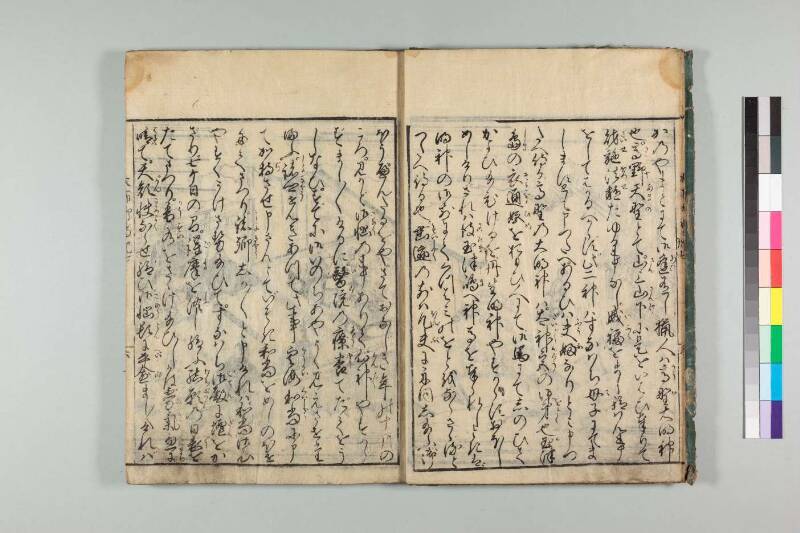
翻刻
かのやまとにて御 逢(あひ)有し猟人は高野(かうや)大明神
也。高野(かうや)天野(あまの)とて。山(さん)上 山下(さんげ)に是をいはひ奉りて
財施(ざいせ)法施(ほつせ)たゆる事なし。威福(いふく)をまし給はん事
をしてはかるべからず。是二神はすなはち母子(もし)にてま
しますとも申つたへ。あるひは夫婦(ふうふ)なりとも申つ
たへ侍り。高野の大明神は。太神宮(だいじんぐう)の御 弟(をとゝ)なり。玉津
島(しま)の衣通姫(そとをりひめ)をおもひ人にて。御馬にてしのひて
かよひ給ひけるを。丹生明神やすからずおほし
めしけり。されは彼(かの)玉津島(たまつしま)へ神馬を奉られしときは。
明神の御前にてくつはみのをとをならさゞると
つたへ侍る也。垂迹(すいしやく)の前は凡夫(ぼんぶ)に舟同し給ふ。御
【みかどの御悩御祈の事】
ほうべんたるをや。さておなじき年の十月の
ころ。みかど御悩(ごなう)の事ありて。心神(しん〴〵)やすから
ずまし〳〵けるに。医院(いゐん)の療養(れうやう)てだてをう
しなひ。すでに御いのちあやうく見えさせた
まふ。諸卿(しよきやう)さんきあつて。此事 空海(くうかい)和尚(くはしやう)に申
て加持(ぢ)させ申さんとて。いそき和尚をめしのほせ
たてまつり。諸卿(しよきやう)しか〳〵と申けれは。和尚御心
やすくうけさせ給ひて。すなはち御殿(ごてん)に壇(だん)をか
ざり。七ケ日の間。護摩(ごま)を修(しゆ)し給ふ結願(けちぐはん)の日 表(へう)を
たてまつり。香水(かうずい)をさゝげ給ひしかば。霧気(ぶき)忽(たちまち)に
晴(はれ)て。天 顔(がん)快(こころよく)ならせ給ひ。御悩(ごのう)頓(とん)に平癒(へいゆ)まし〳〵ければ
現代語訳
かの大和でお会いになった猟師は、高野大明神でありました。高野・天野という(二社)として、山の上と山の下でこの神をお祀り申し上げ、財施・法施が絶えることなく続いております。その威光と御福徳が増し加わられることは、はかり知ることができません。この二柱の神は、すなわち母と子であるとも伝えられており、あるいは夫婦であるとも伝えられております。高野の大明神は、太神宮(伊勢神宮)の御弟であり、玉津島の衣通姫を想い人として、御馬に乗ってひそかに通われていたことを、丹生明神はよく思し召されませんでした。それゆえ、あの玉津島へ神馬を奉納される際には、明神の御前では轡の音を立てないと伝えられております。垂迹(権現として現れること)の以前は、凡夫(一般の人々)と同じ船に乗るようなものでございます。御方便(仮の姿)であることは言うまでもありません。
さて、同じ年の十月のころ、帝が御病気になられ、心神ともに穏やかでいらっしゃらなかったところ、医師たちも治療の手立てを失い、すでに御命が危うく見受けられるようになりました。諸卿が参集して、「この件を空海和尚に申し上げて加持祈祷をお頼みしよう」ということになり、急いで和尚をお召し上げ申し上げました。諸卿がそのように申しましたところ、和尚は快く承諾されて、すぐに御殿に壇を設け、七日の間、護摩を修されました。結願(満願)の日に表白を献上し、香水をお供えになりましたところ、(御病気の)霧気はたちまちに晴れて、帝のお顔色は快くなられ、御病気はたちまちに平癒されましたので、
【帝の御病気の御祈祷の事】
英語訳
The hunter who had been encountered in Yamato was, in fact, the Great Deity of Kōya (Kōya Daimyōjin). At the shrines of Kōya and Amano — worshipped respectively at the top and the foot of the mountain — offerings of material goods (zaise) and the gift of the Dharma (hōse) never cease. The extent to which divine power and blessings shall increase is beyond all measure or reckoning. It is said that these two deities are mother and child, though there is also a tradition that they are husband and wife. The Great Deity of Kōya is the younger brother of the Grand Shrine [of Ise], and harbored feelings of love for Princess Sotoōri of Tamatsushima, secretly visiting her on horseback. This did not sit well with the deity Nyū Myōjin. For this reason, it is said that when a sacred horse is offered to that Tamatsushima Shrine, the sound of the bit and bridle is not allowed to ring out before the presence of the deity. Before taking on a manifest divine form (suijaku), such behavior is akin to being in the same boat as ordinary mortals — this is, of course, a matter of skillful means (hōben).
Now, around the tenth month of that same year, the Emperor fell gravely ill, and was in a state of great unease in both mind and spirit. The physicians had exhausted all means of treatment, and it appeared that His Majesty's life was in danger. The court nobles assembled and agreed: "We must inform the Venerable Kūkai of this matter and request that he perform healing rituals (kaji)." They hastily summoned the monk to the capital. When the nobles explained the situation, the monk graciously accepted. He immediately erected an altar within the Imperial Palace and, over the course of seven days, conducted the Goma fire ritual. On the day of the completion of the rites (kechigan), he presented a written prayer (hyō) and offered sacred water (kōzui). Thereupon, the clouds of the Emperor's illness suddenly lifted, His Majesty's countenance became cheerful, and the imperial ailment was swiftly and completely healed.
[Chapter heading: On the Imperial Illness and the Prayers Offered for It]